
Arkansas brought the tough talk. Texas supplied the consequences. After Ryan Silverfield’s message about being “on their asses,” his Razorbacks went to Austin and delivered three points, another collection of self-inflicted wounds and almost no evidence that the urgency had survived the trip. Texas won 45-3. The scoreboard did not exaggerate the separation.
Silverfield Talked Tough. Texas Made Arkansas Look Helpless.
Now the uncomfortable questions belong to the head coach. What exactly is that message accomplishing? Where does accountability begin when the same failures keep returning? And how does Tim Cramsey retain control of an offense that turned 363 yards into one field goal?
Those are football questions, not demands for a louder press conference. Arkansas has heard enough intensity. It needs competence that remains visible after kickoff.
Tough Talk Does Not Prepare a Football Team
Silverfield does not owe anyone a theatrical sideline performance. He owes Arkansas a team prepared to handle the opening minutes without making a difficult assignment worse. Instead, a holding penalty damaged the first possession. Kick-catch interference improved Texas’ starting field position. A personal foul assisted the Longhorns during their opening touchdown drive.
Then a pass came off Jaden Platt’s hands after contact, and Jelani McDonald returned the interception 31 yards for a touchdown. Arkansas was down 14-0 with 9:01 remaining in the first quarter. That sequence did not prove the players lacked effort. It proved the operation lacked the precision required to compete.
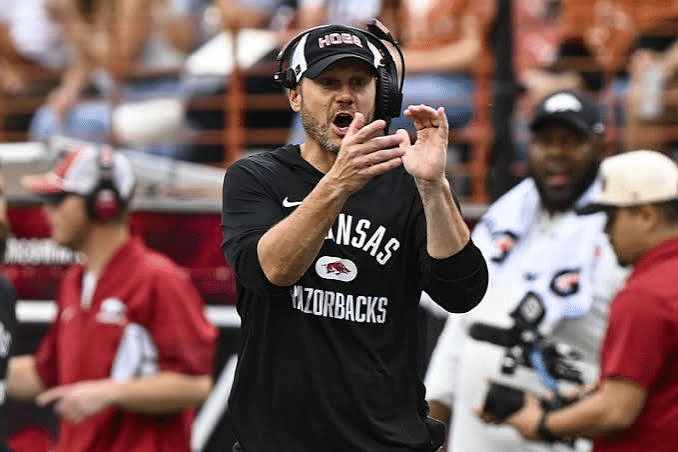
There is a difference, and coaches are paid to address it. A demanding message has value only if it improves the work. Otherwise, it becomes another quote placed beside another explanation of why the team failed to execute. Texas had better personnel in important areas. Arkansas still had control over penalties, assignments and preparation.
The Longhorns did not need the help. The Razorbacks supplied it anyway. By halftime, Texas led 31-3. Whatever urgency Silverfield intended to establish had produced no meaningful resistance to the game slipping away.
Cramsey’s Offense Has Exhausted the Benefit of the Doubt
The question is no longer whether every unsuccessful play was Cramsey’s fault. Of course it was not. Quarterbacks make decisions. Receivers finish catches. Linemen must handle their assignments. A coordinator cannot execute those responsibilities himself. But when the failures repeatedly combine into an ineffective offense, somebody must answer for the combination.
Arkansas gained 363 yards Saturday and scored three points. It converted three of 14 third downs. It never reached the end zone. That is not an offense unfairly judged by one unfortunate bounce. It is an offense unable to complete enough possessions to influence the result. Chris Marshall caught nine passes for 106 yards. Cam Settles gained 63 yards on 14 carries. Useful individual production existed.
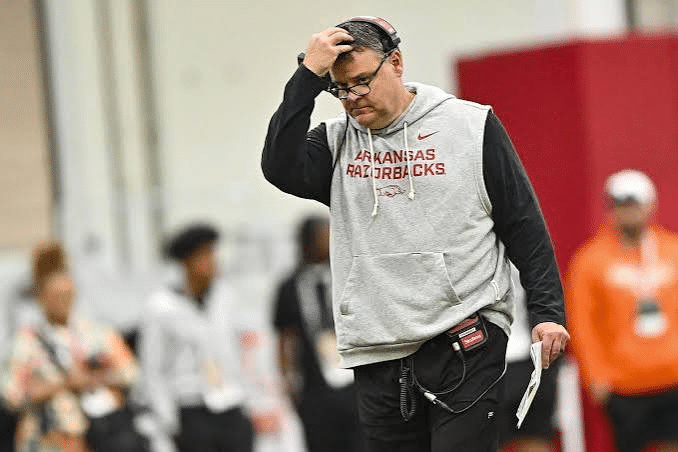
The structure around it did not generate an adequate return. Cramsey’s previous success at Memphis explains why Silverfield trusted him with this assignment. It does not require Arkansas to keep accepting the current results. Continuity is supposed to improve communication, teaching and execution. When those benefits fail to appear consistently, continuity needs a football justification stronger than familiarity.
How is Cramsey still directing this offense without a publicly recognizable change in responsibilities or approach? There may be internal corrections outsiders cannot see. The results remain visible.
Nobody should pretend a replacement automatically fixes everything. But Arkansas cannot use the absence of a guaranteed solution as an argument for preserving a failing arrangement. That would make accountability impossible whenever change carried risk.
Silverfield Cannot Delegate Ownership of This Failure
This is where the criticism must move beyond the coordinator. Silverfield hired Cramsey. Silverfield oversees the staff. Silverfield determines whether confidence remains justified or becomes an obstacle to correction. If the offense belongs to his program when it succeeds, it belongs to his program when it produces three points.
The defense was no refuge, either. Arch Manning completed 21 of 25 passes for 287 yards and two touchdowns. Texas scored twice in the final 2:20 before halftime, including a 74-yard touchdown drive that required only 26 seconds. Arkansas was not one offensive adjustment away from winning.
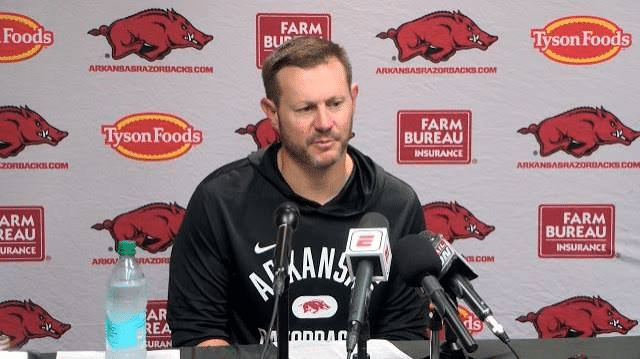
It was failing across the operation. That makes the head coach’s response more important than another declaration of anger. Silverfield must identify what changes, who is responsible, and how the correction becomes measurable.
The South Carolina victory earned credit. It did not purchase immunity. LSU remains. Then comes an offseason when promises about better resources must meet decisions about personnel, development and staff responsibilities. Silverfield can keep demanding more from the players.
First, he must demonstrate that the demand reaches everybody drawing a coaching salary—including himself. Being “on their asses” is not a standard if the people directing the failures remain beyond its reach. Arkansas does not need another tough sentence. It needs its head coach to make a tough decision.