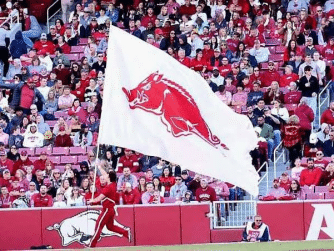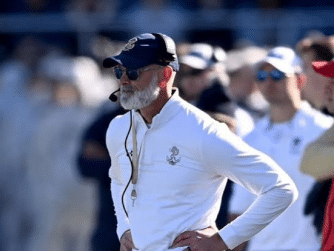


Two minutes and 24 seconds. That was the length of Charles Huff’s postgame news conference after Memphis lost at Navy on Saturday. A university communications official ended the session, according to reporting from the scene. There is no established minimum time a coach must spend explaining a loss. There is also no evidence that the decision to end this particular session was an effort to conceal a coaching move.
Memphis Ended Charles Huff’s News Conference. It Didn’t End the Questions.
But Memphis should understand what it accomplished. It ended the availability. It left the questions. The Tigers had just surrendered a 10-point fourth-quarter lead in a 38-34 loss that damaged their position in the American Conference race. Their first-year coach was already the subject of reporting about another school’s vacancy. This was a moment for explanation, not an appearance so brief that its duration became a story of its own.
For Memphis, the problem now extends beyond a bad afternoon in Annapolis. It is about how a university handles public accountability when the football becomes difficult, and its coach becomes interesting to somebody else.
The Questions Did Not Begin Saturday
On Oct. 27, Huff addressed speculation about other jobs with a direct denial of contact. “Not been called,” he said. “Not been contacted.” He also described keeping an open dialogue with his players while drawing a boundary around what he would discuss publicly. “I will never address it publicly, because I don’t think that’s anyone’s business,” Huff said. “But I’ll always be open and honest with the guys in the building.” By Nov. 18, reports said Maryland had spoken with Huff about its opening. Subsequent reporting again identified him among the coaches contacted.
Those developments do not establish that Huff misled anyone in October. Contact could have occurred afterward. They do not establish an offer, an agreement, or a decision to leave. They establish that the circumstances warranted another question. When did the situation change? What can Huff tell his players about his intentions now? Does he expect to coach Memphis next season? Those questions do not require him to guarantee the rest of his career. They require him to address the present as clearly as he can.
Huff Made The Speculation Part Of His Pitch
Huff has not treated every aspect of the coaching market as off-limits. On Nov. 10, he explained how he used rumors of his departure to counter recruiting attacks. “Every time a coach says, ‘Coach Huff ain’t going to be there,’ it actually works in my favor,” he said. “Because if I’m leaving Memphis, I ain’t going to high school. I’m going to something bigger.” Then he described his message to recruits: “You’re going with me.” That was a recruiting explanation, not a resignation announcement. It should not be presented as one.
But it was Huff’s explanation, delivered publicly. And it invites a legitimate examination of whose future was being sold. Was the reassurance that a player could build something at Memphis? Or that his relationship with Huff could survive Huff leaving Memphis? A recruit might find the second proposition appealing. The university paying for the recruiting operation has reason to care about the distinction.
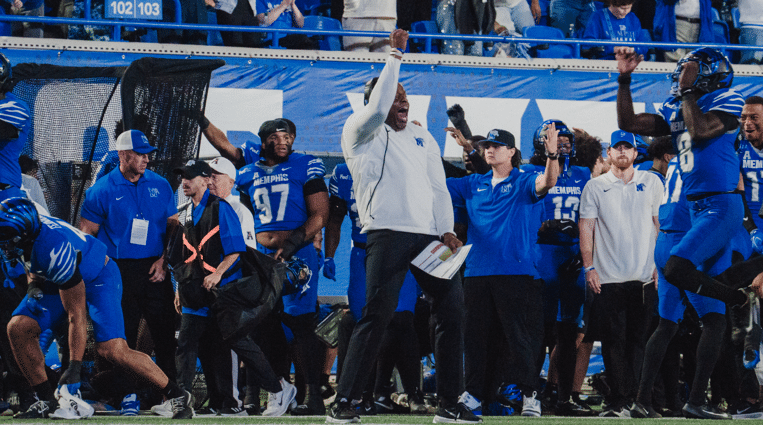
Huff cannot reasonably expect his public description of a possible departure to generate interest only on his terms. Once he explains why leaving for “something bigger” can help his recruiting pitch, questions about that possibility are hardly an intrusion from nowhere.
Memphis Has Its Own Responsibilities
The university’s investment is substantial. Huff’s reported agreement outlines five years and $10 million in scheduled compensation. Memphis also provided an initial assistant-coach salary pool of $4.4 million. The reported memorandum included financial protection against an early departure. Those provisions matter. They do not make leadership and communication optional.
A separation payment could compensate Memphis financially if the relationship ended. It could not preserve the staff relationships, recruiting plans, or continuity the university hoped to build.
Athletic director Ed Scott has discussed the Huff speculation in an interview with Geoff Calkins. It would be inaccurate to suggest the administration has said nothing. But Saturday created another question for the administration: Why was this availability ended after two minutes and 24 seconds? Was there a logistical reason? An established limit? Another obligation?
An explanation would be useful. Without one, there is no reason to invent a motive—but there is every reason to ask for the decision to be explained.
The timing made that especially important. Huff’s usual weekly news conference had also been canceled earlier in the week because of a reported scheduling conflict, although he did speak during his regular radio appearance. That is not evidence of a coordinated effort to avoid scrutiny. It is context Memphis should have recognized before ending another opportunity for questions.
Accountability Is Not An Accusation
Huff did address the football after Navy. “We didn’t tackle well,” he said, adding that Memphis needed to tackle better, coach better, and put players in better positions to succeed. That acknowledgment belongs in the account. So does the fact that Navy made the plays necessary to win.
There is no evidence that job discussions caused missed tackles or the collapse of a fourth-quarter lead. Connecting those things would be unfair to Huff and careless with the facts. The coaching questions and the football questions can remain separate. Both still deserve room.
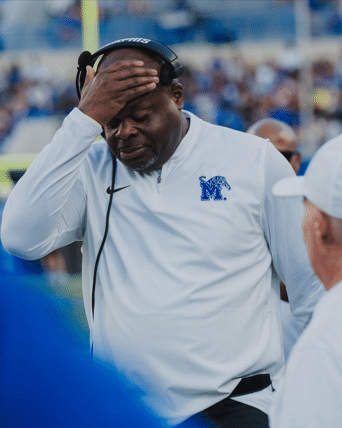
That is the broader issue for Memphis—and the part that should resonate beyond one program. Controlling access is not the same as resolving uncertainty. Ending an interview does not make a reasonable question disappear. It simply moves the discussion somewhere the university has less opportunity to answer it.
Huff is entitled to consider his professional future. Memphis is entitled to protect its interests. Players deserve honesty about what their coach knows and intends. None of that requires a spectacle. It requires enough time to ask a question, hear an answer, and ask the necessary follow-up. On Saturday, Memphis gave that process two minutes and 24 seconds. The university should not be surprised that the conversation is lasting longer.