
Charles Huff’s uncertain future is the headline. The more consequential story is the negotiating power of an agency that helped shape a dozen coaching hires in the previous cycle. The most important figure in a college football coaching search does not always attend the news conference. Sometimes he represents the man answering the questions.
Jimmy Sexton’s influence hangs over Charles Huff’s connection to Maryland, not because there is proof the agent has manufactured the speculation, but because his reach across the coaching market makes every credible opening more than a conversation between one university and one candidate.
Sports Business Journal reported that Sexton represented 12 coaches who landed new jobs during the previous hiring cycle, twice as many as his nearest competitor. Huff was among the clients he co-represented with CAA’s Ed Marynowitz. Other Sexton clients moving into new positions included Lane Kiffin at LSU, James Franklin at Virginia Tech and Ryan Silverfield at Arkansas.
That is the national context for the uncertainty surrounding Memphis and Maryland. One school wants to retain its coach. Another is evaluating whether to hire him. The representatives advise that coaches work across a marketplace much larger than either institution. The question is not simply whether Huff leaves. It is how much leverage exists before anyone makes that decision.
Twelve Hires Explain Why Sexton Matters
Sexton’s influence does not require a theory about secret instructions or coordinated leaks. The documented business is substantial enough. His 12 coaching hires during the previous cycle placed him well ahead of competing representatives. Marynowitz and fellow CAA agent Davis Horton helped Sexton represent nine of those 12 hires, which tells us who truly runs college football.
The significance is not merely the number of introductory news conferences associated with one agency. It is the breadth of its involvement. A school searches to solve its own problem. A representative with clients across the market can evaluate that opening alongside other opportunities, competing employers, and recently negotiated deals.
That creates an important difference in perspective. The university is trying to hire or retain a particular coach. The agent is trying to secure the best available outcome for a client whose choices may extend beyond that university. Those objectives can produce an agreement. They can also produce tension long before an offer becomes public.
In Huff’s case, that tension is already visible: Memphis faces uncertainty about its leadership while Maryland continues a search that has involved several prominent names. USA TODAY Sports reported that Maryland had spoken with Huff and held multiple conversations with Brian Kelly. Separate reporting connected Urban Meyer to the opening.
A Search Can Create Leverage Without Producing A Hire
This is where the Sexton angle becomes more revealing than a simple prediction about Huff’s destination. A credible outside opportunity changes the conversation between a coach and his current employer. It introduces alternatives. It forces both sides to assess what continuing the relationship is worth. That does not mean a raise is inevitable. It does not establish that Huff is seeking one. And it does not prove Maryland is serving as a negotiating prop.
It means that a legitimate candidacy can have value beyond the job itself. If Huff becomes Maryland’s choice, his representatives negotiate a move. If he remains at Memphis, the interest can still become part of a broader discussion about his future there. The existence of both possibilities is precisely why an unresolved search can be so uncomfortable for the institutions involved. The public often treats “he wants the job” and “he is using the job” as mutually exclusive explanations.
They need not be. A coach can genuinely consider an opportunity while recognizing that his current employer now has reason to reassess the relationship. An agent can explore that opportunity without knowing at the outset which outcome will prove best. None of that establishes manipulation. It describes why representation matters.
The Strongest Accusation Still Needs Evidence
Sexton’s reputation makes him an easy central character in every carousel story: the powerful agent moving coaches, pressuring schools and determining the price. But a national examination should distinguish influence from omnipotence. It is well established regarding his agency’s substantial role in coaching transactions. It does not establish that Sexton or Marynowitz planted false Maryland stories, manipulated a prediction market, or orchestrated Huff’s postgame media appearance.
That distinction matters because several details surrounding Huff have already invited conclusions stronger than the evidence. A Saturday report listed Huff at 55% in Kalshi’s Maryland coaching market. That report appeared before Memphis lost to Navy, not as a reaction to his brief postgame availability. The market price reflected trading sentiment, not an announcement from Maryland.
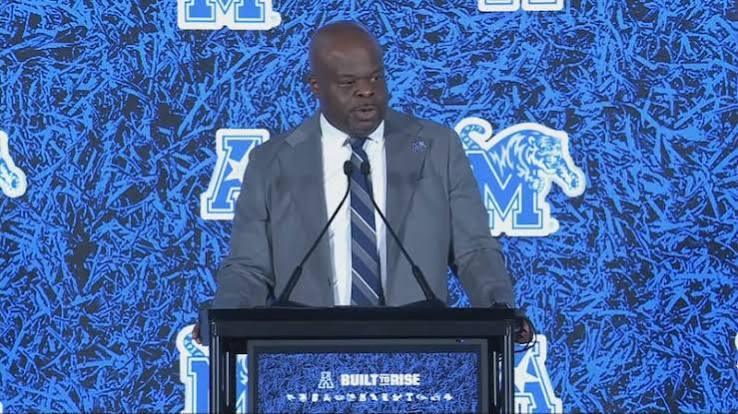
Likewise, Huff’s two-minute, 24-second news conference became an image of a coach supposedly ready to leave. Reporting indicated that Memphis’ communications director ended the session — an important qualification to the claim that Huff simply walked away to avoid questions. Neither detail tells us what Sexton is negotiating. Both demonstrate how quickly public interpretation can outrun confirmed information.
Huff Has Made The Relationship-Versus-Institution Debate Explicit
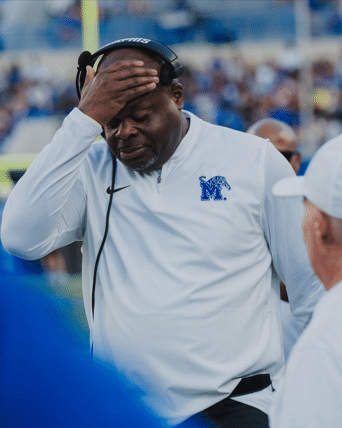
The agent’s role becomes especially interesting because Huff has been unusually direct about how he discusses career mobility with recruits. Earlier this month, he said that leaving Memphis would mean going to “something bigger.” His response to recruits concerned about that possibility was: “You’re going with me.” He also cited the players who had followed him at previous stops.
That is more than a provocative sound bite. It identifies the relationship Huff is selling: trust in the coach, even if the address changes. For an agent representing that coach, a portable network of relationships can be part of the client’s appeal. For the current university, the same portability raises a difficult question about what the institution is building and how much of it depends on one employee.
Huff’s comments do not establish his intentions toward Maryland. They do explain why Memphis supporters might hear the speculation differently from prospective players. The recruit hears that the relationship could continue. The school hears that it might continue somewhere else.
Sexton’s Job Is Not To Provide Institutional Stability
There is a basic point beneath the frustration directed at powerful agents: their responsibility is to their clients, not to preserving a school’s preferred timetable. That does not make an athletic department powerless. Maryland can choose another candidate. Memphis can decide what terms it considers reasonable. Huff can decide that remaining where he is offers the better opportunity.
But neither university should confuse its desire for certainty with the representative’s obligation to produce it. The institutional priority is continuity. The client’s priority may be opportunity, compensation, resources, security, or some combination of those interests. The agent’s value lies in navigating that difference. Sexton’s documented hiring volume helps explain why his involvement attracts attention. It does not mean every rumor originates with him or every search ends on his preferred terms.
The Real Story Is The Market Around The Coach
Huff may leave Memphis. He may stay. Maryland may ultimately choose someone else. Any of those outcomes would be consistent with what is publicly established: the university has spoken with him, the search has included other candidates, and his representatives occupy a powerful position in the coaching industry.

The temptation is to turn the eventual result into proof that every preceding development was part of a master plan. That would give the agent too much credit — and the uncertainty too little weight.
The better national story is that Sexton does not need to control every outcome to matter enormously. His agency’s reach ensures that it participates in a significant share of the decisions shaping the profession. Memphis is evaluating one relationship. Maryland is making one hire. Sexton’s business is the market connecting them.