

Utah’s trip to Big 12 Media Days in 2026 is more than a routine preseason obligation. It is a first impression in a new league and a new era. After years of being defined nationally by Kyle Whittingham’s steady hand and the program’s Pac‑12 toughness, the Utes arrive in Frisco under Morgan Scalley with a fresh voice and a familiar edge. How they present themselves this week will shape not only expectations for the 2026 season, but also perceptions of what Utah intends to be in the Big 12.
Utah Just Changed Everything: Morgan Scalley’s First Big 12 Media Days Reveals the Plan
Scalley’s promotion to head coach brings an interesting challenge. Utah does not want to abandon the hard‑nosed, defense‑driven identity that made it one of the most respected programs in the West. At the same time, the Big 12 is a different ecosystem. Games tilt toward high‑20s and low‑30s scores, offenses stretch you horizontally and vertically, and rosters must be built for speed and explosiveness as much as for size and physicality. Media Days at The Star gives Scalley a stage to explain how he plans to evolve Utah without tearing down its foundation.
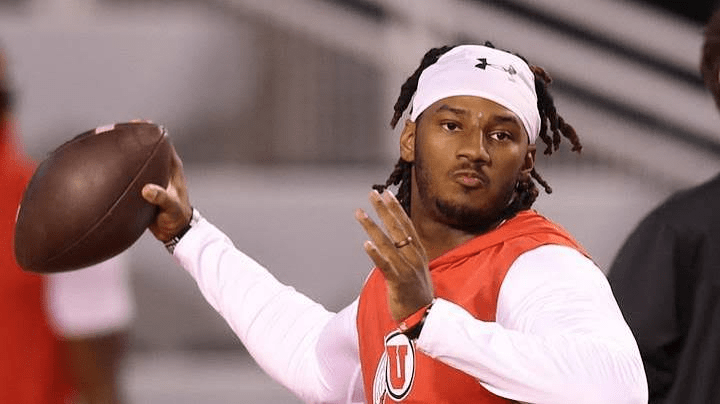
The offensive players he takes to Frisco tell you that evolution is underway. Quarterback Devon Dampier is being positioned as the face of Utah’s future. His presence in the group signals that the post‑Cam Rising chapter is not going to be quietly experimental; it is going to be intentional and public. Dampier brings athletic traits that fit the Big 12 immediately – mobility, arm talent, the ability to extend plays and threaten in space. Utah is betting that he can operate in the kind of tempo‑friendly, multiple‑look offense that this league demands, and Media Days is where he begins to sell that vision to fans and analysts.
Running back Wayshawn Parker accompanies Dampier as the other key offensive piece, and that pairing makes an important point. Utah is not trading its run‑game identity for pure spread theatrics. Parker is the kind of back who can handle between‑the‑tackles work and still function as a weapon on the perimeter and in the passing game. That versatility allows Utah to maintain the physicality it prides itself on while stacking more explosive possibilities on top. In Frisco, Parker can frame Utah’s offense as something more layered than the old “grind and punt” stereotype, without suggesting that the Utes have gone soft.
On defense, Utah’s choices reinforce the notion that some things will not change. Edge defender Lance Holtzclaw represents the front‑line disruption Utah has long relied on. In a Big 12 full of quick releases, RPOs, and wide splits, a pass rusher who can win without help is invaluable. Holtzclaw’s potential to wreck protections and force quarterbacks to speed up their process is a key part of Utah’s plan to survive in a league built on offensive rhythm. Beside him, linebacker Johnathan Hall stands in for the middle‑of‑the‑defense intelligence and toughness that have defined the Utes for more than a decade. Hall is the type of player who allows Utah to be aggressive up front without losing structural integrity. His ability to read, trigger, and tackle in space will be tested weekly, and Media Days puts him in front of cameras as one of the new faces of that responsibility.
The message Scalley needs to deliver in Frisco is that Utah is undergoing evolution, not identity amnesia. If he frames the program as starting over, he invites skepticism from a league that has already seen Utah win and compete at a high level. If he instead emphasizes continuity of culture – physical standards, accountability, developmental pipeline – layered over modern offensive concepts and aggressive defensive adjustments, he keeps Utah anchored near the top tier of Big 12 expectations. His tone on offense will be especially scrutinized. Utah cannot afford to pretend that winning 21–17 every week is still realistic, but it also cannot simply chase shootouts and abandon its strength.
This is where the narrative stakes of Media Days become clear. Utah is entering a conference where other Western brands like BYU, Arizona, and UCF are all campaigning for mindshare. Fans and media in the Big 12 will quickly decide which programs feel like long‑term contenders, which feel like interesting experiments, and which seem destined for the middle. Utah’s track record – titles, physical football, player development – should give it a head start, but perception can erode quickly if the messaging feels generic or out of step with the league’s direction.
A successful week in Frisco for Utah would see Scalley speaking with certainty about the program’s standards while showing curiosity and respect for the new environment. It would feature Dampier sounding like more than an understudy, clearly owning his role as the next Utah quarterback expected to win big games. It would highlight Parker, Holtzclaw, and Hall as standard‑bearers, players who embody Utah’s toughness while embracing the adjustments and speed demands of the Big 12. If the Utes project that kind of unified, confident identity, they will leave The Star not as an unknown quantity, but as one of the teams observers circle when they ask who truly has the bones to win this league over the next two seasons.