
\
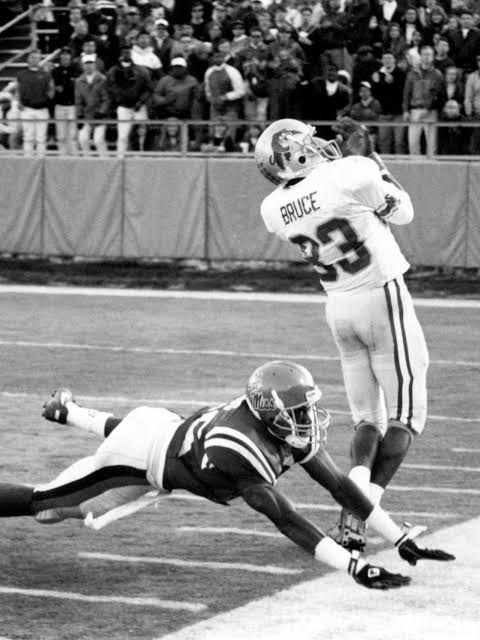
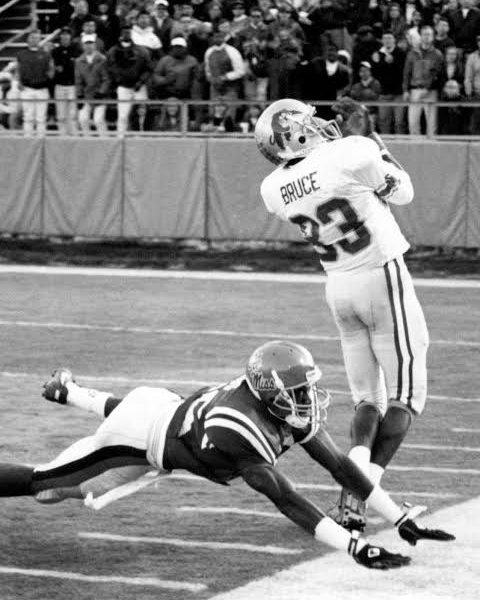
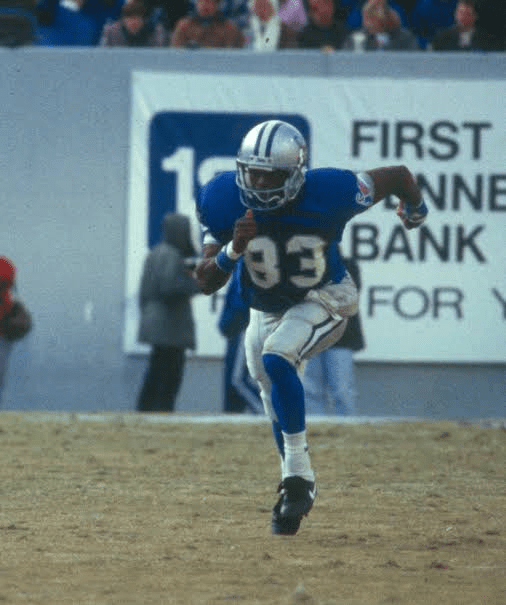
Before Memphis football had a national reputation as a home for explosive skill talent, it had Isaac Bruce streaking down the sideline in No. 83. He did not stay in the program long, but while he was there, he gave Memphis fans a glimpse of what it looked like when an elite, Sunday‑caliber wideout wore their colors. For a program still trying to define itself in the early 1990s, Bruce was less a piece of the puzzle and more a preview of the finished picture.
No. 83: Isaac Bruce and the Jersey That Pointed Memphis Forward
In a series about retired jerseys, he is the perfect place to start. Isaac Bruce did not just catch passes. He changed the way Memphis imagined its own ceiling.
A Star Before the Spotlight
When Bruce arrived at Memphis from West Los Angeles College, he brought with him the chip that comes with the junior college route: a little older, a little more polished, and absolutely convinced he belonged on a bigger stage. He stepped into an offense that needed a playmaker and immediately became the kind of receiver who could tilt the field, not just line up and run what was called. Memphis had talented players before him, but Bruce had that extra gear that made defensive backs panic and made coordinators circle his number on the film.
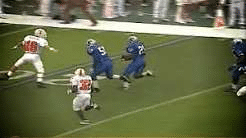
The 1993 season is when the legend really hardened. Bruce caught 74 passes for 1,054 yards, becoming the first Memphis receiver to cross the 1,000‑yard barrier in a single season and setting school records in the process. Those weren’t empty numbers in a pass‑happy system. They were earned routes in an era where the college game was still more conservative, and where a receiver who could dictate coverage was a genuine luxury. Every time No. 83 split wide, defenses had to make a choice: shade help his way and risk getting gashed elsewhere, or leave a single corner on an island and hope Bruce didn’t embarrass him.
For fans in the Liberty Bowl, that choice created a new kind of anticipation. You could feel it before the snap. When Tigers quarterback Steve Matthews dropped back and turned his shoulders toward Bruce, the noise rose a half‑beat early. It wasn’t just hope; it was expectation. Memphis fans started to assume something good would happen when the ball went his direction. That’s a subtle but massive shift in a fanbase’s psychology. You go from wishing for a big play to believing your guy is the one who’s about to make it.
Context matters here. This was not the Memphis of high‑octane spread systems and consistent bowl chatter. This was a program still trying to carve out an identity in the broader college football landscape. Bruce’s emergence gave Memphis an offensive face at a time when it desperately needed someone to embody progress. He was the kind of player who made neutral fans stop flipping channels and say, “Who is that? And when did Memphis get a dude like this?”
Why No. 83 Still Matters
Retiring a number is the most a program can do to honor a player. You can build walls of fame. You can hang banners. You can name awards. All of that is meaningful. But taking a jersey out of circulation entirely is different. It’s the school saying, “No one else gets to be this. This belonged to him.”
In Bruce’s case, the logic is straightforward and emotional at the same time. On the field, his production rewrote the Memphis record book at receiver and set a standard future Tigers would spend decades chasing. But just as important was the symbolic part: he was one of the first Memphis players of the modern era whose talent clearly translated to the highest level. When he left campus and eventually became one of the great wideouts of his generation in the NFL, it didn’t feel like a surprise to the people who had watched him on Saturdays. It felt like confirmation. Memphis fans could say, with rightful pride, “We saw him first.”
That dual impact—college dominance and professional validation—turns No. 83 into more than a nostalgia piece. It becomes connective tissue. Kids who grew up watching Bruce with the Rams can be told, “You know where that started, right?” Current Memphis players walking through the facility see his name and realize someone once used this place as a launchpad to the very top of the sport. Recruits and their families hear the story and understand that Memphis isn’t selling a fantasy; it’s pointing to a real precedent.
There’s also a stylistic inheritance in play. The modern version of Memphis football—the one built around explosive offenses, dangerous skill guys, and the reputation for quietly churning out pros at running back and receiver—can trace part of its DNA back to Bruce. Long before names like DeAngelo Williams, Tony Pollard, and Calvin Austin turned Saturdays into fireworks shows, Bruce was running routes that made the whole thing look possible. No. 83 is a reminder that this program has been capable of producing that level of talent for a long time.
That’s why, when you look up and see his number retired, it doesn’t feel like a museum piece. It feels like a signpost. Isaac Bruce’s jersey isn’t just hanging there to make people feel sentimental. It’s hanging there to tell every player who walks into the Liberty Bowl, every fan who brings a kid to their first game, that Memphis has already produced greatness at this position—and expects to again.
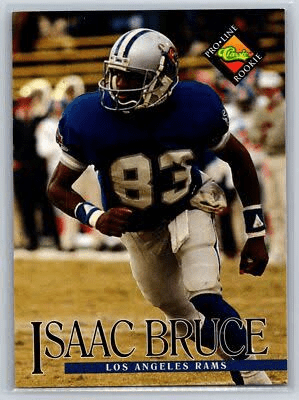
In a series about the jerseys that built the program, Bruce’s story is the moment the lights turned on. Before Memphis could build a reputation, it needed someone to show what was possible. For one electric season in No. 83, Isaac Bruce did exactly that.