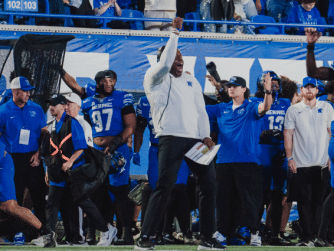

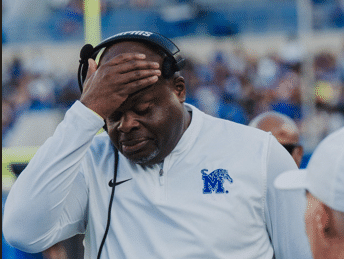
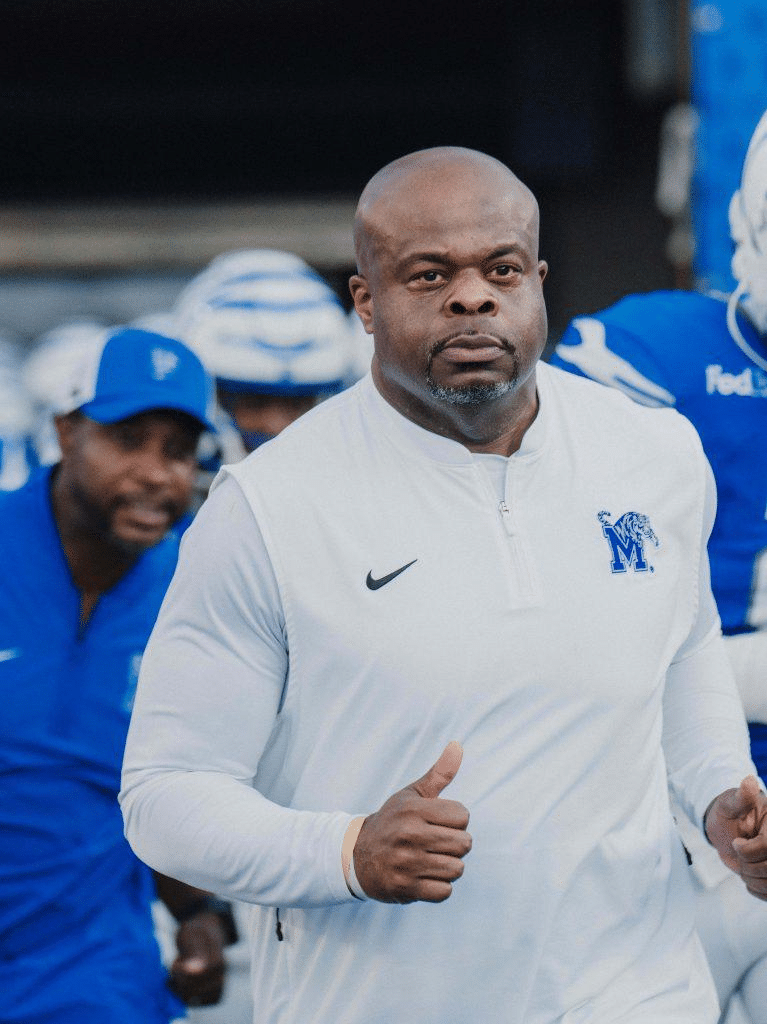
Charles Huff says his bosses knew. He says his representatives knew. For weeks, the public discussion suggested something much less settled. That is the unresolved issue after Huff’s declaration Tuesday that he would remain at Memphis and would not interview for Maryland.
Huff Says Memphis Knew a Month Ago. So Why Did the Maryland Story Keep Growing?
His future received an answer. The timeline received another question. If the decision was made more than a month ago, why did reporters continue to connect him to actual conversations about another job? That is a question about communication and sourcing. It is not proof of a scheme.
The Two Accounts Need To Be Examined—Not Blended
Huff was explicit about interviewing. “I have not interviewed for Maryland. I will not interview for Maryland,” he said. He was equally explicit about what he said he had communicated internally. “I told them when all of the rumbling started with everything—not just Maryland—that I wasn’t taking any jobs this year. I wasn’t taking any interviews.”
USA TODAY Sports, meanwhile, reported that Maryland had spoken with Huff. Coverage of that reporting described two sources and said the depth of the discussions was unclear. Its Nov. 21 update again identified Huff among the candidates Maryland had spoken with.
Those accounts should not be casually treated as identical—or automatically declared contradictory. An interview and a conversation are not necessarily the same thing. A preliminary exchange can occur without an interview, an offer or a willingness to accept a job.
But there is an additional complication. On Tuesday, Huff said he had not spoken with Maryland and did not intend to do so about its opening. That is a broader denial than the interview language alone. The distinction matters. The full record needs to establish exactly what Huff denied and exactly what the earlier reporting described.
An Intermediary Is A Possibility, Not An Established Answer
It would be tempting to resolve the uncertainty by saying Huff did not talk, but somebody representing him did. That could explain some coaching-search reporting. It has not been established here. USA TODAY’s description that Maryland spoke with Huff cannot simply be rewritten as confirmation of agent contact. Nor can an assumed conversation between intermediaries be used to accuse Huff of deliberately maintaining interest.
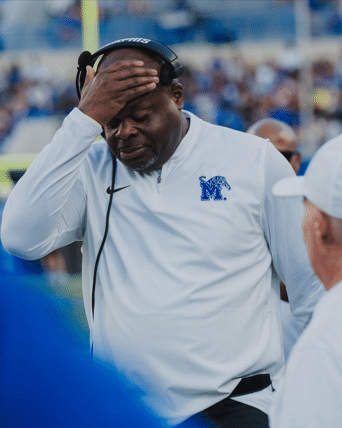
The necessary reporting is specific: Who communicated, when did it happen, and was the communication authorized? Huff’s own account makes those questions more consequential. “I told my representation a month and a half ago I’m not interested in the job cycle,” he said.
If that instruction governed throughout, any reported exchange needs to be understood in that context. An inquiry that was declined would mean something different from an expression of interest. Neither should be invented to make the story cleaner.
Attention Is Visible. Intent Is Not.
Was the prolonged speculation useful publicity? It certainly kept Huff’s name in the conversation. But publicity does not establish that he or Memphis orchestrated it. Calling the episode a ploy would require evidence that someone knowingly encouraged a misleading impression. Nothing known establishes that.
The same caution applies to Saturday. Huff’s statement came after the Navy loss, but chronology alone does not prove the announcement was designed to redirect attention from it. Memphis still has to answer for surrendering that game. A declaration about next season does not resolve what happened this season.
Scott also deserves a precise question rather than an accusation: What did he understand Huff’s commitment to mean, when did he receive it, and what communication strategy followed? Huff says the decision was settled. The noise created ensures that the uncertainty continued. The next step is not choosing the most dramatic explanation. It is establishing how those two realities existed at the same time.