
The University of Louisiana Monroe’s latest football partnership is being framed as a feel-good story, a faith-based relief organization, student-athletes volunteering in storm recovery, and a new revenue stream tied to NCAA-approved jersey patches. But behind the press release language and community imagery sits a more complicated question: what exactly is ULM selling, and to whom?
ULM’s Jersey Patch Deal Raises Bigger Questions Than It Answers
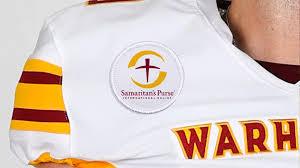
ULM Athletics announced that Samaritan’s Purse, a North Carolina-based Christian relief organization led by Franklin Graham, will appear as a jersey patch sponsor for the 2026 football season. The deal, which includes joint community service efforts following a devastating winter storm in Northeast Louisiana, is described as being valued at “over” an undisclosed figure. That missing number is just the first of several details left unclear.
At face value, the partnership checks multiple boxes for a Group of Five athletic department navigating the modern revenue landscape. The NCAA’s evolving rules around sponsorship patches have created new inventory, and schools like ULM are under constant pressure to monetize wherever possible. But unlike traditional corporate sponsors — banks, healthcare systems, regional brands — Samaritan’s Purse brings a distinctly ideological identity into a space that has historically tried, at least publicly, to remain neutral.
Faith, Funding, and Football
Samaritan’s Purse is not just a disaster relief organization. It is explicitly evangelical, with a mission statement centered on providing aid “in Jesus’ Name.” Its president, Franklin Graham, is a nationally recognized religious and political figure, and the organization has faced scrutiny over its positions on LGBTQ+ issues and its blending of humanitarian work with evangelism.
That context matters when its logo moves from disaster zones to Division I uniforms.
ULM officials have emphasized the organization’s boots-on-the-ground impact in Monroe, particularly following Ice Storm Fern, where players and staff joined Samaritan’s Purse volunteers in clearing debris and assisting homeowners. Those efforts are real and visible. But the decision to translate that relationship into a paid branding opportunity raises a different kind of question: is this about community service, or about institutional endorsement?

Athletic director SJ Tuohy framed the deal as both financially beneficial and mission-aligned, noting the NCAA’s new allowance for patch revenue. Yet the school has not publicly disclosed the financial terms, nor clarified whether the funds are coming directly from Samaritan’s Purse or, as hinted in statements, through a “private donor” supporting the placement.
That distinction is critical. If a third party is effectively purchasing branding space for a religious organization on a public university’s uniforms, it introduces layers of complexity — not just financially, but legally and ethically.
Transparency and the Slippery Slope
Public universities operate under different expectations than private institutions, particularly when it comes to religious affiliation. ULM is not a faith-based school. Its athletic programs represent a taxpayer-supported institution, which makes the presence of explicitly religious branding on official uniforms a notable shift.
Is this a one-off partnership tied to disaster relief efforts, or the beginning of a broader openness to ideological sponsors?
That question becomes more pressing when considering the precedent. If Samaritan’s Purse is an acceptable jersey partner, what standards will ULM apply moving forward? Would the school accept sponsorships from politically active organizations? Advocacy groups? Corporations with controversial public records? The lack of clearly defined guidelines leaves the door open.
Then there’s the issue of messaging. College football uniforms are not just equipment. They are some of the most visible branding assets a university controls. Every broadcast, highlight, and social media clip amplifies whatever appears on those jerseys. By placing Samaritan’s Purse in that space, ULM is not simply acknowledging a partner; it is elevating them.
Supporters will argue that the partnership reflects shared values of service and community impact, and that the players’ volunteer work demonstrates genuine alignment beyond financial exchange. Critics, however, will point out that visibility and endorsement are not neutral acts, especially when tied to organizations with clear religious missions.
There is also the unanswered question of player perspective. While ULM athletes participated in cleanup efforts, it is unclear whether they had any input on the jersey patch decision or how they feel about representing a religious organization on the field. In an era increasingly defined by athlete voice and NIL autonomy, that silence stands out.
Ultimately, ULM’s partnership with Samaritan’s Purse exists at the intersection of necessity and nuance. The financial realities of college athletics make new revenue streams attractive, even essential. But not all dollars carry the same implications.
For now, ULM is betting that the goodwill generated by community relief outweighs any potential controversy tied to the organization’s identity. Whether that calculation holds — with fans, players, and the broader public — is a question that won’t be answered in a press release.
It will play out, patch by patch, every Saturday this fall.