
The lights are softer on Friday, but the conversations get sharper. Coaches walk back into the draft room carrying cut-ups, not hype videos. General managers bring depth charts with honest red circles. Round 2 in 2026 opens with fewer cameras and more candor, and every team in this league feels it.
Round 2 Reality Check: How Friday Night Shapes the 2026 Season
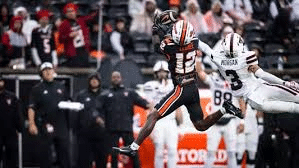
The New York Jets hold the first ticket of the night and use pick thirty-three on Denzel Boston, the long Washington wideout. He is there because Round 1 went defense with Arvell Reese. Boston’s frame and catch radius give whoever is under center a true outside winner, the kind of target who makes third down feel less like a coin flip.
Arizona steps up at thirty-four and grabs Arizona State tackle Max Iheanachor to protect the pocket. Iheanachor is not a finished product, but his feet and length fit an offense desperate to stop losing snaps before routes even develop. This is a pick born from too many free rushers off the edge last fall.
At thirty-five, Tennessee turns to Texas A and M guard Chase Bisontis. They took explosiveness early, now they buy some muscle. Bisontis fits a Titans line that has been shoved around far too often, bringing the anchor and finish they need to lean on people again in November.
Las Vegas sits at thirty-six and hands new quarterback Fernando Mendoza a defensive running mate by taking Clemson tackle Peter Woods. Woods is stout, violent, and disruptive inside. He works because a young offense will need short fields and extra possessions while it figures itself out.
The New York Giants go trench as well at thirty-seven with Georgia defensive tackle Christen Miller. His quickness through the gap gives their front a needed interior penetrator, someone who can ruin a run play before it starts and collapse pockets for their edge rushers.
Houston comes on the clock at thirty-eight and doubles down on the defensive interior with Texas Tech’s Lee Hunter. They are building a wall in front of a young star quarterback. Hunter pairs with their existing front to close the leaks that extended drives and kept C. J. Stroud on the sideline last year.
By the time New Orleans hits forty-two, the tone is set. The Saints take Texas A and M edge rusher Cashius Howell, an older, polished player whose job description is clear. Win one on one, close games in the fourth quarter, and keep a proud defense from slipping further into average.
Miami at forty-three feels the pressure in the secondary and answers with Indiana corner D’Angelo Ponds. He is not the biggest, but he can run and find the ball. Ponds fits a defense that loves to challenge routes and needs more corners who can survive on an island when the blitz is dialed up.
The Jets come back at forty-four with a bonus pick from Dallas and add Georgia linebacker, C. J. Allen. Allen runs like a safety and hits like an old school Mike. He works because he lets their front stay aggressive while still cleaning up checkdowns and quarterback scrambles, a persistent problem last season.
As the middle of the round approaches, the board fills with role players who matter. Minnesota at forty-nine lands Arizona safety Treydan Stukes. He gives Brian Flores a communicator in the back, someone who can handle checks and still drive on throws. In a complex scheme, that kind of brain is as important as the forty times.
Detroit at fifty takes care of an unfinished task by drafting Michigan edge Derrick Moore. Moore is powerful, heavy-handed, and relentless, a perfect complement to Aidan Hutchinson. The Lions know their path is clear. Play from ahead and throw fresh rushers at quarterbacks until the clock dies.
Carolina at fifty-one goes inside its defense with Oklahoma tackle Gracen Halton. He fits because their run defense fell apart in the teeth of the schedule. Halton’s ability to eat blocks and reset the line of scrimmage gives their linebackers a chance to finally play downhill again.
Green Bay at fifty-two turns to Texas corner Malik Muhammad. He is sticky, competitive, and comfortable in off coverage, exactly what their zone match scheme demands. He works as the next in a long line of Packers corners who quietly erase one side of the field.
Pittsburgh at fifty-three injects speed into a lumbering offense with Georgia receiver Zachariah Branch. Branch brings instant acceleration and return value. He fits because the Steelers need someone who can turn short throws into explosives and stop living in twelve-play drives.
Philadelphia at fifty-four takes LSU safety A. J. Haulcy. Haulcy fills two jobs at once, patrolling the middle in split safety looks and dropping down as a physical nickel in heavier packages. He plugs the communication gap that showed up whenever injuries hit the back end last year.
From the mid-fifties into the late fifties, the Jaguars, Bears, Chargers, and 49ers work the same section of the board with their own flavors. Jacksonville grabs an interior defender to stop getting moved off the ball. Chicago adds a young edge for fresh legs opposite its emerging star. The Chargers invest in an Iowa lineman to keep Justin Herbert clean, while San Francisco buys more pass rush with a twitchy outside threat. Every one of those picks fits because it answers something the tape screamed about in losses.
As the round winds down, the atmosphere in the building changes again. The early panic has burned off, replaced by a kind of quiet purpose. Teams hunting one last starter know the board is thin. Others with stronger rosters start eyeing upside.
Houston, for example, waits and then uses a late second slot to bolster the interior again with an athletic guard who can pull and climb. He fits a pivot toward more inside zone and play action, protecting Stroud from interior collapse.
Contenders like Baltimore and Kansas City think about January with their final Day Two swings. The Ravens might grab a route-savvy wideout who feasts on option routes against man coverage. Kansas City looks at another long corner or even a developmental edge because it knows every defensive snap it cares about will come with a lead.
By pick sixty-four, the final phone call of the night feels less like an announcement and more like an exhale. The players streaming across that stage do not carry the same glitz as Thursday’s headliners, but they carry something more important. They are the answers to staff meetings, the fixes to cut-ups, the human patches over the cracks that nearly wrecked seasons.
In a few days, the grades will roll in, and the headlines will predict who won the 2026 draft. The truth is hiding here, in Round 2, where the work was quieter, and the stakes were just as high. The teams that got this night right will not need a graphic to prove it. They will feel it when the air turns cold, and the games finally start to matter again.