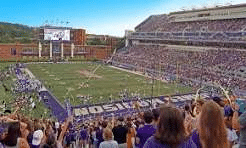

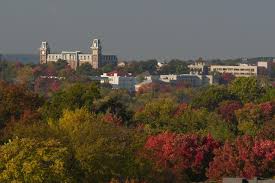
September in Fayetteville does not ease you into football season. It announces itself. The last summer haze hangs over the Boston Mountains. The sky looks soft and sharp at the same time. Morning sun hits the hills and turns concrete into sculpture. On a clear day outside Donald W. Reynolds Razorback Stadium, the air feels different. It slides from sticky to crisp. In that moment, it feels like this corner of Arkansas might be the most beautiful place college football is played.
Is This the Last Great College Football Town?
The Ozark Mountains do not wait politely in the background. They lean in close. Fayetteville sits in its folds, a college town stitched between ridgelines and ravines. Pockets of national forest press against the edge of town. Creeks cut through rock. Bluffs catch the evening light. You can grab coffee on Dickson Street and reach a trailhead before the cup cools.
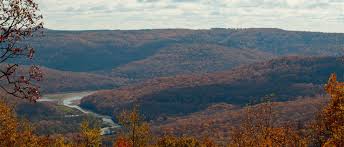
Pavement gives way to birdsong and stone under your shoes. South of town, the Boston Mountains rise into the roughest country in the region. The Pig Trail twists along cliffs and drops into deep, shaded hollows. To the north and east, the Buffalo and White rivers bend through valleys and past small river towns and cabin lights.
By almost any measure, this is a beautiful part of Arkansas and of the nation. That beauty sits right at the center of the tension now.
College football in 2026 feels more national, more transactional, more corporate than ever. Schedules bend to television windows. Kickoff times move for programming needs. Rosters churn like free agency. Logos travels further than stories about the places behind them. Yet here, tucked into the Ozarks, people still come to Fayetteville for something that feels older than all of that. They drive up Interstate 49 through the fog that hangs in the cuts between hills. They wait for the first clean glimpse of the stadium roof above the trees. They walk through campus where grill smoke mixes with the bite of early fall air.
The question hanging over this season is bigger than any single ranking. It is not only whether Arkansas can climb back toward the center of the sport. It is whether a place like this still matters in a game that keeps trying to flatten every campus into the same set.
The Edge of the Neighborhood
On paper, Arkansas still looks like big-time college football. The Razorbacks play in the strongest league in the sport. They run out of a stadium that rises straight from the hillside and feels welded to the landscape. The fan base treats Saturdays as an obligation, not a hobby. The history runs deep enough that older fans can place any big win by coach, by year, and by the feel of the air that day.
The sport’s math has changed faster than its map.
At the very top sits a small band of programs that live in a different financial universe. Another assistant with a massive salary feels routine there. Another football facility that looks like a resort feels expected. Another large ask from a collective feels like the cost of business. Just beneath that tier sits the layer that matters here. Schools that look big time and sound big time and carry themselves like it, but do not have a bottomless well.
Behind closed doors in Fayetteville, the conversations now sound different. The old question remains. How do we win in this league? A quieter question has moved in beside it. Can we afford to fight in every financial battle that this league decides to start?
People in charge know the view from the concourse can still take your breath away on a clear October afternoon. They also know beauty and loyalty do not appear on a spreadsheet.
You see that reality in small, sharp moments. A coach talks less about rebuilding and more about short windows and retention. A veteran lineman enters the portal in December, and everyone understands the real reason. Somewhere else will pay just enough more to make the decision feel simple. Staff meetings turn into roster math and triage. Coaches ask who they want. Then they ask who they can realistically keep when every player sees the same headlines and the same offers.
If this season bends the wrong direction, with a couple of late losses and an ill-timed injury, and one more winter where the wrong names vanish from the depth chart, the decision in front of Arkansas will not just concern play calling. It will concern appetite and identity. Is the university still willing to pay what the current version of this league demands? Or does it slowly accept a future where the hills are just as pretty, yet the games beneath them slide a step further from the center of the national story?
What happens in Fayetteville does not stay in Fayetteville. It draws a line for every program that believes it belongs on the main stage but feels the floor moving under its feet.
The Rest of the Country Is Closer Than It Thinks
Fayetteville works as a lens because it sits right where power and vulnerability cross. Big enough to feel national. Grounded enough that the strain shows.
Farther down the ladder, in leagues now tagged as non-power, the stakes look different but rhyme with this place. Those programs do not have the Ozarks as a calling card. They do not carry the most famous logo in the sport across the fifty. They do have a choice.
Some lean into the role of development hub. Come here. Get on the field early. Grow with your class. When you are ready, decide if you want to chase a bigger stage. Others push back against that idea. They try to build cores that stay long enough to leave a mark you can still feel a decade later. They tell players and fans that sticking around can itself be a bet on the future.
In that context, a nine-win season with a veteran offensive line and a packed home crowd becomes more than a nice year in the media guide. It becomes proof. Proof that you do not have to live at the very top to matter deeply to your place. Those campuses may not have Fayetteville’s hills or its spotlight. They are asking the same hard question. Can a strong sense of location and community still tilt the field, even a little, in a sport tilted toward the largest brands?
If they pull it off, they widen what big time can mean. If they cannot, they send a warning up into these hills. This is what happens when the game stops rewarding roots and only rewards reach.
The Courage To Stay Put
Underneath all of this sits a human story. Coaches and players are trying to build something lasting in a world that no longer trusts the word lasting.
The head coach, in his forties, remembers selling redshirts and four-year plans and the idea of growing into a program. Now he must recruit his own locker room every winter. The position coach who once watched the same guard grow from raw freshman to grizzled senior now meets three different starting guards in three years. The sales pitch used to sound simple. Come here and become part of us. Now it often sounds like this. Come here, and if you blow up, you will have options.
In that world, the most radical act is staying.
Maybe it is a third-year starter who hears about more money and more exposure in another jersey. He thinks about Sunday drives through the Ozarks with the windows down. He thinks about that first cool night game when the sound rolls up into the dark and seems to hang there. He thinks about the same usher at the same gate and the same faces along the rail. He decides one more autumn in Fayetteville is worth more than a slightly bigger deposit.
Maybe it is a coordinator with a steady offer to move. He looks at the roster and the high school map and the way this state carries its team. He decides that the ceiling here sits higher than people around the country assume. Maybe it is a group of donors who stop chasing the splashy one-year fix. They choose instead to keep an entire position room together. They tell a handful of players that if they stay together, this town will stand behind them in ways that do not fit into a graphic.
Those choices will not lead to highlight shows. They will not appear in neat lists of winners and losers. By November they might be a difference between a team that frays and a team that tightens. They might mark the line between a program that simply exists inside college football and a program that still feels stitched into the place it represents.
The scoreboard will still drive most of the talk. Somewhere, a coach will ride a hot month into a new contract. Otherwise, another will lose his job before the leaves finish turning. Someone will lift a trophy under a closed roof as confetti falls and cameras crowd the podium.
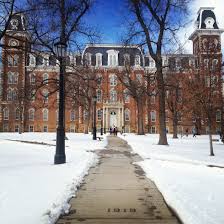
Then winter will return to the Ozarks. The last home game will end. Noise will drain from the stadium and spill into parking lots and headlight streams on the interstate. Cold air will settle into the hollows. Trails will grow quiet again. Fayetteville will slip back into the slower rhythm between semesters and between seasons.
That is when this year’s verdict really begins to form. Not in a ranking, but in whether a place like this still feels connected to the sport it gives so much of itself to. Whether people driving up through the fog next September still believe that the view from the hill and the walk to the gates and the roar that echoes off the ridges add up to something the wider game cannot afford to lose.
If college football wants to keep claiming that it is different, that it still belongs to campuses and communities and not only to contracts, it needs towns like Fayetteville to matter. Not as scenic backdrops. As evidence. Evidence that beauty and specificity, and loyalty still count inside a sport obsessed with size and reach.
The rest of the country may not see that clearly yet. It will. Because what happens in this part of Arkansas in 2026 does not stay here. If the hills in Fayetteville cannot hold, if even a place this rooted becomes expendable, every other town that has ever wrapped itself around a stadium will feel the tremor. And every writer who ever tried to tell the story of a place through a team will know exactly where the fault line ran.