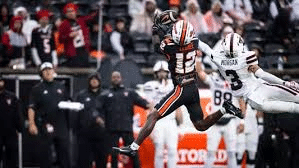

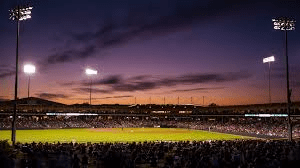
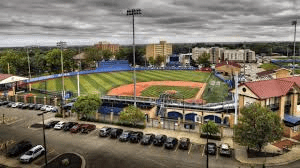
Arkansas fans didn’t just lose a 5–3 game in Kansas’ regional. They lost one of their favorite national talking points. For days, a loud slice of the fan base turned Kansas’ home stadium into content—mocking the bleachers, sneering at the sight lines, and framing the entire regional as an insult to “real” college baseball venues like Baum–Walker and Dudy Noble.
Kansas Just Humbled SEC Arrogance
Then Kansas filled its park, beat Arkansas, and left the Razorbacks staring at a noon elimination game against Northeastern just to earn the right to try to topple the Jayhawks twice on Sunday. That isn’t a curse. That’s the sport of handing a proud program a mirror.
When Capacity Trash Talk Goes National
Across the country, fans outside the SEC were watching. They’ve seen this movie before. When an SEC power is on the road, the discourse often shifts from matchups and lineups to facilities and capacity. The suggestion is subtle but unmistakable: if the environment doesn’t look like Fayetteville, Starkville, Baton Rouge, or Oxford, it’s junior varsity. Arkansas fans fell right into that script with Kansas. The Jayhawks weren’t framed as an emerging program; they were framed as a punchline. “High school park.” “Cute little host.” “Call us when you can seat 10,000.” Capacity became a national weapon, a way to delegitimize an entire Regional before a single pitch was thrown.
The irony is that nobody outside SEC country needed a reminder that Arkansas is big-time. The Hogs’ brand is already national. Everyone knows Baum is a cathedral, knows the Razorbacks draw, knows the SEC is a machine. The arrogance didn’t elevate Arkansas; it alienated everyone else. When the bracket dropped, national attention drifted away from “Can Arkansas make another run?” to “Here go SEC fans again, pretending nobody else deserves a stage.” The story stopped being about baseball and started being about behavior.
Kansas Answered In Win
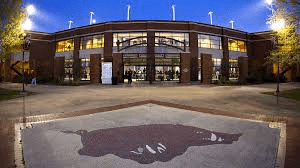
Kansas’ answer cut through that noise the only way that matters. First, the fans showed up. For a program that rarely gets national oxygen, the opportunity to host was treated like a once-in-a-generation event. Whatever the capacity number was, Kansas filled it. You didn’t see empty rows and disinterested spectators. You saw a crowd that understood its moment and leaned into it. That mattered far more on national television than whether the place could match Baum seat for seat. Viewers saw a community that cared, not a meme.
Then the team backed it up. A 5–3 final isn’t a fluke scoreline; it’s exactly the kind of tense, playoff-style game where details and composure separate winners from losers. Kansas didn’t need a cavernous cathedral to validate its bid. It needed timely hits, solid pitching, and enough defense to keep Arkansas from doing what Arkansas usually does. It got all three. That’s what people remember across the country: not the jokes, not the screenshots of bleachers, but the fact that when it was time to perform, the so-called “small-time” host took down one of the sport’s behemoths on its own turf.
Arkansas Still Talking; The Bracket Doesn’t Care
Meanwhile, Arkansas is now in the exact position national critics of SEC arrogance love to see: no talk, only tasks. The Razorbacks must beat Northeastern at noon just to get another shot at Kansas, then beat the Jayhawks twice to advance. No capacity argument can help with that. No “real ballpark” line that changes the realities of an elimination bracket. Outside Arkansas, that’s the piece that resonates. Programs all over the map know this feeling: getting punched early in a regional and having to grind their way out while other fan bases dance on their grave. The difference is that most of those fan bases don’t spend the week beforehand insisting the other guy didn’t deserve to host.
If Arkansas pulls it off, nobody will be talking about stadium size. They’ll be talking about grit and depth and a team that took the longest, hardest path out of a regional it was supposed to control. If Arkansas flames out before even seeing Kansas again, or loses one more to the Jayhawks on Sunday, the conversation shifts from “How is that place hosting?” to “How did we let that opportunity slip?” Either way, it won’t be the seating chart that gets remembered. It’ll be the final scores.
This Isn’t a Curse. It’s Consequences.
Nationally, Arkansas fan behavior in this moment is a case study in how quickly legitimate pride can turn into counterproductive entitlement. There is nothing wrong with believing your program sets the standard. Arkansas has earned that belief. SEC baseball has earned that belief. The problem comes when that standard is weaponized to dismiss and diminish everyone else, especially in a sport that claims to love its underdogs and upstarts. You can’t celebrate Cinderella stories in Omaha while trying to slam the door on anyone who doesn’t look like you in May.
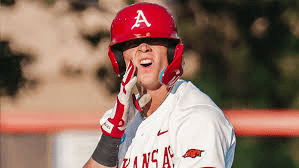
There is no curse in Lawrence. There’s no cosmic punishment for Arkansas. There is only baseball, a tournament that routinely humbles the proud and elevates the hungry. If Arkansas storms through Sunday, beats Northeastern, and then knocks off Kansas twice, the narrative will shift again—to resilience, toughness, and a fan base that backed up its talk the hard way. If not, Kansas’ 5–3 win and whatever comes after it will stand as proof that you can’t bully your way out of a bracket with bleacher jokes. For the rest of the country, the lesson is clear and a little satisfying: capacity doesn’t swing a bat, and arrogance doesn’t throw strikes. For Arkansas fans, the lesson is harsher but ultimately healthy. You can keep your pride. You can keep your standard. But you might want to retire the “high school park” routine the next time a so-called small program gets a big moment, because the seating chart can be loud in March, but in June, the only thing anyone really hears is the final score.