
For two years, Arkansas had the kind of athlete who changes how a campus sees an entire sport. Joscelyn Roberson arrived in Fayetteville as a world team gold medalist, a Paris 2024 Olympic alternate, and the first U.S. national team member and world champion ever to compete for the Razorbacks, and for a moment, she made gymnastics feel like the most nationally relevant brand in the entire athletic department. When she entered the transfer portal and ultimately committed to Georgia, the shock in Arkansas circles was understandable.
World Champ Leaves: What Joscelyn Roberson Just Told Us About College Gymnastics
But the bigger story is what her decision reveals about where college gymnastics is headed. We believe the direction is trending toward a future where elite stars move strategically, Olympic cycles overlap with NCAA careers, and traditional powers regain ground by pairing historic brands with the right individual headliners.
From Statement Commitment to Program Centerpiece
When Roberson first chose Arkansas in 2022, after visits to Arkansas, Michigan, and Oklahoma, it was billed as a breakthrough recruiting win. She came out of World Champions Centre, Simone Biles’ home gym, and Arkansas leaned hard into the historic nature of her signing, promoting her as the first world champion to represent the program. Under Jordyn Wieber, the message was clear: the Razorbacks did not just want to be a solid SEC team; they wanted to prove they could build around the same caliber of elites that usually landed at Oklahoma, Florida, or UCLA.
On the floor, Roberson justified that ambition immediately. She set a freshman all-around program record with a 39.625. She became a two-time All-American, qualifying to nationals individually and then anchoring a Razorback squad that reached the national semifinals and finished No. 7 in the country in 2026. With 9.975 highs on beam and floor and a season full of 9.950-plus scores, she functioned like a franchise player in a sport that rarely gives rising programs that kind of star.
Her presence changed how Arkansas was perceived well beyond Fayetteville. Coverage from national outlets focused on how she was balancing NCAA competition with an elite comeback, painting Arkansas as a legitimate home for athletes who wanted both college glory and a shot at more world medals. The Razorbacks could suddenly walk into living rooms and say they were a place where a current world champion could thrive, which is not a sales pitch many non-bluebloods can make.
The Transfer Heard Around the Gymnastics World
That is what made her portal entry in April 2026 reverberate so loudly. When Roberson thanked “Hog Nation” for its unwavering support and said it was time to close that chapter and move on, it confirmed that even a seemingly perfect pairing between an elite gymnast and a rising program is not guaranteed in this new era. Instantly, she became the biggest name available, with analysts noting that she owned 9.9-plus highs on all four events and would transform whichever roster she joined.
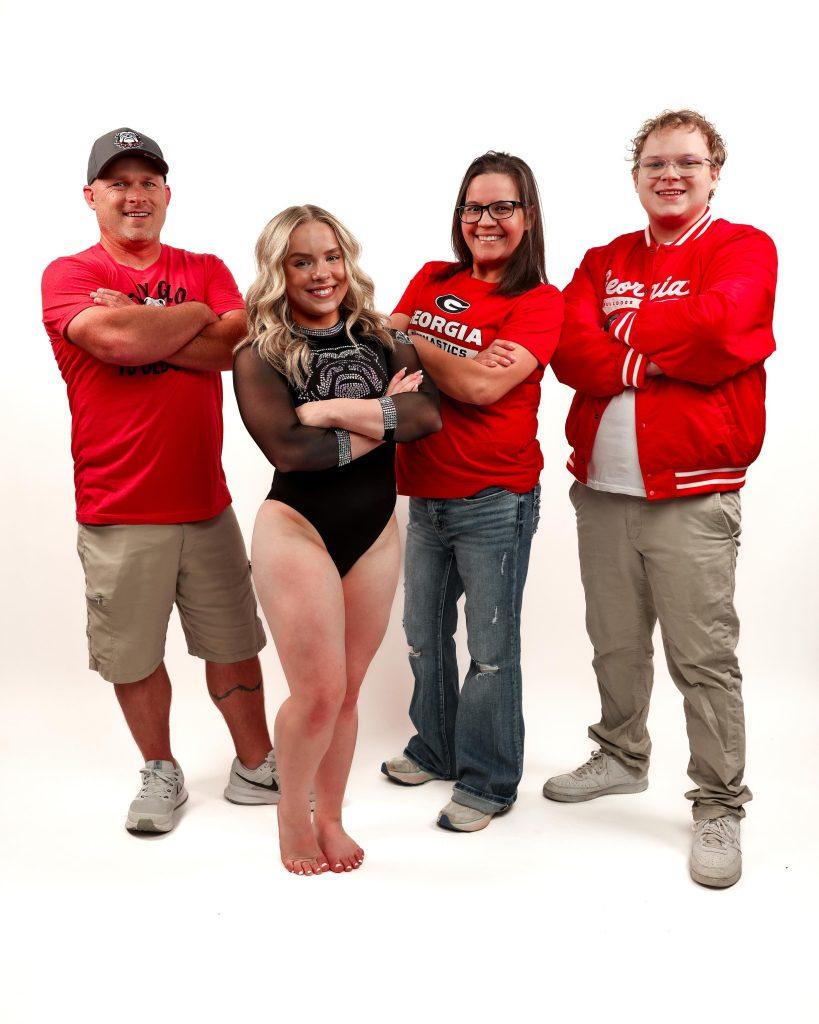
Her eventual decision to pick Georgia over Florida and UCLA framed the move as a calculated step rather than an emotional reaction. She described Georgia as “a good mix of all of the schools,” citing relationships, coaching, academics, and, most importantly, how comfortable she felt there, to the point of thinking, “this is where I’m meant to be.” The presence of head coach Cécile Canqueteau-Landi, who has deep elite ties from Roberson’s club days, only solidified the sense that Georgia offered the cleanest alignment of NCAA title chances and Olympic-level development.
For Georgia, the implications are obvious. The GymDogs, already a ten-time national champion and coming off a top-six finish, just added a two-time world medalist whose strengths line up perfectly with what they need to chase Oklahoma, LSU, and Florida at the top of the sport. Roberson’s elite beam work addresses Georgia’s most glaring weakness, and her track record in the all-around instantly raises their floor and ceiling for 2027.
What Roberson’s Choice Signals About the Sport’s Future
For Arkansas, the lesson is more complicated than simply losing a star. The Razorbacks became a case study in what it means to be an emerging brand in a sport that is suddenly more fluid and more competitive than ever. They proved they could sign and showcase a world champion, they rode her to a national semifinal and a top-10 finish, and then they watched as she used the same freedom that brought her to Fayetteville to seek an even tighter fit between coaching, culture, and long-term goals.
Zooming out, Roberson’s decision is less an indictment of any one staff and more a snapshot of how modern college gymnastics operates at the crossroads of three forces: instant eligibility, Olympic-level aspiration, and the gravity of legacy brands. Her stated goals are clear: she wants to win a national championship and then pursue the Olympics. To chase both in the same four-year window, it makes sense that she narrowed in on a program with proven championship hardware, elite-experienced coaches, and enough roster depth to give her a real shot at that NCAA title.
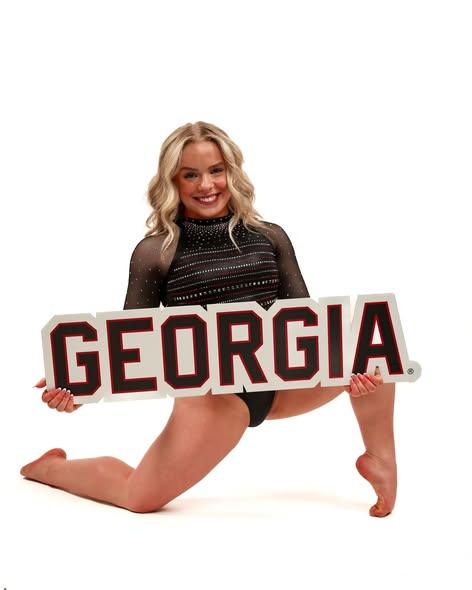
Georgia’s ability to pair its history with a coach like Canqueteau-Landi and a transfer like Roberson is a blueprint for how old powers can reassert themselves. Arkansas’ ability to land Roberson in the first place, then elevate itself into the national semifinals with her as a centerpiece, is a blueprint for how non-bluebloods can get into the conversation at all.
What Arkansas Could Not Finish
In that light, the fact that Roberson did not win a national championship at Arkansas looks more like a timing issue than a failure. The Razorbacks were climbing but still building the depth needed to survive an era in which title contenders trot out multiple Olympians in every rotation. By the time the rest of the roster might have caught up to her level, her own clock—college eligibility, the Los Angeles 2028 Olympic cycle, and long-term academic plans—was ticking loudly enough that staying put made less strategic sense than moving.
That is the hardest reality for Arkansas fans to sit with. Roberson was good enough to be the face of a championship-caliber team, but Arkansas was still becoming one. She helped prove the Razorbacks could recruit and develop a gymnast at the very top of the sport. Yet, her departure is a reminder that attracting elite talent and keeping elite talent are now two very different challenges.
The lasting takeaway is that Roberson’s journey from Fayetteville to Athens is not just a transfer story. It is a signpost for where college gymnastics is going next. The sport is more visible, more mobile, and more intertwined with the Olympic pipeline than ever before, and the programs that thrive will be the ones that can both attract and keep athletes whose ambitions stretch from NCAA podiums all the way to the Olympic stage.