
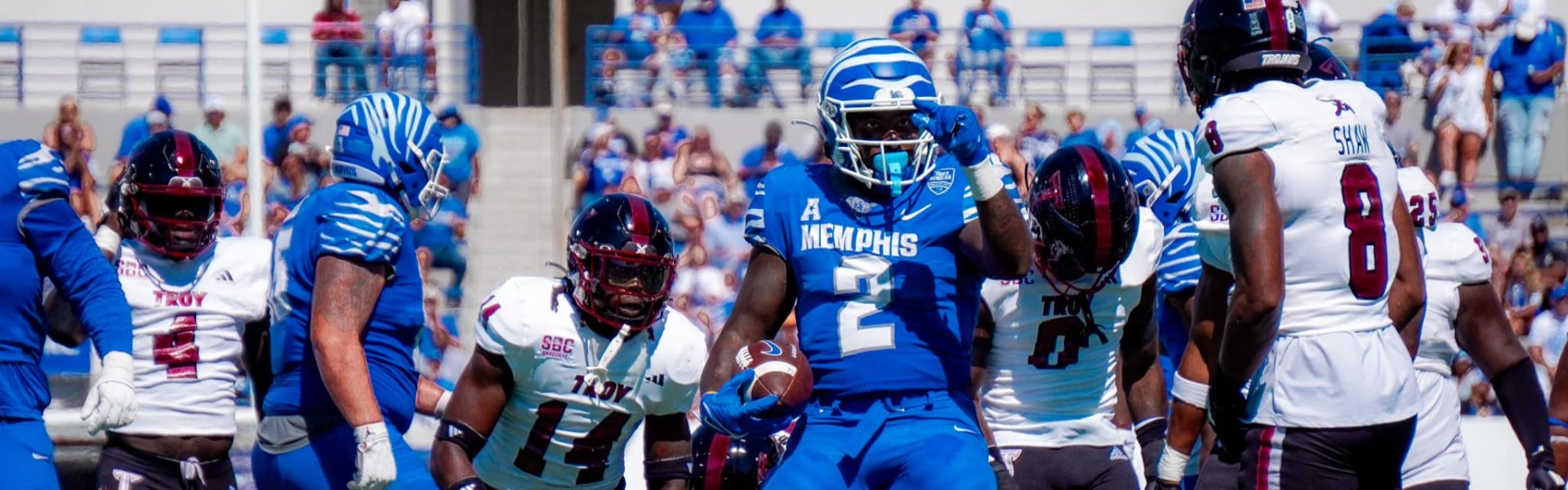
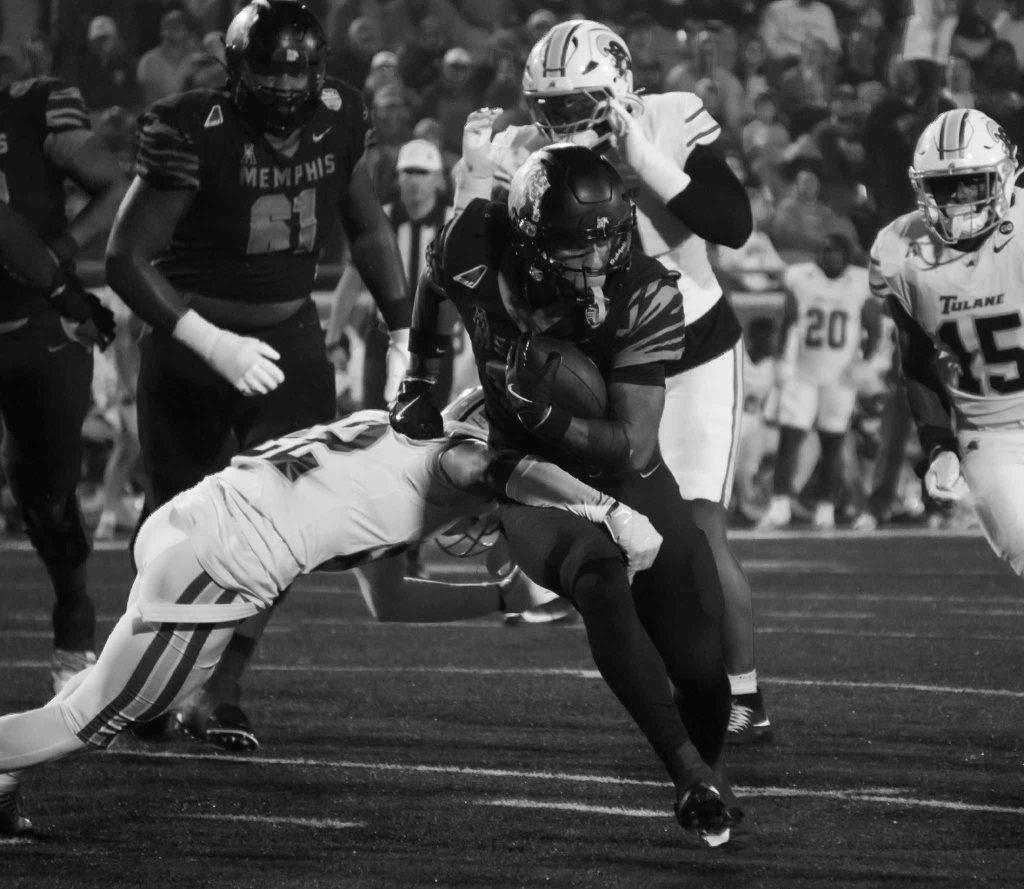
From DeAngelo Williams to Tony Pollard, Memphis has built a running back factory few programs can match.
Memphis Didn’t Just Produce DeAngelo Williams: Inside the Tigers’ Stunning Running Back Pipeline
For a program that has spent much of its football history fighting for attention, respect and a place in the national conversation, Memphis has built an impressive tradition at one position: running back.
The Tigers have never had the luxury of simply recruiting like Alabama, Texas or Ohio State. Memphis has had to identify talent early, develop it creatively and give playmakers enough room to turn opportunity into production. At running back, that formula has worked for decades.
The story did not begin with DeAngelo Williams, even though he remains the face of it. It did not begin with Tony Pollard taking punts to the house, Darrell Henderson shredding defenses at an absurd 8.2 yards per carry, or Kenneth Gainwell becoming one of the most versatile offensive players in college football.
It began much earlier. From the blue-collar runners of the Memphis State era in the 1980s to the transfer-fueled backfields of today, Memphis has steadily produced backs with toughness, versatility, explosive ability and professional upside. The names have changed. The offenses have evolved. The conference logos have changed more than once.
But the position has remained a program strength.
Before the Spotlight, Memphis Built the Foundation
The 1980s and 1990s were not exactly glamorous years for Memphis football. The Tigers were often trying to establish traction as an independent program, and national exposure was limited compared with what would come later. Still, the running back room consistently provided reliable production.
Jeff Womack was one of the important early pieces of that lineage, rushing for 1,764 career yards from 1982 through 1986. Wayne Pryor followed with 1,924 yards from 1986 through 1989, bringing a more versatile skill set that included 69 career receptions. Those numbers may not leap off the page in the modern era of high-tempo offenses and extended schedules, but they mattered because they represented durability and continuity during a difficult stretch for the program.
Then came Larry Porter. Before Porter became a major recruiter, assistant coach and eventually Memphis’ head coach, he was one of the Tigers’ most dependable runners. From 1990 through 1993, Porter rushed for 2,194 yards and 20 touchdowns. He remains among the program’s career leaders and was the kind of player who reflected the football identity of that time: physical, dependable, and willing to carry the offense when needed.
Porter’s 206-yard rushing performance against Arkansas State as a freshman remains part of Memphis lore. It was an early sign that the Tigers could still find and develop feature backs even when the program was not regularly competing on national television.
The late 1990s continued that trend. Gerard Arnold rushed for 2,378 yards from 1997 through 1999, while Teofilo Riley piled up 1,716 yards during the same general period. The names may not carry the instant recognition of later Memphis stars, but they are essential to understanding the pipeline.
Memphis did not suddenly become a running back school in the 2000s. The Tigers had been building toward it.
DeAngelo Williams Changed the Standard Forever
Every program has a player who changes the way outsiders see it. For Memphis football, that player was DeAngelo Williams.
Williams arrived in 2002 and turned into one of the greatest rushers in college football history. Over four seasons, he ran for 6,026 yards and 55 touchdowns. Those numbers are not just Memphis records. They belong in the broader national conversation whenever the sport’s all-time great college running backs are discussed.
He was powerful enough to run through defenders, elusive enough to make people miss in space, and fast enough to turn routine plays into game-changing moments. Most importantly, Williams was not a one-season wonder. He was productive year after year, carrying the Tigers through an era in which the program was still trying to become a consistent winner.
Williams gave Memphis something beyond statistics: credibility. He proved a star running back could come to Memphis, dominate at the highest level of college football, and translate that success to the NFL. The Carolina Panthers selected Williams in the first round of the 2006 NFL Draft, and he went on to become one of the most productive players in franchise history.
That is why Williams remains the standard. Darrell Henderson may have been more efficient on a per-carry basis. Tony Pollard may have become one of the NFL’s most dynamic all-purpose backs. Kenneth Gainwell and Antonio Gibson may have brought modern versatility to the position. But Williams built the foundation for all of that attention.
The Tigers also had strong backs around and after the Williams era. Joseph Doss rushed for 2,339 yards from 2004 through 2007. Curtis Steele followed with 2,462 yards and 22 touchdowns in only two seasons, proving Memphis could still produce a featured runner after Williams moved on.
Brandon Hayes later added 2,385 career yards, while Doroland Dorceus rushed for more than 2,000 yards and scored 24 touchdowns. Memphis was not always nationally prominent during those years, but the position continued to produce. Then the program reached another level.
The Modern NFL Assembly Line
The 2016 through 2019 stretch may be the best evidence that Memphis built a real running back pipeline rather than simply landing a few talented players.
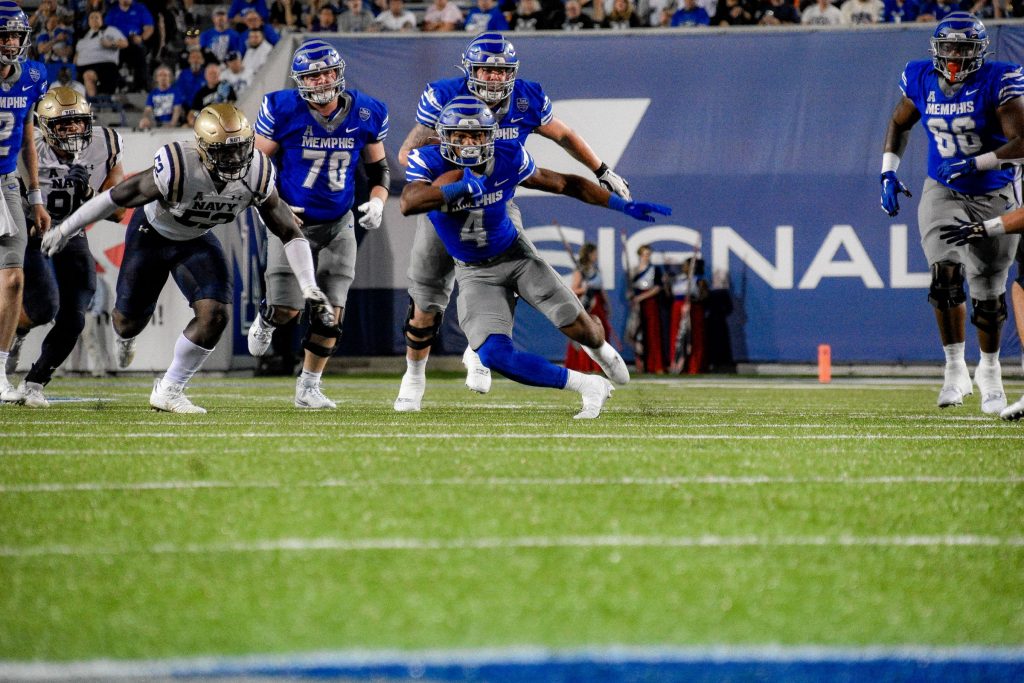
Darrell Henderson, Patrick Taylor Jr., Tony Pollard, Kenneth Gainwell and Antonio Gibson were all part of the broader Memphis offensive ecosystem during that span. That is not normal depth for most Group of Five programs. It is not even normal for many Power Four schools.
Henderson was the statistical headliner. He rushed for 3,545 career yards and 36 touchdowns while averaging an astonishing 8.2 yards per carry. Henderson could score from anywhere on the field, and his blend of burst, vision and long-speed made him a nightmare for defenses already worried about Memphis’ explosive passing game.
Taylor supplied the bruising complement. At 6-foot-3 and more than 220 pounds, he gave the Tigers a downhill presence near the goal line and in short-yardage situations. He finished with 2,884 rushing yards and 36 touchdowns, showing that Memphis could win with power as well as speed.
Pollard was different. He did not accumulate the same rushing totals as Henderson or Taylor because the Tigers had so many weapons, but his versatility made him special. He was a dangerous runner, receiver, and return man, eventually becoming an NFL Pro Bowl selection.
Gainwell stepped into the spotlight in 2019 and immediately looked like the next great Memphis offensive weapon. He rushed for 1,550 yards, added 662 receiving yards, and demonstrated the type of three-down skill set NFL teams covet.
Gibson’s Memphis role was especially intriguing. Listed primarily as a receiver, he flashed the positionless ability that later made him an NFL running back and weapon in the passing game. He embodied what Memphis had become: a place where offensive players could develop beyond traditional positional labels.
The 2020s have brought a new challenge—constant roster turnover. The transfer portal has made it harder for programs like Memphis to hold elite running back rooms together for three or four years.
Yet the Tigers have continued to find answers. Blake Watson exploded for 1,152 rushing yards and 14 touchdowns in 2023 while adding 480 receiving yards. Mario Anderson followed with 1,362 rushing yards and 18 touchdowns in 2024, proving Memphis could still find a featured runner capable of carrying an offense.
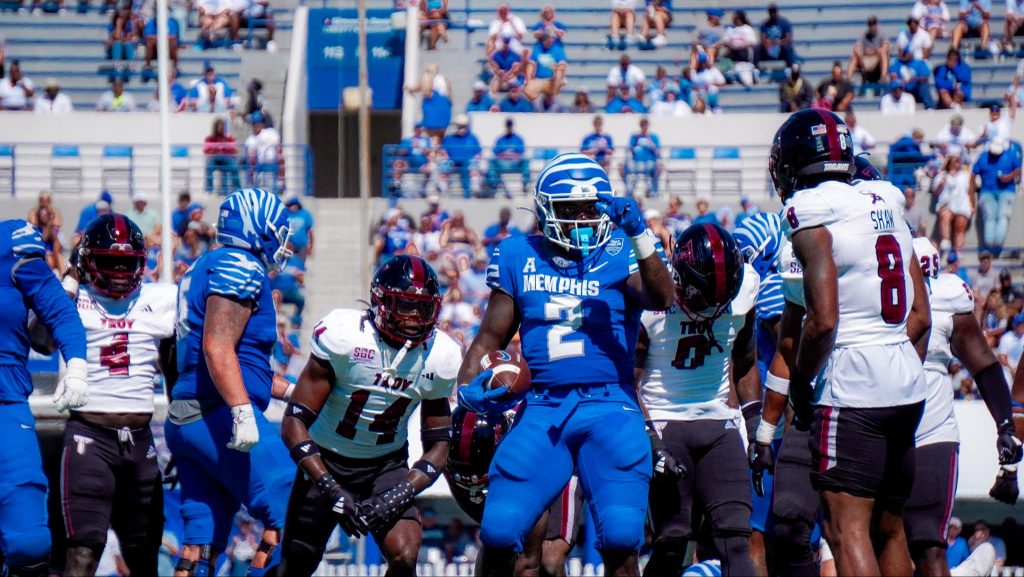
Now, the 2026 room has a different look but familiar potential. Memphis native Dallan Hayden headlines a rebuilt group that includes transfers Jaylin Carter and Manny Covey, along with younger backs Eric Perry, Jordan Thompson and Isaiah McGill.
The next DeAngelo Williams may not be on that roster. It is unfair to place that kind of expectation on any player. But the history says Memphis will keep looking. More often than not, the Tigers find someone.