
Fewer fans are buying what WWE is selling this WrestleMania season, and that should scare a company that has spent the last few years treating stadium sellouts like a foregone conclusion. When the “Show of Shows” suddenly looks more like a hard sell, and one of the key power players behind the boom quietly disappears from view, you are not just talking about a cold ticket market; you are talking about a cold spotlight on the people running the circus.
Where’s Nick Khan, and Why Is WrestleMania Struggling to Sell Out
Ticket Troubles on the “Grandest Stage”
WrestleMania is supposed to be automatic. You flash the logo at Royal Rumble, line up a couple of dream matches, and the rest usually takes care of itself. Tickets fly, travel packages vanish, resale prices climb, and by the time the go‑home show hits, the only question is which records WWE is going to break. This year, the machine is grinding harder than anyone in Stamford is comfortable admitting.
The seats are not empty, but the urgency is different. Instead of instant sellout headlines, there have been lingering pockets of availability, soft spots on seating maps, and price drops on the secondary market that you do not normally associate with WrestleMania weekend. Some of that is economics, some of it is fans doing the math on flights and hotels, but some of it is on the product itself. The card is strong on paper, full of star power and title bouts, yet it has lacked that one runaway, emotional story that makes people say, “I have to be in the building for this.”
There is also a saturation problem WWE helped create. Stadium shows used to be reserved for WrestleMania and maybe one or two other tentpoles. Now, Royal Rumble, SummerSlam, and international premium events all live in football venues, and all get promoted like world‑shifting spectacles. When everything is epic, nothing feels truly singular. Fans who once circled WrestleMania as the obvious “save up and go” trip now have options, and some are choosing a different weekend to splurge on.
Layered over all of this is a quieter, but no less important, storyline, the absence of Nick Khan from the public narrative. For years, he has been the executive face of WWE’s expansion, the person talking up record gates, monster rights deals, and the strategy of turning almost every major show into a stadium event. Now, as the flagship struggles to keep pace with its own hype, it has faded from view. Fewer on‑screen mentions, fewer public appearances in the build‑up, less of the polished, confident presence that used to be a staple whenever business was booming.
In wrestling, absence is never just absence. It becomes part of the story whether you want it to or not.
The Case for a Nick Khan Comedy Hunt
That is where creativity and self‑awareness could actually help. This is a business that has always been at its best when it is willing to turn real‑world awkwardness into on‑screen gold. Think back to WrestleMania X, when Leslie Nielsen wandered through a series of deadpan vignettes, “investigating” the case of the missing Undertaker. It was corny, it was ridiculous, and it worked because it embraced something fans were already buzzing about and pushed it into full parody.
You could make a compelling case for doing something similar now, a tongue‑in‑cheek “Where’s Nick Khan” mini‑mystery running through WrestleMania. Picture a clueless but determined investigator roaming backstage and the corporate suite level, notepad in hand, interrupting production meetings, grilling talent, peering into luxury boxes. One week, he corners Triple H in Gorilla, asking if Khan is hiding in a skybox, counting ticket stubs. Another week, he pesters a harried ticketing manager about secret surge‑pricing strategies designed to move the last few thousand seats.
The payoff could be as simple as a final skit where the detective throws dramatically open a door, only to find Khan standing calmly at the monitors, headset on, producing the show like he has been there all along. It would let WWE wink at the chatter about ticket sales and executive visibility, acknowledge the disconnect between marketing and reality, and remind fans that, at its best, this company knows how to blend the real and the ridiculous.
On its own, a clever series of skits would not solve the core problem. WrestleMania still lives and dies on the strength of its main events and its stories. If the build does not make the matches feel must‑see, if the stakes do not feel larger than life, no amount of comedy is going to magically fill every seat in a football stadium. What a bit like that can do, though, is show fans that WWE is paying attention, that it is willing to laugh at itself and to engage with the conversation instead of pretending everything is perfect.
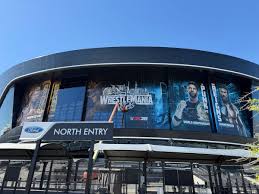
Right now, the messaging says this is the biggest WrestleMania of all time, while the market is sending a more complicated signal. Leaning into that tension, even with a smirk, would be a step toward rebuilding trust with an audience that has never been more informed, more vocal, or more selective. It would be a small way of saying, “We see what you see,” without turning the show into a referendum on spreadsheets.
WWE sits at a crossroads. It has never had more money, more mainstream reach, or more corporate muscle behind it. It also has a fanbase that is more data‑literate, more online, and more willing to keep its wallet closed if the build does not feel special. This WrestleMania’s softer demand is not a crisis, but it is a warning light. Ignore it, and the gap between the company’s hype and the crowd’s response will only widen.
Whether Nick Khan steps back into the spotlight with a sly grin or remains the quiet architect behind the curtain, the lesson from this year is clear. You cannot rely on the WrestleMania name alone forever. You have to make the road to the show feel irresistible, and when the ride gets bumpy, it never hurts to show fans you are in on the joke, not the punchline.