
The 2026 Chicago White Sox have forced a question no one on the South Side expected to ask this soon after 121 losses: “Are the down days over?“
From Rock Bottom To Relevance
In 2024, the White Sox didn’t just lose; they rewrote the record book in all the wrong ways, dropping 121 games for a modern‑era MLB record and stacking humiliating losing streaks along the way. They followed that with a 60‑102 mark in 2025 under first‑year manager Will Venable, their third straight 100‑loss season and the clearest sign yet that the previous “rebuild” had cratered.
Yet by a third of the way into 2026, the standings tell a completely different story. The Sox sit at 38–32 (.543), right in the AL Central race and one of only a handful of American League teams with a record at or above .500. Projections back in March had them pegged around 67–95 with barely more than a one‑percent playoff chance, so the simple fact that they’re in the mix is itself an overachievement.
An Offense That Flipped A Switch
The biggest on‑field driver of the turnaround is how radically the offense shifted after a slow start. As FanGraphs noted, the Sox opened 2026 in familiar misery, skidding to 6–13 while hitting just .195/.286/.316 – dead last in MLB by most measures – and scoring barely 3.2 runs per game. Since that point, they’ve morphed into a completely different lineup, batting .260/.343/.451 with 73 homers and a 121 wRC+, and posting a 28–18 (.609) record over that span – the second‑best mark in the AL behind only the Yankees.
That surge isn’t being driven by one hot bat. Munetaka Murakami has rightfully drawn headlines with 20 homers and a .936 OPS in his first 55 games, but he’s part of a larger wave. Colson Montgomery has produced a .792 OPS with 13 homers and roughly 2.0 WAR, while Miguel Vargas adds an .837 OPS, 12 homers, and nearly 2 WAR from third base. When Andrew Benintendi is slapping RBI doubles and younger names like Sam Antonacci and Chase Meidroth are leaving the yard in the same inning – as in the six‑run sixth that buried the Dodgers on June 14 – you’re seeing depth, not a solo act.
A Work-In-Progress Staff That’s Doing Just Enough
The pitching is still more “surviving” than “dominating,” but even here, there are real signs of change. One starter has quietly given them a 2.04 ERA with 66 strikeouts and just 12 walks in 61⅔ innings, good for 2.3 WAR and the kind of stabilizing presence this rotation simply hasn’t had since the first version of the rebuild peaked. In the bullpen, a late‑inning arm with a 2.36 ERA and 39 strikeouts in 26⅔ innings has helped lock down the kinds of tight games the Sox used to routinely cough up.
It’s still a soft spot on the profile. FanGraphs points out that the rotation and staff overall lag behind the offense, and their playoff odds models remain skeptical, giving Chicago only about an 18 percent shot at October as of early June. Even so, when you compare that to the team that was getting blown out so often in 2024 that losing streaks felt infinite, “average‑ish but competitive” is real progress.
The Numbers Underneath The Record
Beyond wins and losses, the underlying trends support the idea that this isn’t just a short‑term sugar rush. After that 6–13 start, the Sox ripped off a 28–18 stretch, giving them the AL’s top record (21–11) since May 9. They’ve gone 12–5 against divisional rivals like the Tigers, Twins, and Royals, feasting on the Central instead of being the division’s punching bag. And they’re no longer helpless against quality: StatMuse has them at 33–29 against winning teams, which is the kind of split you see from legitimate clubs, not lottery feeders.
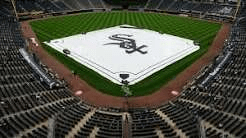
They’ve also passed some important vibe checks. The walk‑off home opener win over Toronto in front of 33,000 at Rate Field felt like a psychological reset for a fanbase that had spent three summers in survival mode. On June 14, a 6–4 win over the Dodgers – their fourth victory in five games, and the capper to a homestand that saw them take series from Atlanta and L.A. – moved them back into a first‑place tie with Cleveland in the division. Afterward, players and staff echoed the same sentiment: those days of walking into the park expecting the worst “are kind of over.”

So…Are The Down Days Over?
That’s the question hanging over everything the Sox have done in 2026. On one hand, the case for “yes” is compelling: they’ve gone from back‑to‑back‑to‑back 100‑loss seasons and a 121‑loss nadir to a winning record, top‑tier offense, and legitimate contention in a weakened American League. They’ve beaten good teams, posted one of the best records in baseball over the past month, and shown a lineup that’s young, deep, and still ascending.
On the other hand, the pitching staff is thin, the playoff odds models are still cautious, and the sample size is only a few months long; a bad six weeks could flip the narrative back to “nice blip, same old Sox.” Even inside their own clubhouse, there’s an awareness that the work isn’t finished – that this is a team learning how to win, not one that’s already built to cruise.
Maybe the most honest answer for now is that the worst days are probably over. The 121‑loss humiliation, the endless losing streaks, the fatalistic expectation that every close game will unravel – those feel like artifacts of a previous era. But for the South Side to say the “down days” are truly gone, this group has to do what no White Sox team has really done in the modern era: turn a surprising rise into a sustained run.
That’s the tension that makes the 2026 White Sox so compelling. They’ve already climbed out of the hole. Now comes the harder part – proving they’ve finally built something sturdy enough that they won’t fall back in.