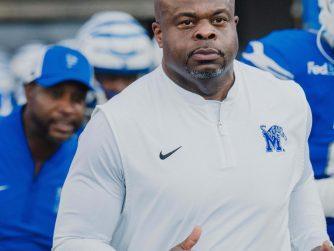



Charles Huff did not speak like a coach content to tread water in the American. He spoke like a man already trying to align Memphis with a bigger future, one that stretches beyond survival in the Group of Six and into the Power Four conversation. At the American Football Media Days, Huff framed Memphis as a program with the resources, platform, and institutional backing to one day stand in a Power 4 league with the same logo, the same president, and the same athletic director still in place.
Memphis to the ACC? The Realignment Case Just Got a Lot More Interesting
That was not a throwaway sound bite. It was a window into how Memphis is selling itself internally, how its football operation is talking to boosters, and how the school is trying to position itself as more than just the best of the rest.

The subtext matters as Memphis does not need another round of vague ambition. It needs alignment between administration, football leadership, and donor energy. Huff’s public posture suggests that alignment is already being built. Athletic director Ed Scott has a direct financial incentive in his deal if Memphis lands in a power conference, and that incentive explicitly includes the ACC alongside the SEC, Big Ten, and Big 12. Scott also chose to keep Memphis in the American rather than jump at a Pac-12 offer, a decision he defended with a hard-nosed breakdown of revenue, travel cost, and long-term viability. When those two threads meet — Huff’s outward confidence and Scott’s strategic patience — the ACC begins to look less like fantasy and more like the cleanest theoretical landing spot if realignment breaks Memphis’ way.
Great Scott, It’s A Clue
Scott’s contract tells part of the story before he even says a word. His memorandum of understanding gives him a one-time $250,000 bonus if Memphis is invited to and joins a conference with an automatic College Football Playoff bid, specifically naming the SEC, Big Ten, ACC, and Big 12. That clause does not guarantee an invitation, of course, but it does show that Memphis hired an athletic director with a mandate that goes well beyond maintenance. The assignment is not simply to manage the department. The assignment is to move it.
The ACC stands out because it makes more sense on paper than the SEC and, in some scenarios, may be a smoother cultural and institutional fit than the Big Ten. Memphis has spent years building the case that it belongs in a bigger room, and the ACC has long lived in the category of plausible reach rather than impossible dream. Scott’s background also matters here because conference relationships and institutional familiarity often shape how schools are perceived in boardroom conversations before formal invitations ever appear. Even without a public roadmap from the ACC, Memphis benefits from having an AD whose job description plainly includes hunting that kind of opening.
Scott’s handling of the Pac-12 situation sharpened that image. When Memphis declined the offer and stayed in the American, Scott did not sell emotion. He sold math. He explained that Memphis was receiving about $9 million from the American, that the projected additional travel burden from the Pac-12 all-sports offer would be about $2.5 million, and that the net gain was too uncertain to justify the move/ He also stressed that everything remained on the table in the American and made clear the school was not going to chase a label at the expense of long-term positioning.That is exactly the kind of posture boosters and power-conference evaluators notice: ambitious, yes, but not reckless.
Huff Didn’t Bluff
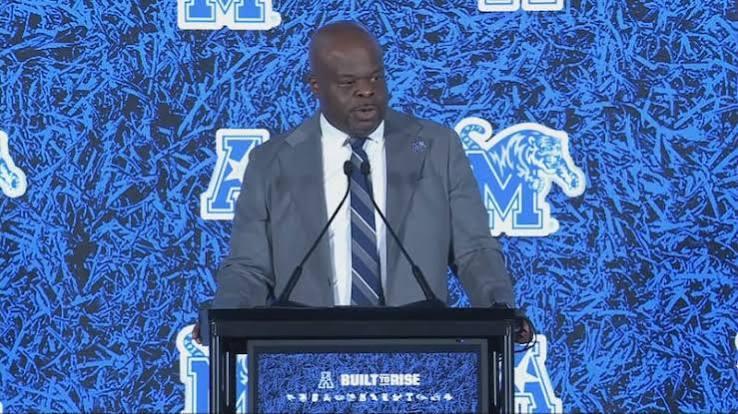
Huff’s comments at media days were striking because they were not limited to roster talk or first-year coach optimism. He described Memphis as a “vehicle” with the resources and platform to grow into the Power 4, then painted a picture of continuity — same logo, same president, same AD, same players — when that moment arrives.
For a coach in his first season, that language does two jobs at once. It rallies the fan base and donor class around a shared ceiling, and it tells prospective players and staff that Memphis sees itself as a program on the rise rather than one waiting to be picked apart.
That matters because Huff’s broader profile makes him a particularly useful messenger for Memphis. He arrived after leading teams to bowl games across five seasons as a head coach, winning a Sun Belt title, and becoming one of the few coaches in a recent cycle to secure a promotion rather than simply survive turnover.
Huff has also shown a deliberate style of communication about culture, line play, and closing the gap in Memphis’ own program messaging. In other words, he is not just selling a dream. He is selling a structure — and boosters are more likely to invest when the pitch sounds organized.
His contract reinforces that Memphis is trying to build in a power-conference direction. Huff’s deal includes an incentive for beating a power-conference opponent, but that bonus disappears if Memphis itself joins a power conference.That detail is revealing. It recognizes the current reality while quietly acknowledging the future goal. Memphis is operating as a school that wants to dominate its level without becoming permanently defined by it.sports.
ACC Makes Most Sense
No available evidence shows the ACC actively moving toward Memphis today, and that distinction matters. A deep dive on plausibility is not the same thing as a report of imminent expansion. But if Memphis is searching for the most logical Power 4 destination, the ACC deserves a serious look because it checks more boxes than most alternatives.
First, the ACC can offer the kind of brand lift Memphis wants without the near-impossibility of forcing its way into the SEC. Second, Memphis brings a metropolitan market, basketball history, football ambition, and an administration clearly willing to invest in access. Third, Scott has already shown he is willing to reject a lateral or messy move in favor of preserving flexibility for a better one. That discipline is essential in realignment. Schools do not get many chances to choose correctly when the music changes.
There is also a practical media case for Memphis. Huff is already talking publicly as though the program should think beyond short-term conference ceilings, and that kind of rhetoric can help keep the school visible in realignment discussions. Visibility alone is not enough, but invisibility is fatal. Memphis needs its coach energizing boosters, its AD managing the long game, and its institution looking stable enough that a future league sees upside rather than desperation.
That is why Huff’s comments landed with more force than the usual July bravado. He was not just hyping a season. He was voicing a strategic ambition Memphis needs everyone to hear — donors, players, rival schools, and any conference office that may someday revisit its map. Scott’s contract says the mission plainly. Huff’s words say the locker room understands it too. If Memphis ever does find its way into the ACC or another power league, the path probably will not begin with a dramatic announcement. It will begin with moments like this one, when the people in charge stop speaking as if the Tigers are trapped where they are and start speaking as if they are preparing for where they intend to go.