
Arkansas’ offensive coordinator has a history of producing points. His present demands a harder conversation about results, loyalty, and accountability. Tim Cramsey’s career explains why Ryan Silverfield brought him to Arkansas. It does not automatically explain why the Razorbacks should remain satisfied with his work.
Tim Cramsey Built a Résumé Worth Hiring. Is It Still Worth Defending?
Before Saturday’s trip to Auburn, Arkansas ranked 125th nationally in scoring at 19.6 points per game—last among SEC and Power Four teams. For an experienced coordinator hired to direct the offense, that is not a minor shortfall. It is the central question surrounding his employment.
How does Cramsey still have the job? His past production and Silverfield’s continued public support help explain it. Whether that confidence remains justified is another matter.
The Coach Behind the Criticism
Cramsey’s career began with the kind of progression that usually earns respect within coaching circles. A former New Hampshire quarterback and long snapper, he started coaching at the high school level before returning to his alma mater in 2003. He coached tight ends and fullbacks, then running backs, then quarterbacks, becoming offensive coordinator in 2009.
Coordinator jobs followed at FIU, Montana State, Nevada, Sam Houston State, Marshall, and Memphis before Arkansas. At Marshall, his 2021 offense averaged 456.8 yards, ranking 16th nationally. His background reflects experience across positions, systems, and levels of competition.
There is a personal foundation, too. An offseason profile described the relationships Cramsey and his wife, Amy, maintained with former quarterbacks, including a group text connecting those players. One former pupil, Kevin Decker, eventually succeeded him as Memphis’ offensive coordinator. Those connections reveal a coach whose influence extends beyond calling plays. They do not settle whether his current offense works.
Why Silverfield Believes in Him
The strongest defense of Cramsey is production, not sentiment. His four Memphis offenses finished among the nation’s top 25 in scoring, averaging 36.3 points across 51 games. His final Tigers offense averaged 420.7 yards in 2025.
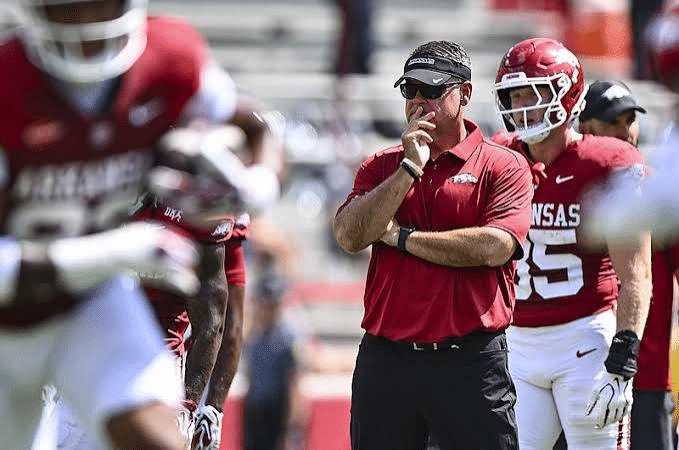
Silverfield witnessed that work firsthand. Trusting a coordinator who repeatedly produced for him is understandable. Earlier this month, he reiterated that Cramsey handles most in-game play-calling while emphasizing shared responsibility for the offense. He also defended Cramsey’s ability to put Arkansas in favorable situations.
That explains why Cramsey remains employed: the head coach continues to believe in him. It does not establish that the belief is correct. Familiarity gives Silverfield a deeper understanding of his coordinator. It also makes an objective evaluation especially important.
Where Confidence Becomes a Liability
The issue is accountability. A résumé earns an opportunity. Current performance determines whether the arrangement should continue.
Arkansas’ scoring struggles demand specific answers. Is protection limiting the offense? Are designs creating opportunities players cannot execute? Is the system asking too much of the available personnel? Are adjustments arriving quickly enough? Those possibilities describe different problems requiring different solutions.
Calling everything an execution problem would be inadequate. Calling every failed possession a play-calling problem would be equally lazy. The staff must identify what is failing and demonstrate that its corrections work.
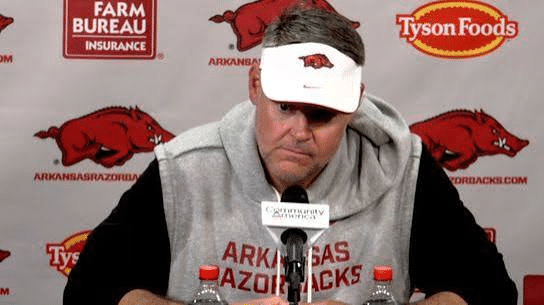
Silverfield owns that evaluation. He selected Cramsey, understands his system and continues to defend him. If the offense remains ineffective, responsibility cannot stop at the coordinator’s office. A head coach cannot claim shared ownership when defending the operation, then leave one assistant carrying every consequence.
What Keeping Him Must Require
Changing coordinators during the season does not automatically repair an offense. Disruption can create additional problems without correcting the original ones. But continuity needs a purpose beyond avoiding disruption.
Keeping Cramsey should require visible improvement in scoring, situational execution and the ability to adapt when the preferred approach fails. The standard cannot simply be that he has succeeded before. His career offers evidence that he can build productive offenses. Arkansas’ current performance suggests something fundamental is not translating. Both belong in an honest evaluation.
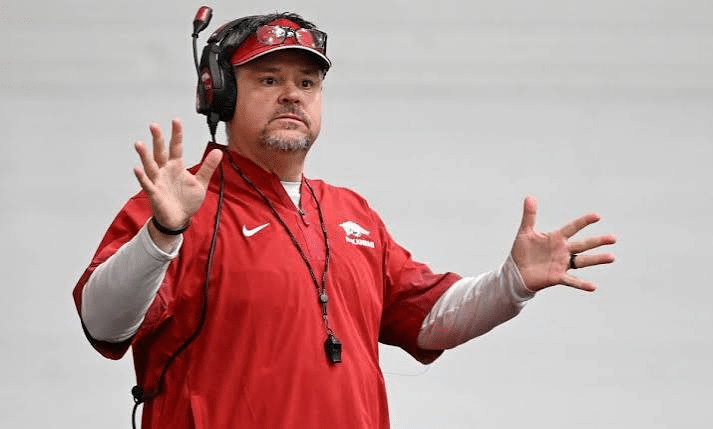
Cramsey earned this opportunity. The question is whether Silverfield is backing a workable correction—or allowing yesterday’s success to postpone today’s decision.