
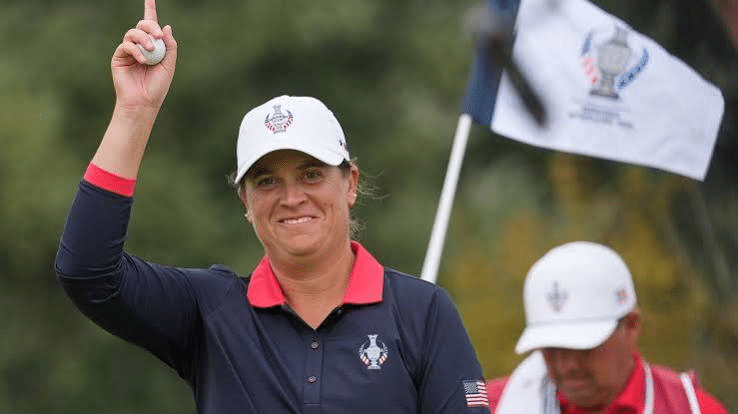
Lauren Coughlin’s victory at the Aramco Championship provides a useful introduction to her 2026 season because it was not built on one uninterrupted run of low numbers. At Shadow Creek, she shot 67–69–73–72, finished at 7 under and won by five strokes over Nelly Korda and Leona Maguire. The achievement came through a complete performance across a demanding week.
That result also corrects a misleading impression a single score can create. An even-par closing round did not mean the final day lacked quality or significance. Coughlin began Sunday one stroke ahead, birdied the first hole and never held less than a two-shot advantage afterward. Her lead reached six during portions of the round.
The supporting numbers explain more. Coughlin led the field with 18 birdies and hit 52 of 72 greens in regulation, also the highest total in the tournament. She was one of only two players to record multiple rounds in the 60s during the week. Her victory combined scoring production with the ability to remain effective when low rounds were uncommon.
It was her third LPGA Tour title. Her first two came in 2024 at the CPKC Women’s Open and Women’s Scottish Open, giving the Shadow Creek result a place within a developing record of winning in different settings.
Now Coughlin is among the highlighted entrants for The ANNIKA, with the tournament packet listing her at world No. 20 in its rankings snapshot. The coming week offers another opportunity to see how her game produces a score rather than simply compare one finishing position with another.
For fans, the simplest place to begin is the approach. What position does the preceding shot leave? What target is available? Where does the ball finish, and what kind of scoring chance remains? Following that chain turns an isolated iron shot into part of the explanation of a round.

The same approach makes difficult holes more understandable. A missed green is not a complete account of what happened. The remaining lie, available landing area and distance to the hole affect the recovery. A par can represent routine execution or a valuable escape, and the score alone cannot tell viewers which one occurred.
Coughlin’s Aramco victory supplies a strong example of why context matters. Her closing 72 was enough to extend the final margin because the course and the competition made scoring difficult. The value of the round lay in what it accomplished within that setting, not in whether the number looked spectacular beside a tournament played somewhere else.
At Pelican, the circumstances will be different. Previous wins establish experience, but they do not make the targets or conditions identical. The most interesting question is whether the underlying strengths appear again and how effectively they translate into the opportunities available that week.
Coughlin also has a story beyond competition. She is scheduled to attend the November 8 NASCAR championship with Annika Sörenstam and Annabelle Pancake-Webb as part of The ANNIKA’s crossover initiative. Michael McDowell is then scheduled to serve as a celebrity caddie during Wednesday’s pro-am. [1226]
That connection offers a different way for people to encounter an LPGA player. Someone who follows racing may see Coughlin in a setting they already understand before meeting her through tournament coverage. The experience can help introduce the athlete without requiring the audience to begin with a statistical profile.

It should remain separate from the explanation of her golf. Attendance at another sporting event does not establish competitive readiness or predict a result. Her performance at Pelican will be understood through the shots, decisions, outcomes and explanations that emerge during the week.
The two stories nevertheless fit within a fuller portrait. There is the competitor who has already won in 2026, and there is the person participating in a sporting week that reaches beyond the ropes. Fans can connect with either introduction and then follow the other.
Coughlin’s appeal is not dependent on every round producing an extraordinary score. Shadow Creek already showed the value of a performance that remained strong when conditions demanded patience and control. At The ANNIKA, the opportunity is to watch another version of that competitive problem unfold.
The score will identify the outcome. The approaches, recoveries and choices will explain how she gets there.