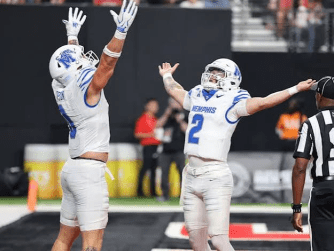

Memphis left Las Vegas with a 27–21 win over UNLV, and the first reaction will be to call it a good road victory. That is true. It is also incomplete.
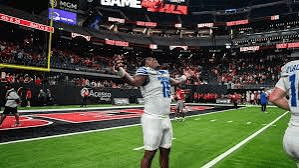
Memphis won because it showed the parts of a program that matter when the stadium is loud, the opponent has momentum, and the numbers are not all moving in your direction.
UNLV finished with more total yards, 460 to 418. The Rebels had more first downs, 23 to 20. They held the ball for 35 minutes and nine seconds. They led 21–14 in the second half.
Memphis still won. The Tigers ran for 195 yards, found enough answers in the fourth quarter, and scored the final 13 points. That is not a trick play, a lucky bounce, or an empty September story. That is the kind of football that travels.
It also explains the real price of winning in modern college football. Winning is not only about the quarterback you land in the portal. It is not only about the NIL announcement that gets a thousand reposts. It is not only about which recruiting class wins a graphic in February.
It is about whether a program can use money, roster spots, coaching continuity, and the portal to build a team that can still function when the game gets hard. Memphis showed that it can.
The Portal Is Not a Shortcut
The transfer portal gives programs access to immediate solutions. It also creates immediate instability. A quarterback can change a season. So can a veteran receiver, an edge rusher, or a tackle who keeps the offense out of second-and-12. But portal success is not measured by the number of transfers announced.
It is measured by whether those players fit the system, learn the expectations, survive a road game, and execute when the game is no longer clean. Memphis faced that test at UNLV.
The Tigers did not dominate every category. They did not own the clock. They did not have the statistical edge in total offense. What they had was enough running-game substance to remain balanced, enough poise to stay in the game after falling behind, and enough finishing ability to own the last 13 points. That is the difference between acquiring talent and building a team.

NIL Has to Buy Continuity, Not Just Headlines
The college-football conversation often treats NIL like a scoreboard. Who spent more? Who landed the bigger name? Who won the commitment post? Those questions are easy to ask because they are visible.
The more important question is whether a program has used its resources to keep the parts that make a roster functional: linemen, depth, position coaches, veteran leadership, and the players who prevent a one-possession game from becoming a collapse.
Memphis’s Week Zero win is a reminder that the most valuable NIL investment may not be the player who creates the loudest preseason reaction. It may be the veteran who helps the line function in a road environment.
It may be the defensive player who gets the stop that ends a 13-point comeback. It may be the staff continuity that allows a team to adjust after halftime instead of panicking when the first plan breaks. The best programs do not treat NIL as a one-time purchase. They treat it as roster maintenance.
UNLV’s Lesson
UNLV did not lose because it lacked talent. The Rebels gained 460 yards. They created 23 first downs. They held the ball for more than 35 minutes. They built a 21–14 lead. But winning football is not only about building the better first three quarters.
It is about finishing the fourth. That is where roster construction, depth, coaching continuity, and late-game trust show up. A team can possess the ball longer and still lose if it cannot protect a lead. A program can produce more yards and still lose if it does not have the answer when the opponent changes the game’s temperature.
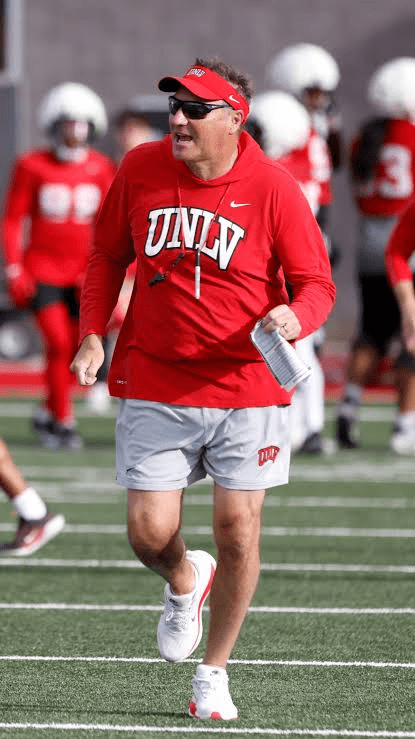
UNLV has a real team. The Week Zero loss does not erase that. But it does create a question that money, the portal, and a strong offseason must answer: does this roster have the late-game foundation to turn good statistical performances into wins?
The Group of Six Fight Is About More Than One Win
The Group of Six race is not won in Week Zero. But the early résumé work matters because there are fewer national windows, fewer opportunities to make a nonconference statement, and fewer chances to show that a program can handle a game with playoff-level consequences.
Memphis now owns an important receipt. It won a road game against a respected opponent. It did it after trailing. It did it without owning every statistical category. It did it by running the ball, staying composed, and finishing.
That is the product of an investment strategy. The Price of Winning is not what a program spends to become interesting in August. It is what a program spends, retains, develops, and teaches so that it can win in Las Vegas in Week Zero when the game gets uncomfortable. Memphis paid that price. UNLV now has to prove it can.