
North Alabama will establish a baseline, but Arkansas’ road trip to Utah will reveal whether Ryan Silverfield’s team can turn a promising opener into meaningful progress.
Week Two Is Where Arkansas Finds Out What Week One Meant
Arkansas will learn something from its opener against North Alabama, but the Razorbacks cannot confuse Week One with an answer to their biggest questions. North Alabama is the baseline. Utah is the test.
Arkansas opens at home against North Alabama before traveling to Salt Lake City the following week to face Utah. The opener offers the first public look at Ryan Silverfield’s program, KJ Jackson as the starting quarterback, and the identity Arkansas hopes to create. The Week Two trip will reveal whether those ideas can survive a difficult Power Four environment.
There is a substantial difference between the two assignments. A coaching staff can prepare for an opener all offseason. It can script the early possessions, simplify the game plan, rely on a home crowd to help settle nerves, and put a new quarterback in situations designed to build confidence. A road game against Utah will test what happens when the crowd gets loud, the game script disappears, and Arkansas has to execute through adversity.
North Alabama Is The Baseline
Arkansas should possess advantages in talent, depth, size, resources, and overall athleticism against North Alabama. The early betting line made the Razorbacks a 40.5-point favorite, underscoring the expectation that an SEC team should control the game against an FCS opponent.
North Alabama struggled defensively last season, allowing 39.2 points and 464.5 yards per game. The Lions surrendered 285.3 passing yards and 179.4 rushing yards per contest. Arkansas averaged 454.8 yards and 32.9 points per game last season, so the Razorbacks should be able to move the football and establish control.
The score will matter, but the way Arkansas produces that score will matter more. Arkansas needs to establish a run game that can create manageable situations on early downs. The Hogs need to convert third-and-short without relying on a trick play, an improvised quarterback scramble, or an opponent’s mistake. KJ Jackson needs to operate the offense efficiently, make the routine throw, protect the football, and avoid turning every possession into a search for a highlight.
The defense must establish its own standard. Arkansas should force North Alabama into second-and-long and third-and-long situations. The Razorbacks need to tackle in space, eliminate free yards after contact, prevent cheap explosive plays, and show Ron Roberts’ defense can play aggressively without losing its discipline.
Arkansas should not leave its opener in a fourth-quarter battle with an opponent it should physically overwhelm. By the second half, the Hogs should be able to rotate depth, protect key players, and show that the game was decided because Arkansas controlled the line of scrimmage and avoided the mistakes that create unnecessary drama. If Arkansas cannot establish those basics against North Alabama, the Utah trip becomes far more concerning.
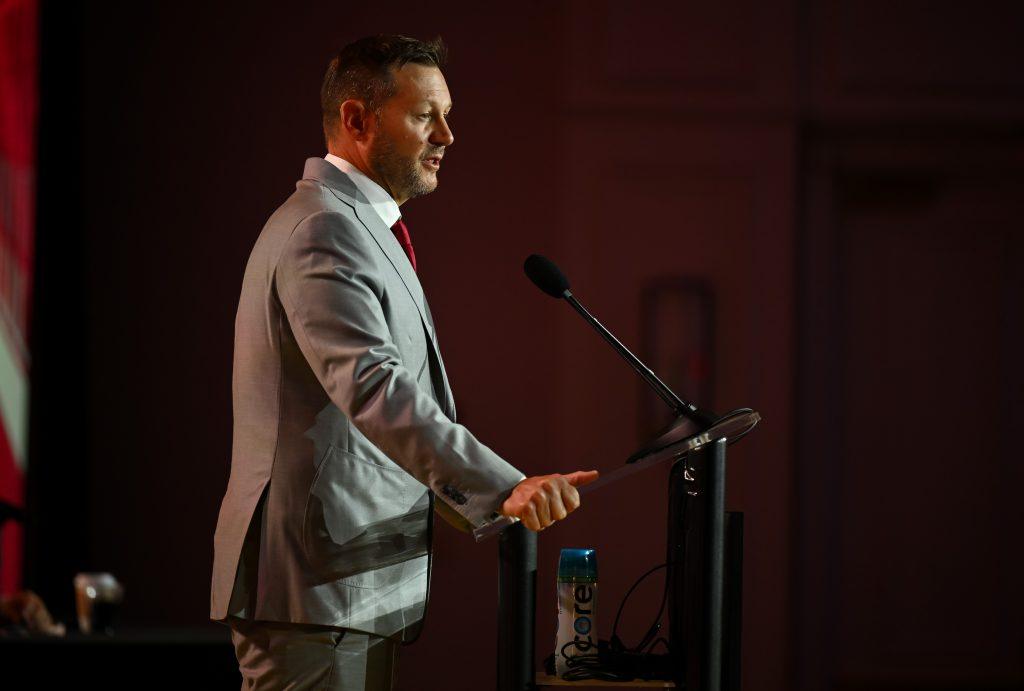
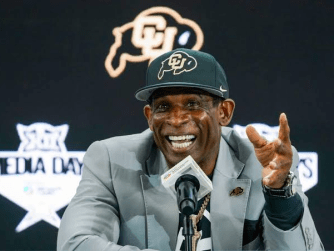
SEC Media Days on Thursday, July 23, 2026 in Tampa, Florida.
Todd Van Emst/SEC
Utah Will Expose The Details
Utah is a different kind of test in every possible way. Arkansas will travel to Salt Lake City for a late kickoff in a hostile road environment. The Razorbacks will deal with travel, altitude, crowd noise, a late start, and an opponent that will expect to control the physical tone at home. Those factors are not excuses. They are the test.
The most revealing part of Arkansas’ Week Two performance may not be the final score. It may be the details that determine whether the Razorbacks are prepared to operate in a difficult setting. Can Arkansas avoid false starts when the offense cannot hear clearly? Can the coaching staff get personnel onto the field without burning timeouts? Can the defense recover after a big Utah gain instead of allowing one mistake to become a full drive? Can special teams protect field position?
Road games often turn on plays that do not make highlight packages. A false start can change a manageable third-and-two into third-and-seven. A missed tackle can turn a four-yard gain into a drive-changing 20-yard play. A personal foul after a third-down stop can give a good opponent another chance to score.
Arkansas cannot afford to give Utah those gifts. The strongest Power Four programs are not necessarily perfect, but they are prepared. They understand that a punt can be the right decision, that taking the safe completion can keep an offense on schedule, and that avoiding catastrophe is sometimes more important than chasing a spectacular play.
Arkansas needs to display that maturity. A competitive performance at Utah would give Silverfield’s staff a valuable foundation. The Razorbacks do not have to win in Salt Lake City for the game to demonstrate progress, but they have to look like they belong. Arkansas needs to be physical in the trenches, organized in critical situations, and capable of staying composed if the game does not begin according to plan.
Jackson’s First Road Moment
KJ Jackson’s Week Two role will extend beyond his passing-yard total. Utah will test the aspects of quarterback play that are often hidden during an opening game against an overmatched opponent. Jackson will have to manage crowd noise, recognize pressure, communicate protection changes, and make decisions when the first read is unavailable.
His upside is obvious. Jackson showed it during preseason work when he threw a 68-yard touchdown pass to Chris Marshall and a 22-yard scoring strike to CJ Brown. The ability to generate explosive plays gives Arkansas a needed dimension. Utah will test Jackson’s floor.
Can he stay calm after a sack? Can he take the checkdown rather than force a dangerous ball into coverage? Can he recognize when to throw the football away? Can he stabilize the offense if Arkansas faces an early deficit or the run game is not producing enough? Those questions matter more than one deep completion.
A quarterback does not have to be flawless to earn trust. He has to be steady. Arkansas needs Jackson to avoid turning adversity into panic and to understand that not every drive requires a spectacular throw. A clean four-yard completion can be as valuable as a 40-yard highlight when it keeps the offense alive in a difficult road environment.
Arkansas hosts Georgia after the Utah trip. That makes Week Two especially important. The Razorbacks need to return from Salt Lake City knowing they can function in a difficult setting, not still trying to solve basic operational problems that should have been addressed before the season began. North Alabama is the first checkpoint. Utah is where Arkansas finds out whether its progress is real.