
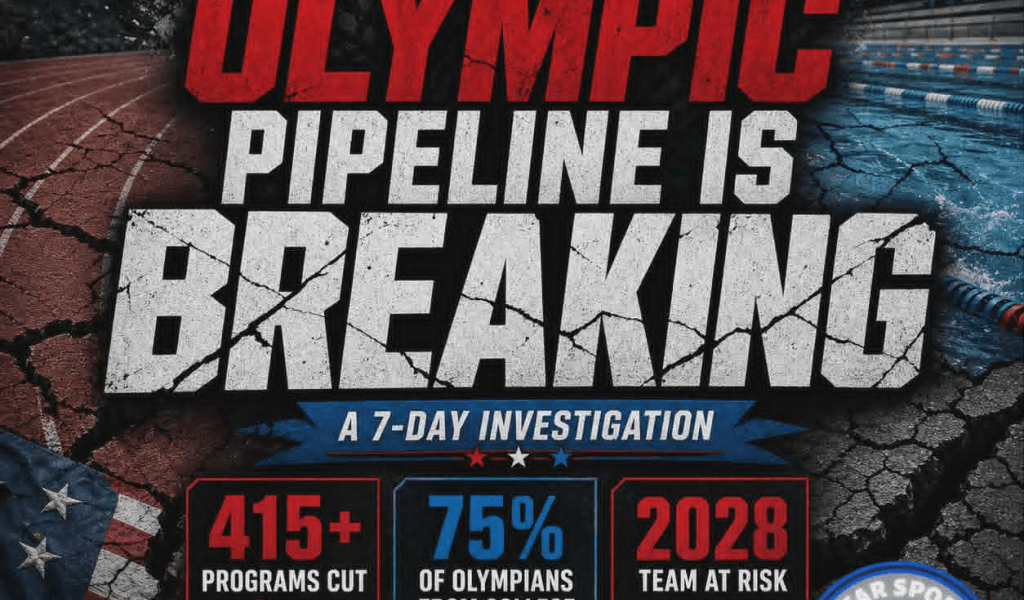

Follow the money, and you’ll find the truth. In college sports, that money doesn’t just flow; it gets routed, disguised, and repackaged until most people forget whose dollars built what and which sports are actually paying the bill.
Inside the Athletic Department Shell Game
From the outside, athletic departments look like one big pot of “sports money.” Inside, the books tell a different story. Football and men’s basketball drive media cash. Students and universities quietly plug budget holes. Olympic sports live or die based on how creative an athletic director is willing to get with the shell game.
The crisis in Olympic sports is not just about how much money there is. It’s about who controls the levers and how those levers get pulled when the lights are off.
The Hidden Plumbing of College Sports
Every spring, administrators step to the podium and announce another record revenue year. Conference distributions climb. Ticket sales bounce back. Donors pledge eight‑figure gifts. On paper, the industry has never been richer.
Crack open the ledgers, and you see the tension. A big chunk of revenue is already spoken for before a single whistle blows. Coaching contracts escalate on rigid timelines. Facilities debt locks in payments for decades. Support staff, recruiting, travel, and game operations all come with built‑in increases.
Layered on top of that is the new revenue‑sharing cap. Schools are now allowed to send tens of millions of dollars directly to athletes each year. Any serious football or basketball program that wants to compete has to treat that cap as a target, not a suggestion.
So where do they find the money?
They start inside the house. University subsidies and mandatory student fees quietly prop up athletic budgets, especially outside the richest conferences. Direct institutional support and hidden facility costs add another layer of subsidy, often labeled in ways that downplay how much the broader student body is covering.
When football media money comes in, it doesn’t just sit in a pool marked “sports.” It gets routed through this whole system of subsidies, restricted gifts, debt payments, and operating lines. The result is a balance sheet where Olympic sports appear to “lose” money, even as they rest on top of a financial structure built on everyone else’s backs.
That structure became far more fragile once revenue sharing entered the chat.
Winners at the Top, Cuts at the Bottom
The new participation agreements and settlement terms did not tell schools which sports to cut. They didn’t have to. They simply raised the stakes and let the existing incentives do the rest.
Power programs with giant media checks can reallocate internally. They shift a few percentage points of football surplus, lean on donors for a new fund, bump ticket prices, and meet the revenue‑sharing cap without gutting their Olympic slate. They may still trim around the edges, but the core stays intact.
Mid‑majors and smaller FBS schools do not have that luxury. Their external revenue is limited. Their donor base is smaller. Their students are already paying mandatory athletics fees. When those schools sign onto revenue sharing, they face a stark choice: increase subsidies even more, or start removing entire sports from the ledger.
Many have chosen the second option. Since the settlement era began, hundreds of programs have been cut, merged, or moved to cheaper divisions, with Olympic sports bearing the brunt of the damage. Public statements are careful. Administrators talk about “difficult decisions” and “aligning with institutional priorities.” The numbers tell a simpler story. The money that used to subsidize those teams is being redirected to cover athlete payments, coaching escalators, and the fixed costs of keeping football in the arms race.
Inside the building, the mechanics can get even more cynical. New donor gifts are earmarked for facilities that primarily benefit revenue sports, but the department counts those gifts as evidence of broad support. Debt tied to football projects gets blended into “athletics” obligations, so when cuts come, they hit the sports that didn’t drive the debt in the first place.
Student fees and institutional support keep rising even as Olympic opportunities shrink. In effect, everyone on campus is paying more to support fewer teams.
That’s the real internal movement of money: up the ladder toward the sports that sell, away from the sports that develop Olympians and serve the broader mission.
The future of the Olympic pipeline will not be settled in courtrooms or TV trucks alone. It will be decided in budget meetings, behind closed doors, where line items turn into lives and careers. If the people in those rooms keep moving money the way they always have, the outcome is already written.