

Dustin and Maria Starr are carrying studio wrestling forward in a city that showed how a small television setting could produce larger-than-life entertainment. Memphis Wrestling does not need to look like a stadium spectacle to have an identity. Its opportunity is more distinctive: Take the intimacy, personality, and weekly storytelling that made wrestling essential television in Memphis and give a new generation a reason to invest.
Memphis Wrestling Is Building Its Future Around the Format That Helped Change the Business
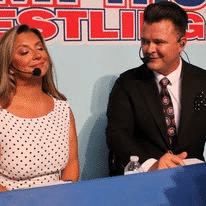
At the center of that effort are Dustin and Maria Starr, the husband-and-wife team behind the locally owned company. Their operation combines television production, live wrestling, and training at the Memphis Wrestling WrestleCenter—a place where developing performers can learn the business while becoming part of a weekly wrestling product.
The setting matters. So does the city. Memphis did not invent studio wrestling. But through the work of Jerry Jarrett, Jerry Lawler, Lance Russell, Dave Brown and generations of performers, it helped demonstrate how compelling wrestling television could become when personalities and unfolding conflict drove the action. That approach influenced the larger national productions that followed. The Starrs’ challenge is not to recreate every detail of that era. It is to make its underlying strengths work now.
A Company, Not Simply A Tribute
There is an easy way to tell a story about wrestling in Memphis: Mention the legends, celebrate the memories, and treat everything happening today as an extension of yesterday. That approach misses the business the Starrs have been building.
Their path included hosting a syndicated wrestling program with locally produced introductions and endings before moving toward a locally produced show of their own. The launch of Championship Wrestling from Memphis was announced for February 27, 2021, with distribution on CW30 and YouTube. It was an attempt to create something ongoing—not merely bring familiar faces together for an occasional reunion.
Dustin brought experience as a wrestler, broadcaster, and live-event personality. In an October 2026 interview, he described work that includes arranging appearances, developing television stories and preparing wrestlers to perform for both the people in the building and those watching at home.
Those responsibilities reveal the difference between staging matches and operating a wrestling company. The matches are the visible product. Behind them must be a system that brings performers, production, promotion, and an audience together repeatedly. Maria’s role is central to that system.
Maria Starr Belongs At The Center Of The Story
Describing Maria only as Dustin’s wife would leave out a substantial part of how the company came together. In a 2021 interview, Dustin credited her with behind-the-scenes responsibilities that included graphics, web design, and accounting. He described her as a driving force in the operation while also discussing their plans to present the television program together. That work is not incidental to wrestling. It is part of what allows wrestling to exist as a sustainable product.
A promotion needs more than a compelling main event. It needs people to know where to watch, how to attend, and why they should return. It needs a recognizable presentation and the administrative work that keeps the creative side functioning. The Starrs’ partnership spans those demands. The company has identified Memphis Championship Wrestling LLC as locally owned and operated by both Dustin and Maria. That distinction deserves to remain visible: This is a company being built by a husband-and-wife ownership team, not simply a wrestling personality with a spouse beside him.
Why The Studio Still Matters
Studio wrestling’s greatest asset is not its resemblance to an old television broadcast. It is proximity. A smaller setting can put a wrestler’s expression, a cutting interview, and an audience’s immediate reaction at the center of the presentation. There is less distance between the conflict and the people being asked to believe it matters.
Memphis turned that relationship into a powerful weekly attraction. After Jarrett broke away from Nick Gulas in 1977, the television operation moved to WMC-TV with Lawler and the familiar announcing voices of Russell and Brown. Saturday television built interest in the live events, including Monday nights at the Mid-South Coliseum.
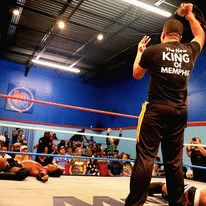
The program was not simply a sequence of matches. Interviews, confrontations and developing stories gave viewers reasons to follow the wrestlers from one week to the next—and from television into the arena.
Its reach was extraordinary. Wrestling historian Dave Meltzer reported that during the late 1970s and early 1980s, more than 20 percent of television households in the Memphis metropolitan area watched the program, while more than 70 percent of sets in use during its time slot were tuned to wrestling. Those are different measures, but both illustrate how deeply the show penetrated its market. The lesson was bigger than the room: Wrestling could build enormous emotional investment through television storytelling.
The Influence Traveled Beyond Memphis
The Lawler–Andy Kaufman feud is the clearest example of Memphis wrestling reaching beyond its regional audience. Their conflict extended to Late Night with David Letterman in 1982, where Lawler slapped Kaufman during their appearance. It brought the territory’s ability to blend personality, confrontation, and uncertainty onto a national stage. But Memphis’ influence was not limited to one celebrity feud.
Its television emphasized recognizable characters, fast-moving developments, and conflicts that made the next episode feel necessary. Wrestling writers and historians have traced those qualities into the national television presentation that followed, including the structure of modern weekly wrestling programs.
That is the meaningful historical connection for today’s Memphis Wrestling. A studio is not inherently compelling. Neither is a giant arena. The format succeeds when the people inside it give viewers something to care about. The Starrs are working in a city whose wrestling history offers unusually strong evidence of that principle.
Building The Next Generation In The Same Room
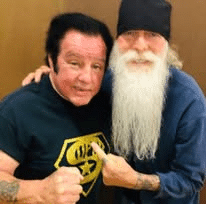
The WrestleCenter gives the company another purpose beyond producing a show. It also serves as a training environment. Wrestling legend King Cobra is a partner at the training center, connecting a veteran of Memphis wrestling with performers learning the business today.
In 2024, the company announced Jonathan Gresham as a full-time competitor and mentor for its WrestleCenter Starrs of Tomorrow program, another example of tying in-ring presentation to wrestler development.
That combination creates the possibility of continuity. A developing wrestler can learn more than moves. The environment can demand that performers understand cameras, communicate a character, and recognize whether an audience is responding. For a company rooted in studio-style television, those are not secondary skills. They are fundamental to the product.
The Past Provides A Foundation, Not A Finish Line
Today’s Memphis Wrestling distributes its work through television, Facebook and YouTube, using short clips alongside individual matches and full programs. The presentation has roots in local television, but its distribution is not confined to a local broadcast signal.
That is where the company’s historical identity and contemporary opportunity meet. The goal need not be to make viewers feel as though they have stepped back into a particular Saturday morning. It can be to make them feel the same urgency that brought previous generations back: a performer worth supporting, an antagonist worth resenting, and a story worth following.
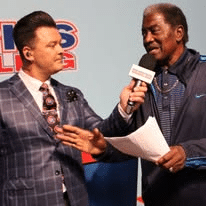
Dustin and Maria Starr have a recognizable name, an influential local tradition and a facility that connects production with development. What they build from those pieces will define the company more than nostalgia can. Memphis helped teach wrestling how much could happen inside a small television studio. The opportunity now is to show how much can still happen there.