
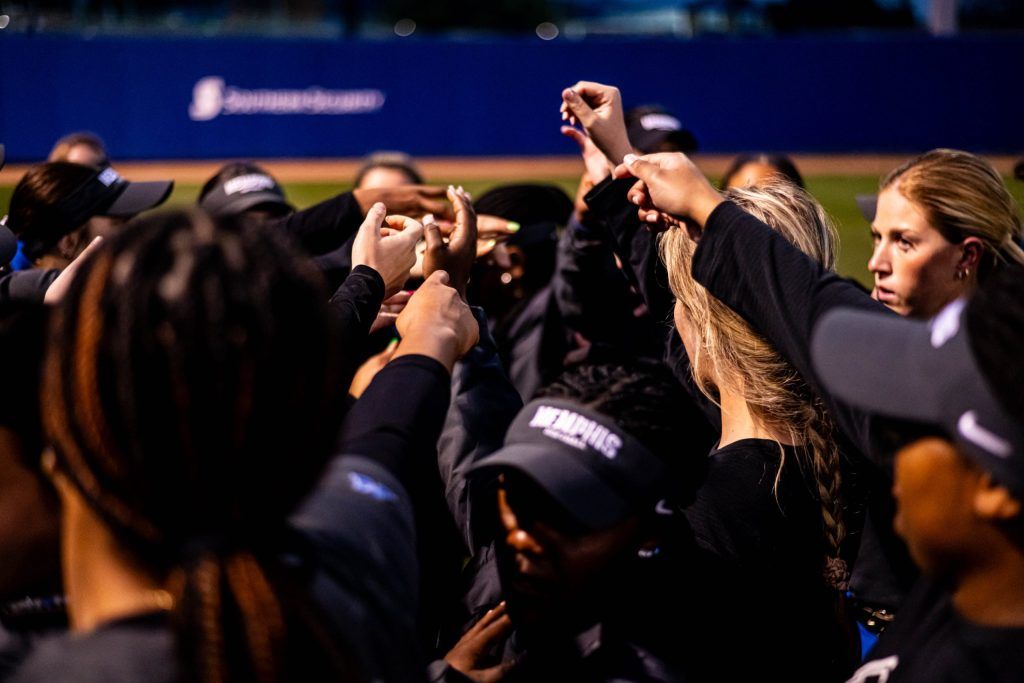
Eight players. That’s how many Memphis softball athletes entered the transfer portal on June 8, 2026 — two weeks before the 5-for-5 rule was even officially approved. The wave wasn’t random, and it wasn’t quiet. It was the most visible sign yet that Trena Prater’s program is navigating one of the most turbulent roster environments in college softball history.
Memphis Softball’s Portal Exodus: Breaking Down Every Departure and the Path Forward
Here is who is leaving, what each departure actually costs, and what Memphis has to do to rebuild.
The Eight Who Left — And What They Meant to This Team
Jasmine Mack | Catcher/Utility | Sophomore
If there is one departure that stings the most from a production standpoint, it is Mack. She was arguably Memphis’ most complete offensive weapon in 2025-26, starting 38 of 52 games and hitting .286 with six home runs and 26 RBI — tied for second on the team. She hit for extra bases against elite competition, including a triple against No. 9 LSU and home runs against East Carolina, Jackson State, Tulsa, and Alabama A&M. From behind the plate, she threw out a team-high six baserunners. Memphis’ own program notes called her, Ariel Davis, and Faith Brown “a powerful stretch in the middle of the lineup.” That stretch just lost its anchor.
Jericho Tate | Right-Handed Pitcher | Sophomore
Tate was one of three primary arms in the Memphis circle, and she was the one Prater could trust in high-leverage moments. In 2025, she tossed a complete game shutout and logged the first save in Memphis’ AAC Tournament win over UAB. This past spring, she went 3-7 with a 5.81 ERA, but her 72-pitch complete game gem against Oakland showed the ceiling she has. She was the staff’s most consistent finisher. Losing her means the pitching will need to lean on a returning sophomore Avery Stutts, amkng others.
Zereniti Sousa | Catcher/Infielder | Redshirt Sophomore
Sousa started 25 of 37 games and did legitimate work behind the plate and at second base. She brought a high-ceiling pedigree — Extra Innings Softball Elite 100 honoree in the Class of 2023 — and was productive in the middle of a developing lineup, logging two home runs and 15 RBI with 15 walks. A Utah State transfer in her first full season with Memphis, she was just starting to find her footing. Her departure, combined with Mack’s, strips the program of its entire experienced catching corps overnight.
Marley Maness | Catcher/First Base | Junior
Maness is a homegrown Tennessee kid from Lexington with deep program ties — the daughter of former Memphis athletes Mark and Lori Maness. She was a backup catcher who came off the bench regularly, and her ability to play first base gave Prater lineup flexibility. With three catchers now gone from a 25-player hard-capped roster, her departure completes a critical positional wipeout.
Shelby Durbin | Catcher/Outfielder | Senior
A Murray State transfer entering her final season, Durbin appeared in 42 games and made 31 starts. She was one of the more experienced players Prater had in the mix, and her versatility to play both behind the plate and in the outfield made her a valuable piece off the bench. Seniors entering the portal are typically seeking a grad transfer opportunity somewhere with better competition or more playing time, and at this stage of the 5-for-5 transition, she has options.
Jazmine Chavez | Right-Handed Pitcher | Sophomore
This one is uniquely painful because of the optics. Prater specifically went back into the portal last July and added Chavez from UNLV as the final roster piece to complete the 2025-26 team. Now she is gone after one season with a 13.76 ERA in 19.1 innings, used primarily in mop-up and developmental situations. The ERA is misleading in isolation — she was being managed carefully and not thrown into the fire — but the investment of a portal spot on Chavez, only to see her exit one year later, reflects the brutal roster turnover reality of this era.
Brylee Butts | Infielder | Freshman
Butts hit .227 in 23 appearances with three starts as a true freshman, recording a triple in her very first collegiate at-bat and showing some raw ability with the bat. But the numbers weren’t enough to hold a roster spot when the cap math tightened. Losing a freshman infielder hurts depth, but it is the most explainable departure of the eight given the production gap between her role and the players pushing her out.
Jaila Mitchell | Second Base | Freshman
Mitchell appeared in 29 games and started 14 as a true freshman, hitting .200 with two RBI and five runs scored. She was developing, not dominating — and in a 25-player world, a developing freshman is exactly the type of player squeezed out when fifth-year veterans occupy roster spots. Her departure leaves second base depth thinner heading into fall camp.
The Damage Assessment
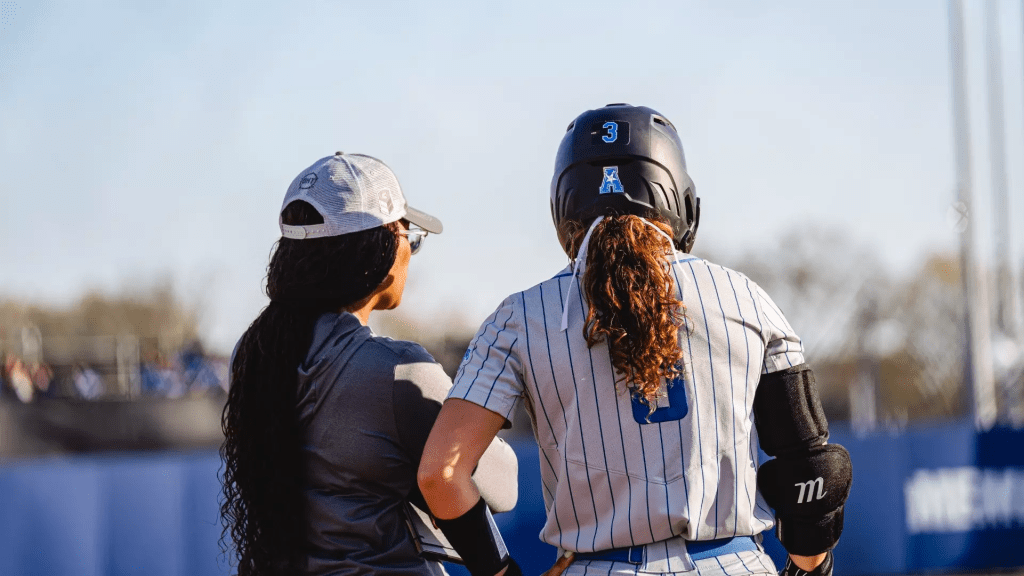
Let’s be direct about what this means positionally. Memphis just lost four catchers in one portal window — Mack, Sousa, Maness, and Durbin — essentially wiping out the entire depth chart behind the plate. On the mound, Tate and Chavez are both gone, stripping the staff of its No. 2 and No. 3 arms behind Dugar. In the infield, Butts and Mitchell were depth pieces, but losing them at third base and second base leaves those positions thin heading into fall camp. The catching situation is not just a problem — it is the program’s single most urgent crisis entering 2026-27.
Who Is Left — The Returning Core
The Fall 2026 roster, confirmed on the official Memphis Athletics site, shows a returning core with real upside. Ariel Davis anchors the infield with back-to-back AAC academic and All-Conference recognition. Mya Clark earned unanimous First Team All-AAC honors in 2026 and is the unquestioned ace of the staff. Deana Cunningham is one of the best shortstops in the conference. Faith Brown and Taniyah Brown give the lineup power and pitching versatility. Top-ranked incoming prospect Channing Collins — as high as No. 11 in the 2026 class per Extra Innings Softball — is on campus and represents the program’s most significant recruiting win. And NJCAA DII All-American transfer Bree Urban, signed just June 23, brings a .525 batting average, 104 hits, and 22 doubles from the junior college level. The pieces are there. The gaps are real but fillable.
How Memphis Fills the Void
Finding a catcher is the first and most pressing order of business — and it needed to happen yesterday. The transfer portal is still open, and there are experienced backstops available. Memphis needs at minimum one proven D1 backstop who can handle a pitching staff and provide a threat in the middle of the lineup. Mack’s production set a high bar at 6 HR and 26 RBI, but any experienced catcher who can handle game management and give the lineup production will be a win right now.
Replacing pitching depth is the next critical task. Mya Clark is a legitimate ace capable of carrying a staff on her back, and Avery Stutts is a capable complement. But Dugar’s graduation and the loss of Tate and Chavez mean Prater needs at least one more reliable arm. Channing Collins pitching out of the circle could be part of the answer. A targeted portal add at the pitching position would be the safest insurance policy available.
Shoring up the middle infield behind Davis and Cunningham is also necessary. With Mitchell and Butts gone, second base depth is thin. Newcomers from the signing class will need to step into depth roles immediately rather than easing into the program over two seasons — a reality the 5-for-5 era is making standard everywhere in college softball.
Finally, Prater needs to deploy Bree Urban immediately and prominently. A .525 average at the NJCAA DII level demands immediate playing time in the lineup. If Urban translates even partially to the D1 game, she could be the most impactful addition Memphis made this entire offseason — and a player who makes fans forget about the production that just walked out the door.
The 60-Day Window That Defines Year Three
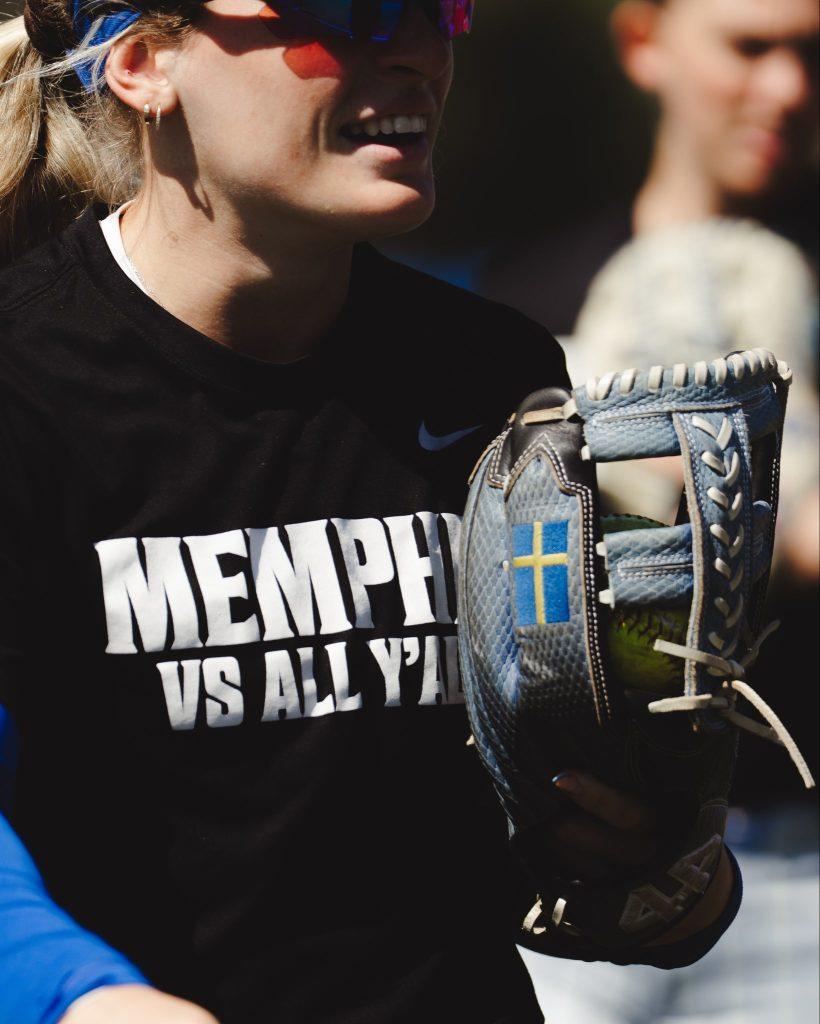
The portal remains open. The July 31 deadline for old-model eligibility waiver requests will clarify which returning players are actually staying, and once Prater has that clarity, the roster strategy can be executed with precision. Right now, every program in America is doing the same math in the same compressed window.
Year three is the year a head coach’s system stops being installed and starts producing results. The framework Prater built is real — the program’s scheduling ambition in 2025-26, the recruiting class she assembled, and the core of talented players who are staying all point to a program trending in the right direction. The eight departures are painful, but they are not a verdict on her coaching. They are the price of operating a mid-major rebuild at the exact moment the NCAA restructured everything.
The next sixty days will determine whether Memphis walks into February 2027 as a team ready to compete in the AAC — or a team still searching for answers at the most fundamental position on the diamond. Prater has shown she can build. Now she has to prove she can reload.