


Imagine spending months committing to your dream school — visiting the campus, meeting the coaches, picturing yourself in that uniform — only to get a phone call telling you the offer is being pulled. No explanation of your ability. No critique of your game. Just three words: the 5-for-5 rule.
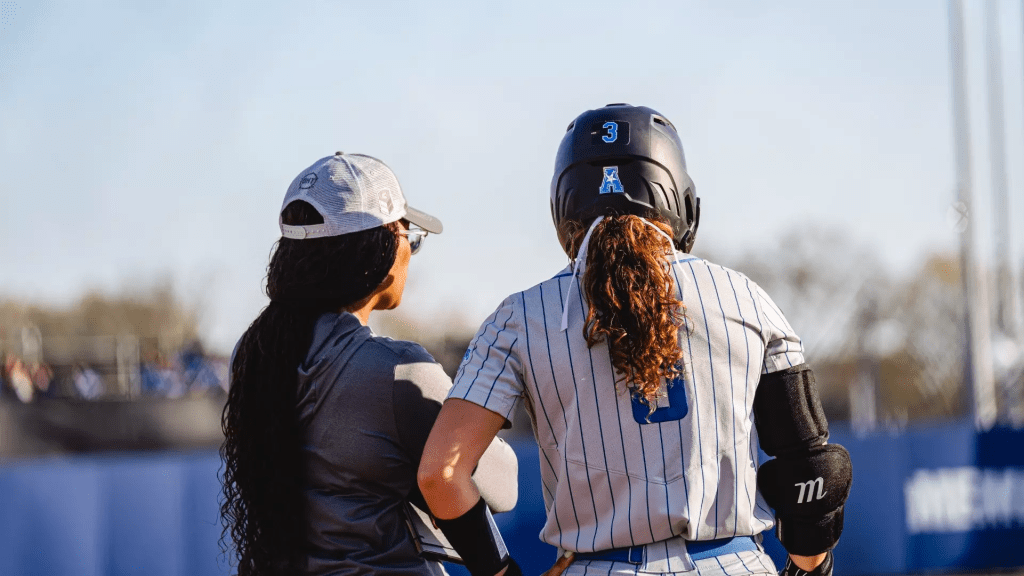
Memphis Softball Is Caught in the NCAA’s Biggest Roster Storm in History
That is exactly what several Memphis softball recruits are experiencing right now, and if you’re scratching your head wondering why, you’re not alone. But the answer, once you understand the full picture, is one of the most significant stories in college athletics right now.
Two Rules Changed Everything at Once
On June 23, 2026, the NCAA Division I Cabinet unanimously approved the “5-for-5” eligibility model, a complete overhaul of how college athletes earn their years of competition. Under the new system, every Division I athlete gets five full seasons to compete within a five-year window. Simple, right? The problem is what that does to roster math.
Under the old structure, players had five years to complete four seasons. That one-year gap — the redshirt year, the medical hardship year — was an exit ramp. It opened a roster spot. A senior would graduate, a spot would open, and a committed freshman would walk right in.
Under 5-for-5, that exit ramp is gone. Every veteran player can now return for a fifth full season of competition, and every one of them occupies one of the spots on a team’s hard roster cap.
Here’s the other rule that changed everything: the House v. NCAA settlement implemented a hard 25-player roster cap for Division I softball. No exceptions. You can have a maximum of 25 players. It replaced the old 11.7 scholarship equivalency model with a firm headcount limit.
Put these two rules together, and the math becomes brutal. If more returning players than expected exercise fifth-year eligibility — and why wouldn’t they, with an extra season on the table — every one of those decisions directly displaces an incoming freshman who was already committed.
Why Memphis Is Especially Exposed
Head coach Trena Prater is in the middle of a program rebuild. She was hired in August 2024, inheriting a program that went 8-43 the season before she arrived. Year one went 15-23. Year two — this past spring — ended 18-39, with a 6-21 conference record in the AAC, last in the league.
That’s the context. Prater has been recruiting aggressively, doing exactly what you’re supposed to do in a rebuild. She brought in 14 newcomers for 2025-26, then signed nine players in the November 2025 signing class for the 2026-27 season. Those signatures happened months before the 5-for-5 rule was finalized.
Now, the Fall 2026 roster shows 22 players listed, with NJCAA All-American transfer Bree Urban just added on June 23. The program is approaching that 25-player ceiling fast — and if even one or two upperclassmen decide to exercise fifth-year eligibility, the math requires decommitting players from the incoming class.
Memphis is also at a structural disadvantage compared to Power Four programs. Schools like Oklahoma, Texas, and Florida can deploy massive NIL and revenue-sharing budgets to influence who stays and who moves on. Memphis, as an AAC mid-major, does not have that same financial leverage.
Why No One Will Explain It
The silence from programs — and specifically the refusal to give any reason beyond “the 5-for-5 rule” — is deliberate, and it’s actually the legally responsible move.
Verbal commitments in college softball are non-binding until a National Letter of Intent is signed. A coach can withdraw a verbal offer without legal consequence and without explanation. That has always been true. The 5-for-5 rule has just created an unprecedented wave of situations where coaches are exercising that right all at once.
Sports law experts are already warning that the 5-for-5 rule itself could face antitrust challenges. In a legal environment this unsettled, explaining detailed internal roster decisions creates potential liability. “The 5-for-5 rule” is a factually accurate, legally clean explanation that deflects from anything resembling personal evaluation.
There is also a ticking clock. Programs have until July 31, 2026, to submit any remaining hardship waiver requests under the old eligibility model — meaning coaches are simultaneously figuring out who is staying and who is leaving, all inside a five-week window following a rule that just passed.
What This Means for the Program
Memphis softball is not in crisis because of mismanagement. It is navigating the most disruptive regulatory moment in college athletics history at the same time it is trying to climb out of a multi-year competitive hole.
The 5-for-5 rule will eventually create more roster predictability. Once the transition class fully moves through, coaches will be able to project available spots with the precision they have never had before.
But right now, in June 2026, Memphis softball is caught in the gap between the old world and the new one. The recruits losing their spots are casualties of a structural earthquake — not a reflection of their talent, their character, or their potential.
For a program still building its identity under Prater, managing this transition cleanly while retaining players who can genuinely move the needle — like top-ranked prospect Channing Collins — will define whether 2026-27 is a turning point or another year of growing pains.
The 5-for-5 era has officially begun. Memphis softball is living through the first wave.