
Thirty years after the Tigers stunned Tennessee, Scherer shares the people, decisions, and memories behind the victory in an exclusive conversation with 4 Star Sports Media.
Memphis Beat Peyton Manning. Rip Scherer Remembers the Hug.
The score followed Rip Scherer all the way to Hawaii. The memory he treasures most never left midfield. Twelve years after Memphis beat Tennessee, Scherer crossed paths with Peyton Manning at a Pro Bowl practice. Manning was talking with ESPN’s Chris Mortensen, who recognized the former Tigers coach and asked whether the quarterback knew him.
According to Scherer, Manning answered, “I f’ng hate Coach Scherer.” Scherer responded by mentioning that his email address included the numbers 2117.
“That ticked him off even more,” he recalled.
It is an irresistible story: a famous quarterback, an old loss and a coach who knew exactly which numbers would bring it back. But when Scherer was asked to choose his favorite memory from Memphis’ 21–17 victory over No. 6 Tennessee on Nov. 9, 1996, he did not choose anything involving Manning. He chose his father.
“My favorite memory, among many, was hugging my Dad … at midfield after doing a post-game TV interview,” Scherer told us at 4 Star Sports, in an exclusive conversation. “He was so proud.”
Thirty years later, that answer gives the game something a scoreboard cannot. Memphis had won an afternoon the program would remember forever. Scherer had his dad there to share it.
Spook’s Message and Scherer’s Blue Tigers
Memphis entered the Tennessee game at 3–6, carrying a four-game losing streak. Tennessee was 6–1 and ranked sixth. Manning was the quarterback, and the Tigers had never beaten the Volunteers in 15 previous meetings.
Scherer did not need to explain the opponent’s reputation. What he could do was put someone in front of his players who cared deeply about Memphis—and cared very little for Tennessee.
Billy “Spook” Murphy, the former Tigers coach and athletic director, brought both feelings into the room. “I had so much respect and admiration for him,” Scherer said. “And he has so much passion for the game and dislike for UT, I wanted to get him in front of the team.”
Murphy’s connection to the program was not something Scherer had to manufacture. His 91 coaching victories were part of Memphis’ history. Now he was being asked to help a different team write its own chapter.
“He told the Defense that every time they make a play, to point up to the Press Box where he would be watching,” Scherer said.
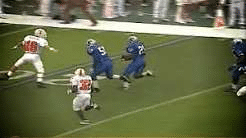
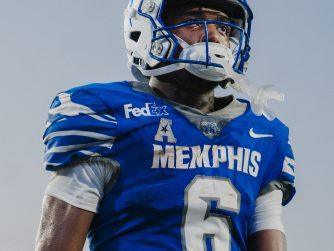
The players had somewhere to look after a stop. Above the field, a man who understood what the game meant would be watching. The Tigers also wore all blue. Against Tennessee orange, the uniforms became part of the afternoon’s lasting picture. Scherer’s explanation is simpler than the symbolism later attached to them.
“I thought the all blue would make a good look on National TV,” he said. Not every detail began as a grand motivational device. Sometimes the reason was that straightforward. The winning made it memorable.
The End Zone Prediction That Came True
The more remarkable pregame moment happened after Friday’s walkthrough. Scherer took his players into a corner of the end zone and asked them to consider what the next afternoon might require.
“I told them that someone may be asked to make a play that would make a difference in the game, maybe right here in the EZ,” he said.
It was a coach asking his players to picture themselves accepting responsibility when the game demanded it. A day later, Chris Powers caught the winning touchdown in that corner.
“How prophetic!” Scherer said.
Getting there required Memphis to survive an afternoon Tennessee controlled in many conventional ways. The Volunteers ran 89 plays to the Tigers’ 53. They outgained Memphis 381–153 and held the ball for nearly 38 minutes. Manning threw for 296 yards. Memphis kept those advantages from turning into a comfortable win. The Tigers intercepted Manning twice and held Tennessee to 85 net rushing yards.
Then Kevin Cobb supplied the touchdown that still produces two versions of the same memory. After Tennessee took a 14–7 third-quarter lead, Cobb returned the ensuing kickoff 96 yards for a score. The dispute centered on whether his elbow touched the turf after early contact, before he continued the return. Tennessee remembers a play that should have been stopped. Memphis remembers a touchdown that counted.
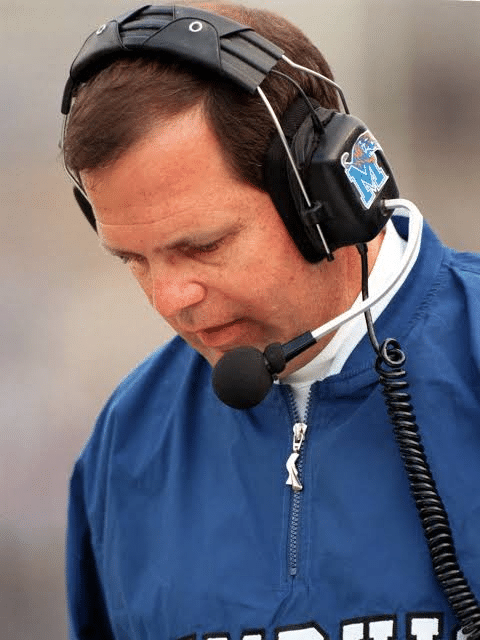
The game was tied. The argument would last much longer. “There were so many huge plays in that game it is hard to single one out,” Scherer said. Tennessee eventually regained a 17–14 lead. With 34 seconds remaining, Qadry Anderson found Powers for the touchdown that put Memphis ahead. In the corner where Scherer had gathered his team on Friday, someone had made the difference on Saturday.
“A Lot of Emotion Down Here”
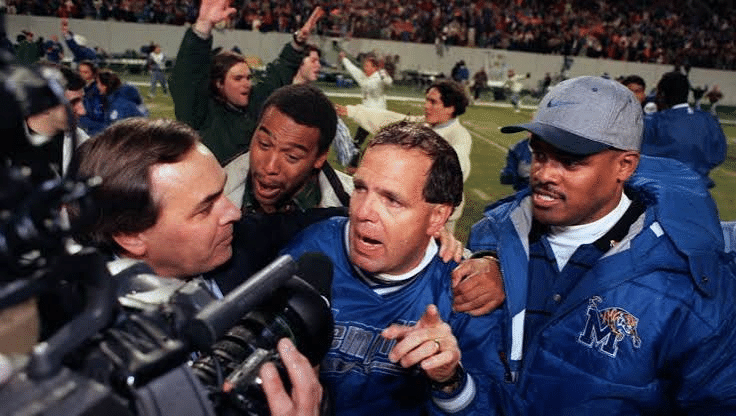
The Tigers had finally beaten Tennessee. Around Scherer, the celebration was becoming a television moment. CBS sideline reporter Artie Gigantino’s closing observation fit the scene: “A lot of emotion down here.”
Scherer’s recollection puts the most meaningful part of that emotion at midfield, where he hugged his father after the postgame interview. His dad was a former high school coach. He knew the profession. He knew his son. Now he had watched him deliver a victory unlike any Memphis had earned against Tennessee. “He was so proud.”
That is the detail Scherer chooses before the others. The locker room made its own impression. “Also, the Locker Room was AMAZING!” he said. The attention followed him home, too. “I had local TV trucks outside of my house doing interviews and sports news from my Living Room—crazy.”
The next morning, Scherer attended Mass at St. Louis Catholic Church. The priest recognized him afterward, and Scherer received a standing ovation. “It was a special night,” he said. For a little while, the game followed him everywhere. People wanted to congratulate him, hear from him, and share in what Memphis had done.
Yet he remembers the next week without pretending it was part of a perfect ending. “That night was huge; unfortunately we did not follow up the following week.” Memphis lost to East Carolina and finished 4–7. The Tennessee victory had not solved every problem. It had given the program one extraordinary afternoon.
The Win Was Public. The Memory Was Personal.
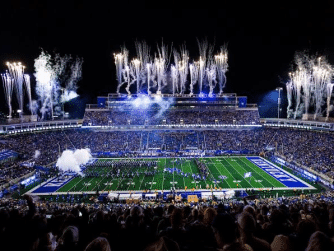
Tennessee recovered to finish 10–2 and win the Citrus Bowl. Manning became one of football’s defining quarterbacks. Memphis had other seasons to build and other milestones to pursue. But 21–17 stayed.
It stayed in the memories of the people who filled the Liberty Bowl. It stayed in the argument over Cobb’s return. It stayed in Scherer’s email address and, judging by his account of that Pro Bowl encounter, in Manning’s recollection.
When Scherer looks back, however, the score is not the final destination. He returns to a father and son at midfield. The victory was large enough for national television. The celebration was large enough to follow him home. The moment he treasures most was small enough to fit inside an embrace. Thirty years later, Memphis still has the win. Scherer still has the hug.