
Every April, the spotlight locks onto the same names: the franchise quarterbacks, the blue-chip pass rushers, the can’t-miss left tackles. Those are the picks that sell jerseys and dominate mock drafts, but they’re not always the ones that swing seasons. The real drama starts after the first wave, when front offices stop drafting for the cameras and start drafting for their board. That’s where the “who is THAT?” prospects live — the ones who walk into rookie minicamp as afterthoughts and walk out as future starters.
Hidden Gems Who Could Steal the 2026 NFL Draft
This draft has no shortage of those hidden gems. They’re the linebackers who were asked to do everything in college and never got to master one thing. They’re the wide receivers buried in deep position groups who only saw a fraction of the targets their talent deserved. They’re the small‑school defensive backs who spent their Saturdays erasing future accountants and engineers, not national TV stars, but still looked like the best athlete on the field.
A week from now, one GM is going to turn in a card for a player most fans barely know and, in that moment, quietly change the shape of his roster. Maybe it’s a rangy linebacker whose role finally gets simplified. Maybe it’s a big‑bodied receiver who turns every 50/50 ball into a quarterback’s best friend. Maybe it’s a versatile safety who becomes the glue for an entire coverage scheme. Before those names flash across the screen on Day 2 and Day 3, it’s worth getting to know a few of them — and imagining what they could become in the right uniform.
Harold Perkins, LB – Unfinished Monster in the Right System
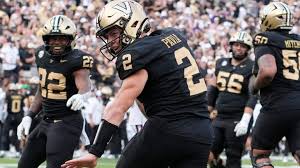
Harold Perkins is the kind of defender who makes offensive coordinators slam the laptop shut and go find more coffee. The athletic profile jumps off the screen: rare first‑step quickness, real range, and the kind of closing burst that erases mistakes up front. What held him back in college wasn’t talent; it was usage — asked to drop, rush, and clean up in equal measure, he never got to become truly elite at one job.
Drop him into an NFL scheme that picks a lane for him, and Perkins stops being labeled a “tweener” and starts looking like a problem. A defense like Pittsburgh’s could turn him loose as the heat-seeking missile behind a physical front, letting him blitz, spy, and chase from sideline to sideline. In Dallas, lining him up next to Micah Parsons in a creative pressure package would force offenses to decide which nightmare they want to slide toward. Even a team like New Orleans could keep him home and unleash him as a new‑age playmaker in a division full of mobile quarterbacks.
Wherever he lands, Perkins has a chance to be that pick fans talk about in three years with a smirk: “How did everyone let him fall that far?”
Deion Burks, WR – The Space‑Creator Quarterbacks Love
Every draft has a receiver who’s “too small,” “too light,” or “too specialized” until he’s torching nickel corners on Sunday night. Deion Burks fits that mold. He wins with suddenness: off the line, at the top of routes, and once the ball is in his hands. He doesn’t need 10 targets to make noise; three or four schemed touches can flip field position.
Imagine him in Kansas City, motioning across the formation with a safety trying to pass him off through traffic, then snapping into a deep over route as Patrick Mahomes extends the play. Or in Buffalo, ripping a crosser behind play‑action, catching the ball in stride, and turning upfield into open grass. On a young team like Houston’s, he becomes the built‑in “cheap explosive,” the guy designed for when the offense needs a quick jolt.
Burks probably isn’t getting handshakes in the green room on Thursday night. But on Sundays this fall, he’s the type who suddenly has 80 yards and a score on four touches while everyone asks how he lasted until Day 2.
Charles Demmings, S – Small‑School Chameleon With Big‑League Traits
Then there’s Charles Demmings, the small‑school safety who played all over the secondary and still managed to look comfortable. He’s long, he can run, and he tackles like a guy who never forgot he had to earn his scholarship every week. Teams will nitpick the level of competition and the occasional false step, but the bones of an NFL starter are there.
In a place like Baltimore, Demmings could be the next in a long line of do‑everything defensive backs: a dime safety as a rookie, buzzing down over the slot, blitzing off the edge, and carving out a home on special teams until the staff trusts him with more. In San Francisco or Green Bay, he fits that modern mold of safeties who can play half‑field, spin down to the box, and disguise coverage without coming off the field.
He won’t walk into the league with a starting job, but if he hits, we’ll look back and realize he was hiding in plain sight the entire time.
Denzel Boston, WR – Contested‑Catch Bully Built for Big Stages
If Burks is the jitterbug, Denzel Boston is the bully. He’s the receiver who turns every jump ball into a personal duel, who boxes out like a power forward and treats the boundary like his ally, not his enemy. Add in enough speed to force corners to respect the deep ball, and you’ve got the makings of a quarterback’s security blanket.
Pittsburgh feels like the spiritual fit: a big‑bodied boundary target in a city that loves physical football. Tell him the third‑and‑7s and red‑zone fades are his and let him grow from there. Chicago or the Giants could use him as that long‑missing outside presence, the guy who gives their young quarterbacks an “I’m covered, but I’m open” option when the pocket starts to collapse.
Boston doesn’t need 4.3 speed to change a passing game. He just has to keep doing what he’s already done: win when it’s crowded, win when it’s late, win when the ball placement isn’t perfect.
Jacob Rodriguez, LB – The Coach’s Favorite Waiting to Happen
Some sleepers flash with freaky measurables. Jacob Rodriguez flashes with the kind of reliability that makes coaches relax. He diagnoses quickly, flows cleanly, and arrives with enough force to finish the play. On film, he looks like the guy who knew everyone’s job in the huddle and then went out and did his own at full speed.
On a young defense in Carolina, he could be the steady voice in the middle, the one who gets the front lined up and buys the secondary a beat with his calls. On a retooling roster like the Rams, he’s the mid‑round pick who suddenly is playing 700 snaps because the staff trusts him. In New England, he feels like the next in a line of smart, versatile linebackers who quietly hold everything together.
He may start as a special‑teams demon and nickel piece, but if his football IQ translates, he’s the kind of player who’s still wearing the same jersey on his second contract.
Jadarian Price, RB – The Undersold Engine for a Modern Offense
Finally, there’s Jadarian Price, the running back who never quite got to put together a full, clean, headline season — but who always looked right when the ball found him. He runs with patience and vision, has enough burst to punish overpursuit, and can legitimately help on passing downs in protection and as a receiver.
In Kansas City, he could quietly become the back Mahomes trusts most in obvious passing situations, chipping edge rushers before slipping out into space. In Dallas, he’d step into a committee and threaten to take the lion’s share of touches if he proves he can hold up. In Miami, his one‑cut style and soft hands fit perfectly in an offense built on angles and speed.
Price isn’t being drafted to be a 25‑carry workhorse. He’s being drafted to make 12 touches a game feel like 20 in the box score.
In a week, the football world will argue about who won Round 1. But the front offices that really separate themselves are the ones that win the quieter moments on Friday and Saturday — the ones that see Harold Perkins as more than a tweener, that trust the tape on Deion Burks, that are willing to bet on Charles Demmings, Denzel Boston, Jacob Rodriguez and Jadarian Price. Those are the GMs who walk out of Detroit not just with headlines, but with answers.