

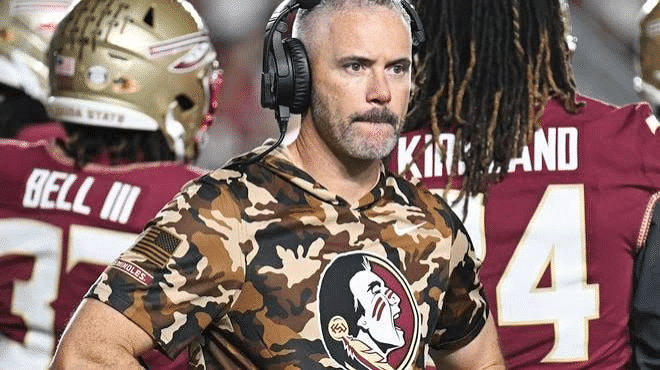
College football’s accountability conversation too often stops one office short. The coach will have to answer for the record. Just as a man making possibly millions of dollars should. He selected assistants, shaped the roster, approved the plan and stood on the sideline when the decisions became results. A difficult season does not become somebody else’s responsibility because the questions are uncomfortable.
Everybody Wants the Coach Fired. Who Hired Him?
But before the entire accountability conversation ends at his office door, somebody should walk down the hall. Who hired him? Who negotiated the contract? Who approved the extension? Who decided the program needed more time, then decided it needed a new direction? Those are decisions, too. If the football operation has failed badly enough to require an expensive restart, the people who designed and financed that operation belong in the examination.
The Hire Was an Institutional Decision
A coach does not appoint himself. An institution identifies a candidate, evaluates the fit and agrees to the terms. It decides which risks are acceptable and which qualifications matter most. Sometimes a reasonable process produces an unsuccessful result. Injuries happen. Personnel evaluations miss. Circumstances change. An unsuccessful hire is not automatically proof of administrative incompetence.

But neither is it merely bad luck because the administrator responsible would prefer that explanation. The useful questions concern the process. What did the school believe the coach would accomplish? What evidence supported that belief? Which concerns were identified before the agreement? How were they addressed? Those questions should not first become relevant after the introductory enthusiasm has disappeared.
Extensions Deserve Their Own Examination
The original hire is only one decision. An extension is another. It represents a fresh judgment about performance, retention risk, contractual leverage, and the program’s direction. A school may reasonably decide that stability is worth purchasing. It may believe another institution is prepared to pursue its coach. It may conclude that the early evidence supports a longer commitment.
Fine. Explain why. If that judgment later proves costly, the extension should not vanish into the general disappointment surrounding the season. The administrator who approved it was making a consequential evaluation, just as the coach was making consequential evaluations about his staff and roster. Accountability should follow both.
The Buyout Is a Consequence, Not a Strategy
A large exit obligation does not prove a coach should stay. Sometimes an institution concludes that the cost of continuing is greater than the cost of changing. That can be a defensible decision. But paying for an exit is not the same as establishing a better destination.
Who is the realistic replacement? Why does that person fit the job? What will the institution provide differently? Which mistakes in the previous process will not be repeated? Without those answers, the school may be purchasing the appearance of action. Supporters are entitled to demand better football. They should also demand a better explanation than “we had to do something.” There is always something to do. The responsibility is choosing something that makes sense.
The Next Search Needs More Than a New Name
The coach owns his performance. The institution owns the conditions it created and the decisions it approved. That does not mean every dismissal should trigger another dismissal. Replacing everyone is no more inherently intelligent than replacing nobody. It means the review should be broad enough to identify where the failure actually began.

Was the coach wrong for the job? Was the job misrepresented? Were expectations disconnected from resources? Did the administration overlook evidence because it liked the announcement? The next introduction will offer another opportunity to celebrate. Before that happens, somebody should explain what the school learned. Otherwise, the new coach may be the only part of the process that changed.