
When blood hit canvas on the South Lawn of the White House, America wasn’t just watching a fight card. It was watching a three-hour campaign commercial dressed in 4‑ounce gloves, streamed to the country from the most powerful backyard on earth.
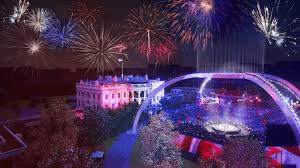
Blood Hit Canvas On The South Lawn, And The White House Cheered
UFC Freedom 250 turned the people’s house into a partisan arena, and the message was as loud as any knockout: this presidency doesn’t just attend big events, it owns the spectacle.
A New Playbook For Power And Sports
UFC Freedom 250 was packaged as a patriotic celebration of America’s 250th birthday and the president’s 80th, but the branding did more than drape flags over the Octagon. It fused state power and sports entertainment into one made‑for‑TV product aimed squarely at a young, mostly male audience that both the UFC and Donald Trump covet. The South Lawn wasn’t just a venue; it was a co‑star, framed in every walkout, every anthem, every cutaway to the presidential row.
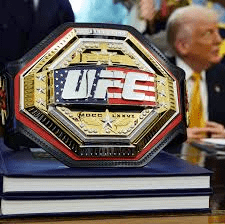
You didn’t need a stump speech when the images did the campaigning. Fighters made the long walk with the White House glowing behind them, while the president sat cageside alongside Dana White, serenaded with “Happy Birthday” between bouts. The visuals told their own story: strength, toughness, and patriotism live here, in this administration, with these allies. What might once have been an extraordinary intersection of politics and sport became something more calculated—a blueprint for using live events as political broadcast, with championship belts and head kicks as the hooks.
Viral Chaos, Real-World Consequences
Into that carefully staged environment walked Josh Hokit, and with him came the moment that revealed what this spectacle really valued. At the weigh‑ins, Hokit stumbled toward the scale in a sloppy, exaggerated sway, playing the role of a man who’d been at the bar longer than in the gym. Then came the fake vomit, a sick‑looking stream down his chest in front of cameras, followed by the line built for social clips: “So what, maybe I was drinking last night. Who wouldn’t be?”
Theatrics aside, perception is everything. For millions who would only ever see that 15‑second clip, the image of UFC Freedom 250 became a “drunk” heavyweight puking on himself on the White House stage. The remainder of the quote is, “I have a giant black man that wants to knock me out.”.
Discipline and professionalism—a fighter’s entire job in the hours before making weight—were downgraded to props in a content bit. When that kind of chaos is rewarded with clicks and replayed on loop, it sends a clear message about what the sport’s biggest platforms think is worth celebrating.
Then fight night delivered another flashpoint: Hokit using his post‑fight mic time to spit slurs at Michelle Obama, with the president visible cageside as the comments landed. These same conspiracies were spewed by Hokit regarding WNBA star, Brittney Griner following UFC 324 while being interviewed by Joe Rogan, same as on Sunday night.
What should have been a moment to talk about performance instead became a national story about bigotry, decorum, and the standards—if any—that apply when you move a cage to federal property. Even if the UFC or the White House issues statements later, the indelible national snapshot is already fixed: a fighter clowning as a drunk, then weaponizing hate speech on the symbolic front porch of American democracy.
What This Means For Sports, Politics, And The Public
For combat sports, the ethical questions here go beyond one fighter’s judgment. MMA already lives in a gray zone where we ask athletes to risk long‑term health for short‑term glory, and we justify it with structure: medical checks, commissions, codes of conduct, a culture that at least pretends to value safety and preparation. When a weigh‑in becomes a stage for glamorizing the idea of fighting drunk—at the White House, no less—that thin layer of seriousness starts to tear. When slurs go out uncensored from that same stage, the tear turns into a rip.
Beyond the cage, UFC Freedom 250 lands as a national precedent. The White House is now on record as a viable backdrop for a corporately sponsored, polarizing fight festival that doubles as a political broadcast. Future administrations will study the sightlines, the engagement numbers, and the partisan reactions. They will see how effectively this kind of event can rally a base, dominate news cycles, and hard‑wire a visual association between a presidency and a particular brand of toughness. Once that door is kicked open, it rarely swings shut again.
So the question isn’t just whether the fights delivered. They did, in bursts, because fighters always will. The question is what, exactly, America chose to celebrate when it turned its most symbolic lawn into a cage site and handed the microphone to chaos. Was it courage and craft, or the catharsis of violence framed around one political figure? Was it national unity, or the deepening of cultural fault lines through spectacle?

You can love this sport and still be honest about the answer. You can respect the athletes and still call out the way their work is being staged, packaged, and weaponized. UFC Freedom 250 didn’t just push the line between sports and politics—it dared us to admit that, for now, the line barely exists.