
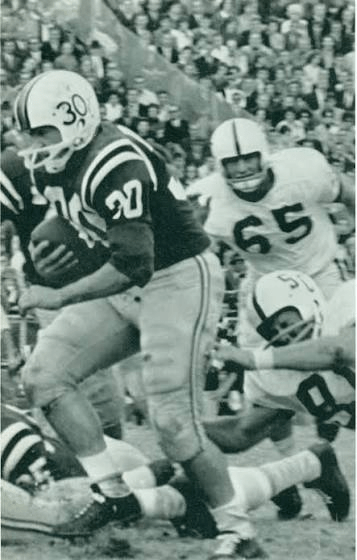
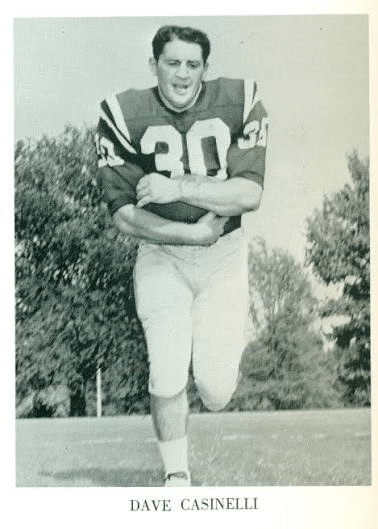
Before DeAngelo Williams became the modern face of Memphis running backs, there was Dave Casinelli — the original workhorse, the bruising fullback who helped make the Tigers matter on a national stage. His No. 30 is more than a retired jersey; it is a time capsule from black-and-white Memphis, when football was mud, power, and sheer stubbornness.
The Original Workhorse
Casinelli was the kind of back that fit the 1960s perfectly: a tailback by label, a battering ram by trade. In an era when offenses leaned on toughness and repetition more than finesse, he was built to take punishment, keep going, and drag a defense backward one hard-earned yard at a time. Memphis has had many dynamic runners since, but Casinelli represented the old language of the game — low pads, heavy traffic, and a refusal to go down clean.s
That style mattered because the Tigers were still a young program trying to prove it belonged. Memphis football did not yet have the branding power, the television presence, or the national habit of relevance that came later, so every chain-moving run carried extra weight. Casinelli’s role was not just to produce points; it was to give the program an identity opponents could feel.
The 1963 Breakthrough
Everything culminated in 1963, when Memphis went undefeated and finished 9-0-1, with the lone blemish a tie against No. 2 Ole Miss. That season gave the city a rare football high, because a still-developing Memphis program suddenly had proof it could stand with the best in the country. The Tigers closed the year ranked No. 14 in the final UPI Coaches Poll, and Casinelli was central to that climb.
He became the first Tiger to rush for more than 1,000 yards in a season, finishing with 1,016 yards in 1963. He also led the nation in rushing that year and captured the national scoring title, a remarkable standard in an era before Memphis was accustomed to producing national statistical leaders. For a school and city that had spent years looking for a football breakthrough, those numbers were not just impressive — they were defining.
Memphis Before the Spotlight
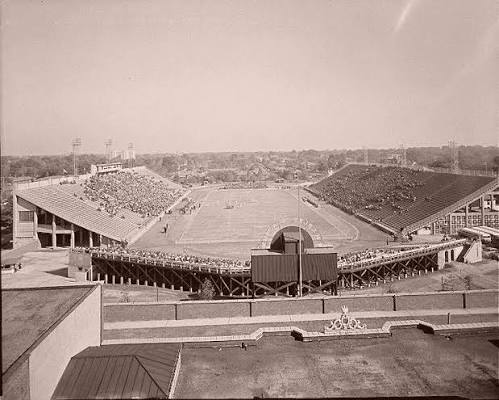
There is a certain charm in imagining those Saturdays at Crump Stadium: smaller crowds than modern fans are used to, leather helmets giving way to plastic, and a city that did not yet have an NBA team or an NFL franchise to claim its sporting identity. Football was the main event, and Casinelli was one of the reasons people showed up. Memphis packed the stands to watch a local team pound out yards the hard way, and that bond between team and city gave the unbeaten run its lasting emotional power.
The 1963 team also marked a turning point in how Memphis was viewed beyond its own borders. The Tigers were not just a regional curiosity anymore; they were a team with enough muscle and balance to earn national attention. Casinelli’s bruising runs became part of that story, the kind of production that made people outside Memphis take notice even if they had never paid the program much attention before.
The Standard That Lasted
Casinelli’s records endured for decades, which is usually how true program standards reveal themselves. He remained the benchmark for Memphis backs long after his playing days ended, with his career total of 2,636 rushing yards and 36 touchdowns placing him near the top of the school’s historical charts. When later stars like DeAngelo Williams came along, they were not chasing an anonymous old statistic — they were chasing a name that had already become part of the program’s backbone.
That is why No. 30 still resonates. It is nostalgia, yes, but it is also instruction: this is where Memphis football learned that a single runner could help define a generation. Before the modern highlight reels and national profile, there was Dave Casinelli, churning through mud and memory, and giving the Tigers an identity worth retiring.