
The first thing Memphis should understand about Evansville’s perimeter offense is that a missed three-pointer does not necessarily mean the defense succeeded. If the same opening remains available, the next attempt may produce a different result. Sunday’s assignment is therefore more demanding than hoping the Purple Aces shoot below their average. The Tigers need to identify how those attempts develop, decide which ones they can accept, and eliminate the breakdowns that make an opponent comfortable.
Evansville enters its first meeting with Memphis at 3–2. Nearly half its field-goal attempts—48.9%, according to the supplied scouting notes—have come from three-point range. The Purple Aces have converted 33.5%. That combination establishes volume without establishing that every shooter, action or possession presents the same threat.
The Percentage Does Not Explain The Possession
Memphis has already experienced how quickly perimeter production can change a game. Vanderbilt made 15 of 32 threes in a 105–81 victory over the Tigers. Louisville made seven of 14 before halftime, then missed all 15 after the break as Memphis rallied to win 98–78. Those results demand examination, not a universal explanation. Vanderbilt cannot all be assigned to poor effort without reviewing them. The Louisville misses cannot all become proof of perfect defense.
The same discipline should guide Sunday’s evaluation. Was the shooter waiting after a drive drew help? Did a screen force defenders into an unclear exchange? Did Memphis lose somebody while recovering toward the paint? Did an offensive rebound create an unsettled second opportunity? Each situation asks something different about the defense.
If the Tigers repeatedly concede the same clean attempt and Evansville misses, the scoreboard may temporarily conceal a problem. If Memphis forces a difficult shot and the opponent makes it, the correct response may be maintaining the responsibility rather than changing everything. The aim is not eliminating every three-point attempt. It is understanding the attempts Memphis is allowing.
Personnel Must Shape The Response
Symons offers a clear starting point. He is 10-for-24 from three and is coming off a 21-point performance against Le Moyne in which he made five of eight from distance. That identifies a shooter Memphis must locate. It does not establish whether his opportunities primarily come from movement, stationary catches or another action. Those details belong in the film work.
Quinet presents another responsibility as Evansville’s leading scorer at 20.4 points per game. Casey averages 17 points and 7.3 rebounds. Memphis cannot become so consumed with the three-point line that it abandons the rest of the possession. Defensive attention directed toward one threat can create space for another. The challenge is coordinating the response rather than asking each defender to solve an isolated problem.
Who contains the initial action? Where is the help supposed to come from? Which player covers the space that helper leaves? Those questions become especially important when a possession requires more than one rotation. A late sprint toward the shooter may look urgent while revealing that the real breakdown happened several seconds earlier. The review should begin at the source, not merely with the defender nearest the eventual attempt.
The Rebound Completes The Perimeter Defense
Louisville collected 16 offensive rebounds against Memphis. The Tigers won comfortably anyway, helped by exceptional second-half shooting. That does not make the unfinished possessions irrelevant. Against Evansville, the defensive assignment continues after the ball leaves the shooter’s hands.
A successful contest can pull a defender away from rebounding position. Help on the initial action can leave another player responsible for finding an opponent. If nobody completes that exchange, Memphis may defend the first attempt well and still surrender another opportunity. Raw rebounding totals will provide part of the postgame picture. The possession examples should explain the rest.
Track one sequence where the Tigers contest, locate opponents, and secure the ball. Track another where the shot is difficult, but the rebound remains available. The difference can reveal whether the problem is positioning, communication, or a missed individual responsibility. Memphis also needs to avoid treating every perimeter catch as an emergency. An uncontrolled recovery can exchange one concern for another by allowing the ball-handler past the defender. The closeout has to connect with the help behind it.
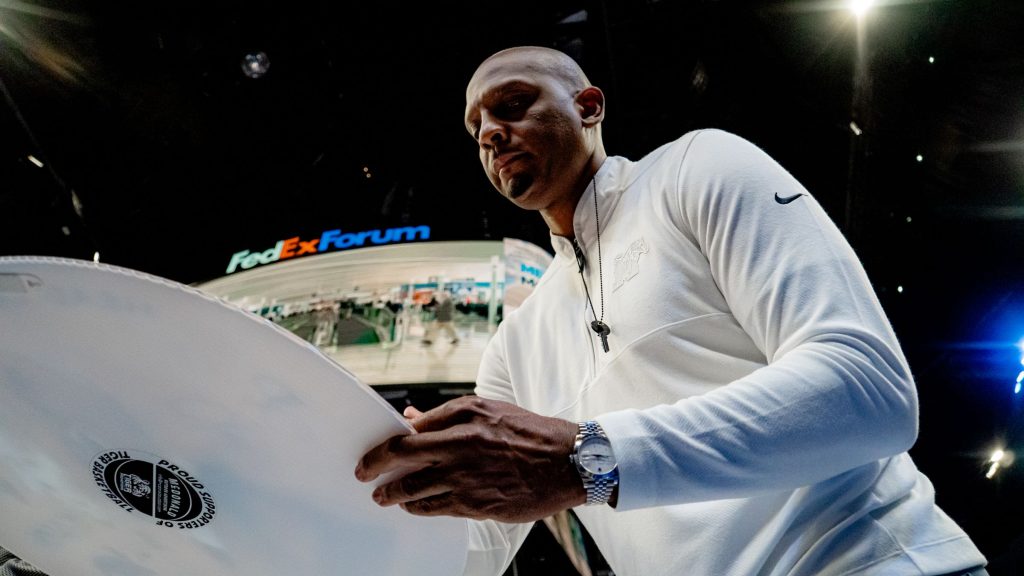
Sunday’s game begins at 1 p.m. at FedExForum and will be streamed on ESPN+. The opponent’s name may not create the same anticipation as Louisville’s, but the defensive work remains substantial. Evansville’s shooting profile allows Memphis to demonstrate greater precision. Not merely more activity. Not simply a better-looking opponent percentage. Identify the action. Communicate the responsibility. Contest the attempt. Finish the rebound. If the Tigers do those things consistently, the defensive performance will have substance beyond whatever the three-point column says at the end.