
Marcus Stokes gave Memphis a finish worth celebrating. He did not give anyone permission to simplify his story. Five touchdowns after halftime, an overtime victory and another 300-yard passing performance belong in the record. So does the racist slur that cost him a Florida scholarship opportunity and changed the direction of his recruitment. An honest profile cannot use the first set of facts to cover the second. It must explain the football progress without pretending a box score can measure accountability.
Stokes’ latest performance helped Memphis beat East Carolina, 41–34. His path to that moment ran through Division II West Florida, a transfer, a coaching connection and a competition for the starting job. The result is a story about opportunity. What makes it worth telling is the work and responsibility attached to that opportunity.
The Detour Became a Football Foundation
Stokes was a four-star prospect at Nease High School in Ponte Vedra, Florida He ranked as the No. 33 quarterback in his class in the 247Sports Composite. He committed to Florida before the program withdrew his scholarship opportunity after a video appeared of him using a racial slur while singing along to a rap song. That incident was not an incidental detail. It changed his football path.
Stokes went to West Florida, redshirted in 2023 and became a starting quarterback during the 2024 season. By 2025, his production supplied a substantial résumé: 3,297 passing yards, 30 touchdown passes, 367 rushing yards and 10 rushing touchdowns. He became the Gulf South Conference Offensive Player of the Year and a Harlon Hill Trophy finalist.
Those accomplishments explain why another program would evaluate him as a potential addition. They do not independently establish personal growth. Stokes has publicly acknowledged the mistake. In an April interview he said, “I’m not going to forget about my mistake, because I can never forget about it.”
That statement belongs in the story as his stated position. It should not become an unsupported declaration that accountability is complete. His actions over time must carry that weight.
Memphis Supplied an Opportunity, Not a Guarantee
The move to Memphis arrived during a broader transition. Charles Huff replaced Ryan Silverfield, and the roster was rebuilt largely through transfers. Stokes entered a competition with South Carolina transfer Air Noland rather than receiving an uncontested assignment.
There was an established coaching connection, too. Offensive coordinator Kevin Decker had recruited Stokes while at Old Dominion before moving to Memphis. The Commercial Appeal identified Stokes’ experience and fit with Decker’s high-tempo offense as important context around his arrival.
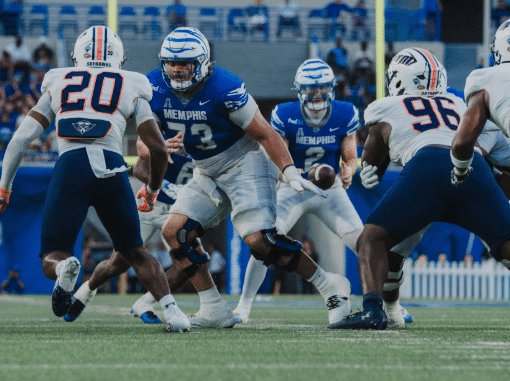
That is more useful than simply describing the transfer as a move to a bigger stage. Fit matters. So does competition. What system will the quarterback run? Which coaches understand his strengths? How does previous production translate? What must he demonstrate before receiving responsibility for the offense?
Stokes won the starting job over Noland. That answered the first competitive question at Memphis. It did not settle every question about the season. An FBS starting position was a new responsibility, not a retrospective award for his Division II production. His work had to stand against a different schedule and a different level of expectation. The opportunity opened the door. Performance would determine what happened inside it.
The Comeback Added Evidence, Not a Final Chapter
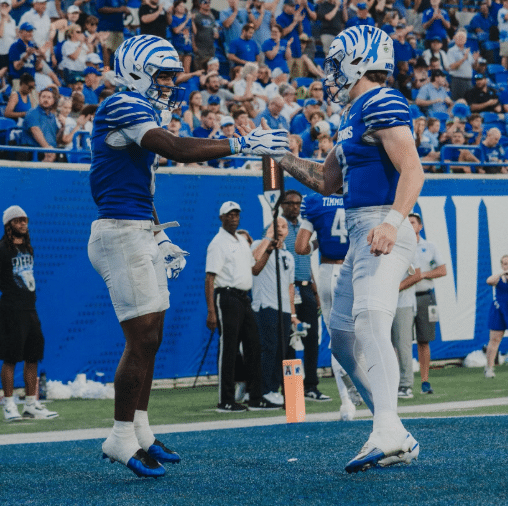
Against East Carolina, Stokes’ most productive work arrived after Memphis had created a difficult situation. The Tigers trailed 16–3 at halftime. Stokes finished 29-of-43 for 320 yards, with three touchdown passes and two rushing scores. All five touchdowns came after halftime.
This is his fourth 300-yard passing performance of the season and a career high in completions. Those details connect the comeback to a developing performance record. This was not simply one isolated highlight detached from the rest of his season. His five-yard overtime touchdown gave Memphis the lead. Ellis Ellis Jr.’s interception on East Carolina’s possession secured the victory.
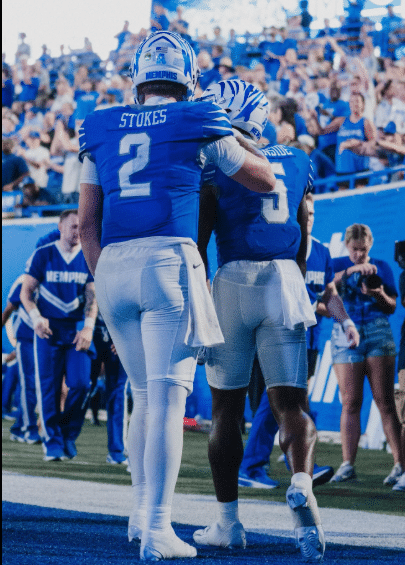
Stokes drove the recovery. A teammate completed the ending. The first half still belongs in the evaluation. So does the need to turn productive stretches into more consistent complete games. There is no reason to force the night into a finished redemption story.
Stokes has earned recognition for documented football accomplishments. He has acknowledged the incident that changed his recruitment. Continued conduct and continued work are the appropriate measures of what comes next. For Memphis, the immediate question is whether its quarterback can help make a strong offense more consistent.
For Stokes, the broader opportunity is to build a career without treating progress as permission to forget. The touchdowns tell us what he did Thursday. The story of who he becomes requires more time—and more than the scoreboard.