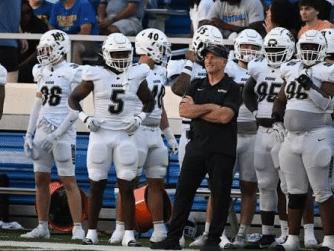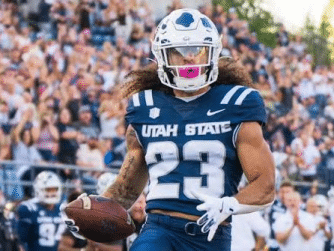


KJ Jackson’s mistakes deserve scrutiny. So does an Arkansas offense that scored once against Texas A&M and never found another successful answer.
Arkansas Cannot Put Its Entire Offensive Problem on KJ Jackson
Yes, Jackson needs to play better. Arkansas cannot allow that statement to become the end of its offensive evaluation. The quarterback made a costly early mistake against Texas A&M, but the Razorbacks then had the remainder of the game to show that they could recover, adjust and produce. They scored one touchdown and never scored again.
That is a problem involving more than one position. Jackson belongs at the center of the review, but the review must also examine the opportunities the offense creates and the support available when the first answer disappears. Tennessee arrives in Fayetteville on Saturday with another chance to test whether Arkansas’s diagnosis has become an effective correction.
Jackson’s Mistakes Must Be Examined Honestly
Jackson threw for 111 yards, one touchdown and one interception in Arkansas’s 34–7 loss at Texas A&M. His early interception gave the Aggies a short field and helped establish a deficit the Razorbacks never overcame.
The quarterback’s responsibility includes recognizing the situation, making an appropriate decision and protecting the possession. An early turnover changes more than the offense’s statistics. It can affect field position, the defense’s workload and the conditions under which the next offensive series begins.
Arkansas did respond. Jackson connected with Chris Marshall for a touchdown that cut a 14–0 deficit in half.
That possession deserves recognition without being allowed to erase the rest of the performance. One successful drive did not establish consistency, just as the early interception did not explain every stalled possession afterward.
A useful quarterback review must include both. Which decisions were correct? Which opportunities were missed? What happened when the defense changed the available options?
The answers should come from individual plays rather than a conclusion selected in advance. Jackson needs accountability that identifies what he can improve, not simply a collection of unsuccessful snaps used to repeat that improvement is necessary.
The Offense Must Supply More Dependable Situations
After Arkansas scored, Texas A&M produced the remaining 20 points. The Razorbacks never added to their touchdown, and a later fourth-and-goal attempt from the 1 ended with a two-yard loss.
That short-yardage result belongs in the evaluation alongside the passing problems. An offense needs useful answers in several different circumstances, not merely a concept that produces one scoring play.
Near the goal line, the available space changes. On a difficult passing down, the defense has a clearer expectation of what is coming. After the opening series, the opponent has additional information about the plan.
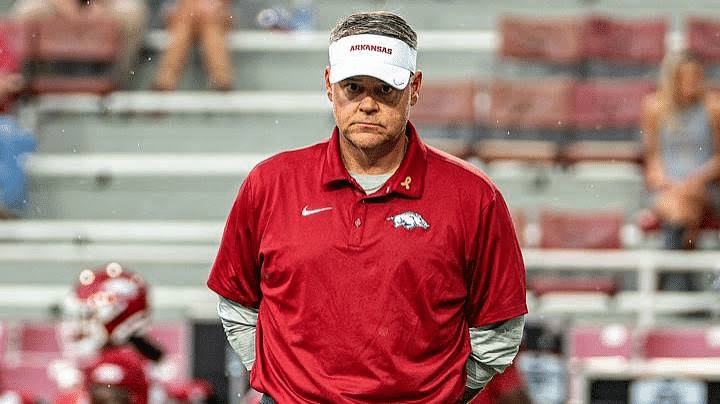
Arkansas must respond to those circumstances as an entire operation. Protection, route execution, timing and the running game all influence the situations in which Jackson makes his decisions.
Examining those elements is not an attempt to excuse the quarterback. It is an attempt to understand what better quarterback play requires and whether the offense is helping create those conditions.
Ryan Silverfield acknowledged shared responsibility after the loss, calling for everyone in the program, beginning with himself, to find ways to improve. The preparation for Tennessee should reflect that standard.
An honest review cannot stop at the most visible player. It must determine whether the offense’s dependable options are clear enough and whether the players can execute them when the opponent takes something away.
Tennessee Needs to See a Change on the Field
Saturday’s game begins at 3:15 p.m. Central at Razorback Stadium. By then, Arkansas’s explanations will matter less than the evidence produced by its possessions.
Does the offense create manageable downs? Can it move the ball after the opening plan has been tested? Does a drive near the goal line end with points rather than another missed opportunity?

Those are reasonable measures of progress without requiring Jackson or the offense to play perfectly. A useful adjustment might appear in the timing of a decision, the structure of an early possession or the answer available after an unsuccessful snap. The specific solution belongs to the staff, but its effect should be visible.
Arkansas also needs to avoid making one positive play carry the entire argument for improvement. A touchdown matters. So does what happens on the next series. The quarterback and the offense around him are not separate projects. Their progress is connected, and neither can be evaluated accurately by ignoring the other.
Jackson must improve. Arkansas must improve the operation in which he plays. The Razorbacks will not solve their offensive problems by choosing between those responsibilities. Saturday needs to show that they are addressing both.