

The quarterbacks deserve the attention. The more revealing matchup may be how each offense handles the circumstances that make quarterback play difficult.
Georgia–Alabama Will Be Decided Behind the Quarterback Headlines
The touchdown pass will receive the replay. The protection decision that made it possible may explain more about Georgia–Alabama. Saturday’s matchup features two unbeaten teams and productive quarterbacks, but the most informative evaluation will include what happens before the throw and what remains available when the expected opportunity disappears.
Georgia visits Alabama at 6:30 p.m. Central on ABC. Both teams are 5–0 overall and 3–0 in SEC play. Their Week 5 performances supplied evidence of effective offense; this meeting will test how well the decisions and support behind that production hold up against a different level of resistance.
The Quarterback Numbers Begin the Conversation
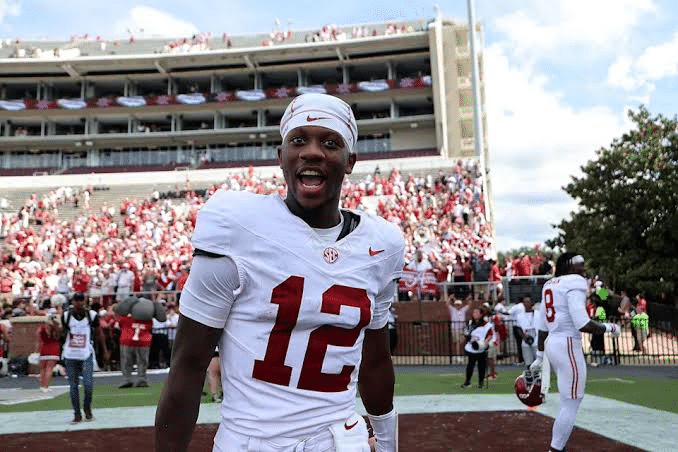
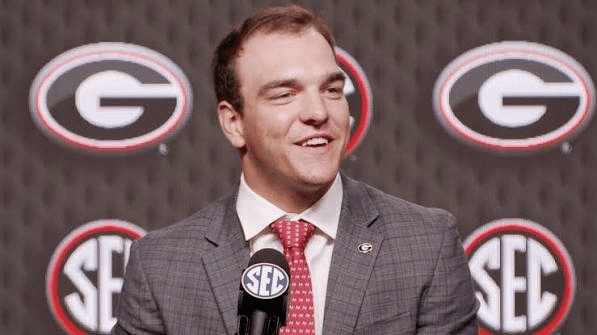
Keelon Russell threw for 285 yards and three touchdowns against Mississippi State, added a rushing score and committed no turnovers. Gunner Stockton completed 25 of 32 passes for 295 yards and three touchdowns in Georgia’s 38–14 victory over Vanderbilt.
Those performances deserve attention, particularly because productive quarterback play is not limited to accumulating yards. Retaining possession, recognizing the available answer and avoiding a damaging decision are part of the same job.
The numbers do not establish that the same opportunities will appear Saturday. A passing result comes from several connected actions: the call, protection, route execution, space created and the decision made as the snap develops.
A different defense may challenge those connections differently.
That is why Week 5 is better used as evidence than as a prediction. Each offense needs to preserve the successful work while preparing for the possibility that the next opponent removes an early answer.
The quarterbacks will be central to the discussion. They should not become the entire explanation for either offense’s performance.
Georgia’s Continuity Has a Specific Football Value
Georgia has used the same five starting offensive linemen throughout its first five games: Earnest Greene III, Dontrell Glover, Drew Bobo, Zykie Helton and Juan Gaston Jr.
Bobo and Greene provide fifth-year experience. Glover and Gaston are sophomores, while Helton is a freshman. The group combines familiarity with differing levels of experience.
Georgia has allowed five sacks through five games. That does not make the unit invulnerable, but it provides a current baseline for the Alabama evaluation.
The comparison with last season is notable. Georgia used a different starting offensive-line combination in each of its first six games in 2025. This year, the staff has been able to work from an established group.
The significance should be judged through execution, not simply celebrated as an advantage already realized.
How does the line communicate when the defensive presentation changes? Can the offense remain organized after an unsuccessful early-down play? What happens when the defense has a clearer expectation that a pass is coming?
Protection also cannot be separated entirely from Stockton’s decisions. Timing, recognition and the point at which the ball should be released affect whether a play remains viable.
Continuity gives Georgia a foundation. Saturday tests what that foundation supports.
The Ordinary Downs Can Shape the Biggest Moments
Watch whether either offense repeatedly creates difficult third downs. An explosive completion can change a possession, but early-down decisions determine how often the quarterback must produce one.
A routine gain matters if it prevents the offense from becoming predictable. An incomplete pass can be a useful outcome if the alternative is a forced decision that gives away possession.
Watch what happens when the original concept fails. Does the quarterback find another answer, protect the ball or make the situation worse?
Supporting players deserve the same attention. A catch that extends a drive, a block that allows the concept to develop or a protection adjustment that prevents pressure may not define the broadcast’s highlight package.
It can still define the possession. Georgia’s own offensive distribution adds another part of the matchup. Its game notes report 16 touchdown catches shared by 13 players through five games. That gives the passing production a broader context than one quarterback-receiver connection.
Alabama and Georgia have already demonstrated they can score. The stronger test is whether each offense stays organized when scoring becomes harder.
Russell and Stockton deserve the headlines. The result will be better understood by examining the work that allows them to succeed—and the moments when that work is challenged.