
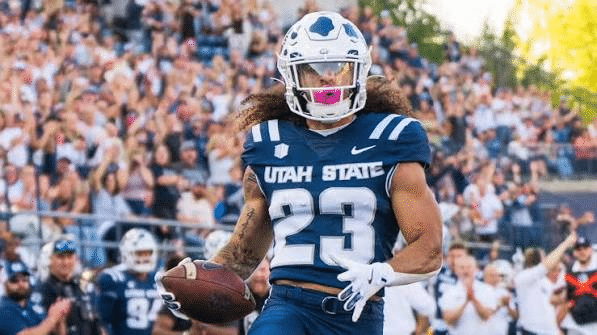
Friday’s one-point finish supplies more than another final score. It gives the rebuilt league a current result to explain as Saturday’s conference games arrive.
Utah State’s Rally Gives the New Pac-12 a Story to Carry Into Saturday
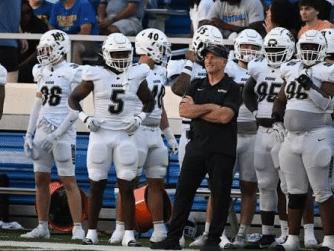
Utah State entered halftime trailing Washington State 16–3. It left Friday night with a 17–16 victory, turning 14 unanswered second-half points into a result that belongs in Saturday’s Pac-12 conversation. The league does not need to manufacture a storyline around that comeback. It needs to explain the one the game supplied.
That is part of the work facing a rebuilt conference. Fans may recognize its schools without yet understanding how to follow the competition from week to week. A result like Friday’s provides an opportunity to connect performances, introduce players and make the next matchup feel like part of the same developing story.
Friday Produced More Than a Score to File Away
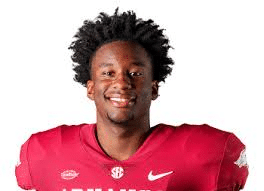
Grady Brosterhous threw for 150 yards and a touchdown. Javen Jacobs contributed 62 rushing yards and a score as Utah State erased Washington State’s halftime lead.
The final margin was one point, but the progression gives the result its meaning. Washington State scored 16 points before halftime and none afterward. Utah State produced the two second-half touchdowns necessary to change the outcome.
Those facts establish the comeback. They do not, without further examination, assign every cause to a particular adjustment or mistake.
A useful review should identify how the possessions changed and which plays made the difference. The coverage can recognize a successful response without inventing a halftime speech or claiming access to decisions that have not been reported.
The game also supplies recognizable contributions for viewers who may not follow either team regularly.
Brosterhous and Jacobs are part of the story because their production helped determine the result. Introducing those contributions gives the competition more substance than treating the schools as familiar logos on a new schedule.
Friday’s game should remain relevant when Saturday’s coverage begins.
Distribution Is a Platform, Not an Identity
The rebuilt Pac-12’s games appear across broadcast partners including USA Network, CBS Sports Network and The CW.
That establishes places to watch. It does not establish how consistently viewers find the games or whether they develop a habit of following the league beyond their own team.
Those are different achievements and should be evaluated separately. The existence of multiple partners does not, by itself, prove audience confusion. It also does not prove that the distribution has produced lasting interest. Either conclusion would require evidence beyond a list of channels.
The practical coverage assignment is more immediate: provide clear information, explain the competition and connect current results to the next set of games.
A viewer should understand why Friday’s comeback matters without needing to know every detail of conference rebuilding. The identity becomes more convincing when the football is explained consistently. Which team answered a problem? Which weakness remained? Which player made a contribution worth watching again?
Those questions allow the league’s current competition to carry the story rather than repeatedly relying on the fact that the structure is new.
Make the Weekend Feel Connected
Saturday includes San Diego State at Oregon State and Boise State at Fresno State. Those games should be presented as part of the same conference slate that began with Utah State’s victory.
That does not mean Friday’s result predicts Saturday’s outcomes. It means the audience should not have to begin its understanding of the league from scratch every time another broadcast starts.
The coverage can summarize what changed, introduce the next questions and explain how the results contribute to a developing race.
It should also preserve uncertainty. Early conference games provide evidence, but they do not settle every evaluation. A comeback win deserves attention without becoming proof that all of a team’s problems have disappeared.
A one-point loss deserves examination without being treated as a complete verdict on the losing program.
That balance makes the competition easier to follow honestly. The audience gets a current story and a reason to watch what happens next, rather than a collection of oversized conclusions.
The Pac-12 does not need every viewer to become invested in every school immediately. It needs the next game to feel connected to the previous one.
Friday supplied a comeback, identifiable contributors and a result worth discussing. Saturday offers the league another chance to turn separate broadcasts into a competition people recognize—and return to follow.