

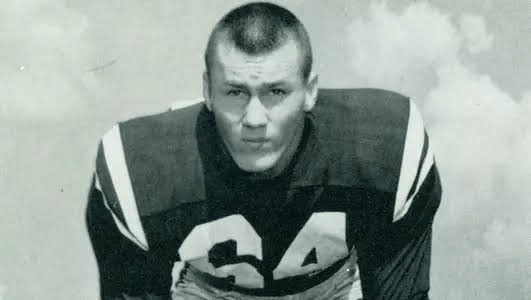
Every football program has at least one figure who comes to represent edge before anything else. Not polish. Not glamour. Edge.
For Memphis, John Bramlett is one of those figures.
No. 64: John Bramlett and the First Great Defensive Identity
His retired No. 64 belongs to an older and rougher layer of Tiger history, one that matters precisely because it predates the version of college football most fans are used to seeing. When Memphis chose to preserve Bramlett’s jersey, it was honoring more than a player. It was honoring a certain way of being—a version of football rooted in violence, intensity, and emotional authority.
That kind of legacy does not always translate easily through generations. Numbers fade. Seasons blur. But identities last.
Before Branding, There Was Bite
Modern college football programs spend enormous energy trying to define themselves publicly. They create slogans, launch graphics, and build aesthetic packages meant to communicate toughness before the first game is even played. Earlier generations had no such luxury. If a team wanted an identity, it had to earn one with the players on the field.
Bramlett came from that world.
His importance to Memphis football is reflected not only in the retired jersey itself, but in the way his name continued to matter inside the program long after his playing days. Memphis later attached his name to the John Bramlett Defensive Player of the Year award, a sign that the school viewed him as more than a historical figure. He became a standard against which later defenders could be measured.
That is one of the strongest indicators of real legacy. Plenty of players are remembered. Fewer become vocabulary.
Bramlett’s place in the retired-number line suggests he stood for what Memphis wanted its defense to feel like: aggressive, uncompromising, and emotionally charged. Even if younger fans cannot immediately pull up his old film, they can still understand what the school was trying to preserve when it took No. 64 out of circulation. It was preserving a temperament.
Why No. 64 Still Speaks
One of the easiest mistakes in writing program history is focusing only on the most visible stars. That approach misses the players whose greatest contribution was not statistical domination but cultural imprint. Bramlett belongs firmly in that second category.
His retired jersey tells the story of a defender who helped give Memphis football a personality when personality had to be earned the hard way. He belongs to the lineage of players who made opponents uncomfortable and teammates more confident simply by being there. Those players shape programs from the inside out. They create tone. They create standards. And when a program later wants to define what “real Memphis defense” should look like, those are the names it reaches for.
That connection becomes even more meaningful when viewed through Danton Barto, who twice won the program’s John Bramlett Defensive Player of the Year honor before eventually joining him in the retired-jersey group. That bridge across time says everything. Memphis did not just admire Bramlett in hindsight. It built part of its defensive culture around his name.
That is the mark of a foundational figure.
So No. 64 should not be understood only as a relic from an older football age. It should be understood as an anchor. It reminds the current program that toughness is not a slogan it invented. It inherited that responsibility from players like John Bramlett, whose value went beyond what could be captured in a stat line.
Retired But Not Forgotten is, at its core, a series about why a school refuses to let certain names fade into the background. In Bramlett’s case, the answer is simple: because Memphis football did not just need stars. It needed a backbone. No. 64 helped provide one.