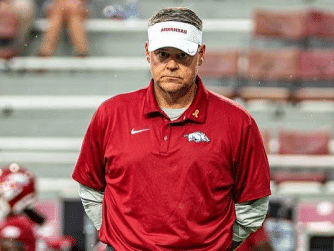

Three Stories Later, the Facts Are Still Ugly: The Sport Knows What Happened, Knows What Was Said, and Still Cannot Explain Where the Line Really Is
Art Briles Is Back, and College Football Still Has No Good Answer
From Baylor to Eastern New Mexico, This Series Exposed a Game That Moves Fast on Rules and Money — But Gets Shaky When the Question Is Character
The Question the Sport Still Cannot Answer
By the end of this week, the most uncomfortable part of the Art Briles story is no longer that he found his way back onto a college sideline. It is that college football still cannot give a clean answer for why he should have been able to.
That is the through line of this entire series. Not confusion over facts. Not missing context. Not some obscure technicality that only lawyers and compliance officers can sort through. The facts have been public for years. Baylor’s scandal is public. The NCAA’s criticism of Briles is public. The outrage that greeted Grambling State’s hiring and forced that brief comeback to collapse is public. The only thing that remains foggy is the part the sport keeps pretending is settled: where exactly the moral line is, and who gets to draw it.
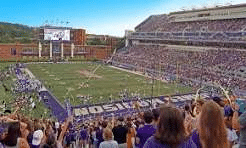
The first part of this series walked through the road back. Baylor’s rise under Briles was one of those stories college football loves — offense, points, relevance, power. Then the collapse came, and with it one of the most damaging scandals the sport has faced in the modern era. Baylor fired him in 2016, and for a moment it felt as if college football was trying to show that some things were larger than football. But the years that followed told a different story. Briles was never fully gone. He remained close enough to the game that a comeback always felt possible if the right school decided the price of controversy was worth paying.
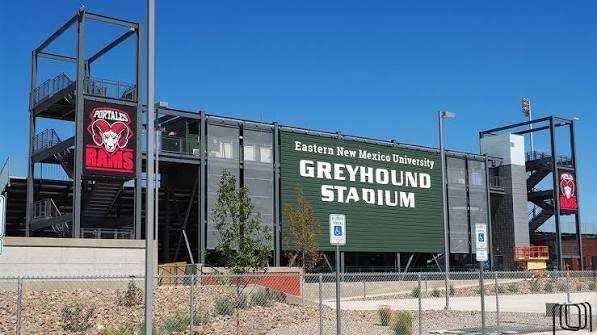
The second piece made the system underneath that decision harder to ignore. When the top of the sport decides a figure is too toxic to touch, that person does not always disappear. He often slides down the ladder. The pressure gets smaller, the scrutiny softens, the budgets tighten, and the appetite for risk changes. What looks untouchable in a Power Four building can start to look like a calculated gamble in Division II. That is how Eastern New Mexico entered this story. It did not create the moral ambiguity. It inherited it and acted on it.
Then comes the third and ugliest layer: what this says about college football’s priorities. This is a sport that can move quickly when money, rosters, and competitive balance are at stake. Transfer rules evolve. Eligibility fights trigger public responses. Lawsuits over athlete rights and compensation keep pressuring the system into change. The NCAA and conferences know how to speak clearly when the product feels threatened. But on Briles — on the question of whether a coach tied to one of the most disturbing institutional failures in recent memory should ever again lead young athletes — that same clarity never arrived.
The Gap That Says Everything
That absence is the answer, even if the sport does not want to admit it.
Because if college football had a strong, coherent, durable standard here, Eastern New Mexico would not have had this choice to make. If the people running the sport had ever truly decided what disqualifying failure looked like in this case, the issue would not still be hanging in the air a decade later. Instead, everybody has been left to improvise. Baylor fired him. Grambling backed away from him. Other schools kept their distance. Eastern New Mexico said yes. That is not accountability. That is fragmentation.
And fragmentation is exactly where institutions hide when they do not want to commit to a principle. It allows one school to say, “Not us,” without ever saying, “Not anyone.” It allows conferences to market integrity while leaving the hardest cases unresolved. It allows the sport to rely on fatigue, time, and distance rather than defining what it actually believes.
That is why this series was never just about Briles. He is the most uncomfortable name in the conversation, but the real subject is college football itself. What does it truly believe about leadership? What does it believe about oversight? What does it believe about the point at which a failure stops being something time can smooth over and becomes something permanently disqualifying?
So far, the sport’s answer appears to be situational. If a problem threatens the business model, the response comes quickly. If the issue is character, harm, and institutional responsibility, the response gets softer and more negotiable. That may not be the official message college football wants to send. But it is the message its actions send anyway.
There is a temptation to talk about redemption here, and redemption is not a meaningless concept. But redemption without a real standard of accountability is just branding. Rehabilitation without transparency is just public relations. If Briles’ return is supposed to represent forgiveness, then the sport still owes people a far more honest explanation of what was forgiven, why it was forgiven, and who had the authority to decide that in the first place.
Until then, this story stays where it belongs — at the center of a larger college football conversation, not tucked away as some niche Division II oddity. Baylor was not a small story. The NCAA’s words were not small. The backlash at Grambling was not small. Eastern New Mexico may be a smaller stage, but the question hanging over the hire is still national because the logic behind it reaches every level of the sport.
And that question remains brutal in its simplicity: what actually disqualifies someone from leading college athletes again? College football still has no good answer. That should bother everyone in the game a lot more than it seems to.