
The United States is still selling the same Olympic dream, but the supply line that feeds it is crumbling in plain sight. The pipeline runs through college campuses, and right now, that pipe is full of cracks, leaks, and political dynamite.
The Olympic Pipeline Is Breaking – The System Is In Crisis
For decades, the math was simple. Football and men’s basketball made the money. Olympic sports got the scholarships, coaching, and facilities that turned raw teenagers into medal contenders. That bargain is now collapsing under the weight of media money, revenue sharing, and an arms race that favors brands over broad opportunity.
College sports didn’t stumble into this moment. They spent years sprinting toward it.
A Model Built to Break
The entire system rests on one fragile truth: most Olympic sports do not pay for themselves. They never have. They were funded by football TV checks, donor wallets, and student fees that kept the books balanced on paper while the real business happened in the fall and early spring.
Then the money changed shape. The House settlement and related moves opened the door for schools to share millions in revenue directly with athletes. That shift was overdue in many ways. It also blew a hole in the old subsidy model. Athletic departments must now pay their biggest stars while pretending nothing else has to give.
Something always gives.
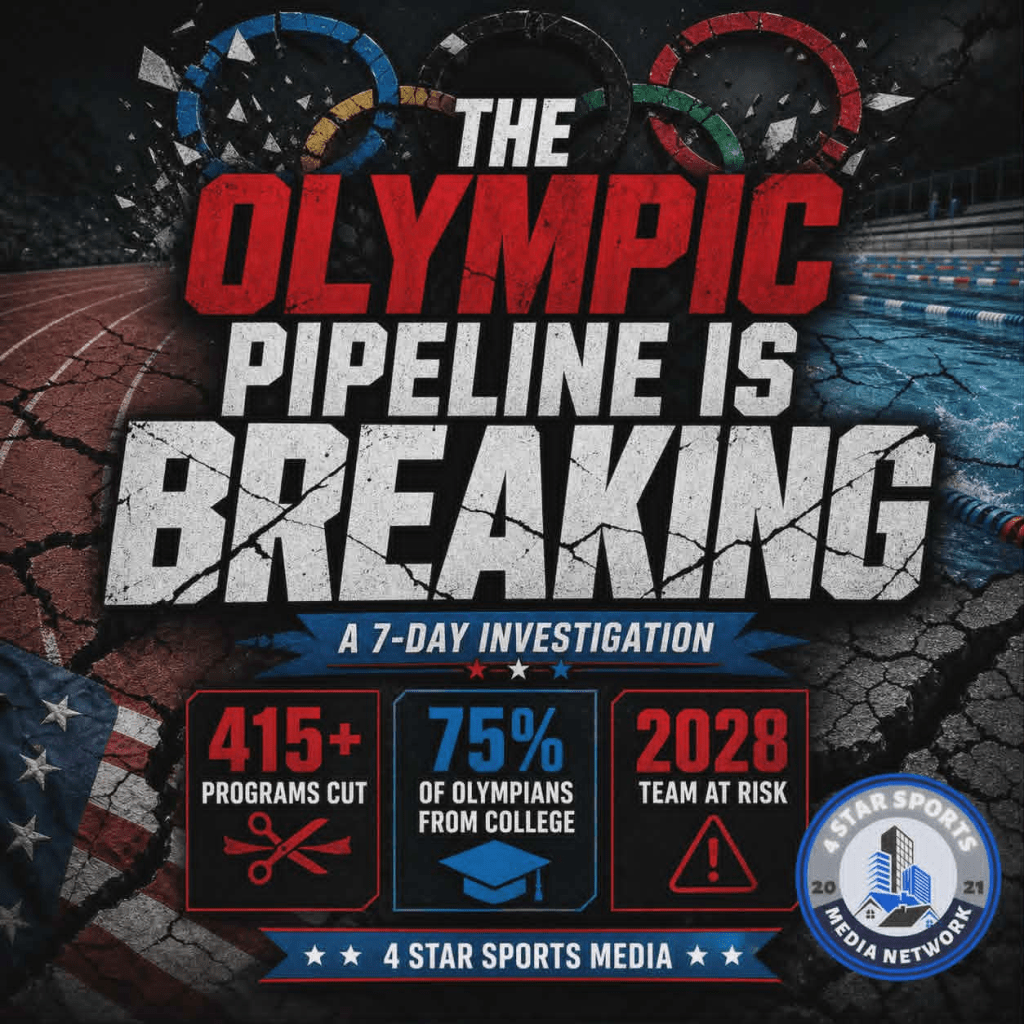
Since early 2024, hundreds of Olympic programs across all levels have been cut, merged, or pushed down to cheaper classifications. That isn’t a coincidence or a temporary correction. It is a policy by spreadsheet. When a department faces a new multimillion‑dollar athlete‑comp obligation, the first question inside the building is simple: What can we drop that doesn’t fill the stadium and move the TV needle?
The answer is usually a sport with no broadcast contract, no major donor base, and no angry season‑ticket holders. That means Olympic sports.
This is not just a budget story. It is a talent‑supply story. Roughly three‑quarters of recent U.S. Olympians came through college programs. When you remove that layer, you are not trimming fat. You are carving into the bone marrow of American high‑performance sports.
Winners, Losers, and the New Math
The crisis does not hit every campus the same way. The SEC and Big Ten sit on billion‑plus revenue machines. Their media checks are big enough that many schools can keep robust Olympic menus while still paying football like a pro operation. Even there, though, you hear the conversations. How many sports do we really need? How many scholarships? How much travel?
Outside those leagues, the math turns vicious in a hurry. The Group of Five schools, mid‑majors, and non‑football powers rely heavily on subsidies and local fundraising. They do not have the luxury of adding a new line item for revenue sharing without ripping something out of the wall. When the next round of cuts comes, it rarely takes out luxury seating in the football stadium. It takes out a lane in the swimming pool.
Administrators like to frame this as a tough‑choices era. They talk about “sustainability” and “right‑sizing” their portfolios. Listen closely, and you can hear what they are really saying: we are going to protect the products that drive our media deals and hope nobody notices what dies in the shadows.
The fans do notice, just not all at once. A wrestling program disappears in one region. A women’s tennis team disappears in another. A track squad loses indoor competition or slices its roster. Each story looks isolated until you pull them together and see the pattern. The Olympic pipeline isn’t cracking in a single place. It is fraying at thousands of little joints.
There has always been tension between big‑time college football and the broader athletic mission. What makes this moment different is scale and speed. One settlement and one round of media deals have accelerated a decade of change into a few years. Departments are not carefully re‑engineering a system. They’re triaging a patient on the table, grabbing whatever organ they can cut without the donor screaming.
That kind of crisis management does not build a sustainable Olympic future. It builds a skinnier, harsher version of the same old machine. The richest brands survive and maybe even expand. The rest trim, pray, and eventually fold.
If nothing changes, the United States will still produce stars. The NFL and NBA will still thrive. But the quiet miracle of American sport — the idea that a kid can walk onto a college campus in almost any corner of the country and find a funded path to the world stage — will fade into nostalgia.
You can already hear the talking points that will come later. “We had to adapt.” “The landscape changed.” “We did the best we could.” The truth is simpler. When the bill came due, the people with the power chose which sports lived and which sports became line items to erase.
The Olympic pipeline is breaking. Day 1 is about admitting that the system is not just under stress. It is in crisis by design.