
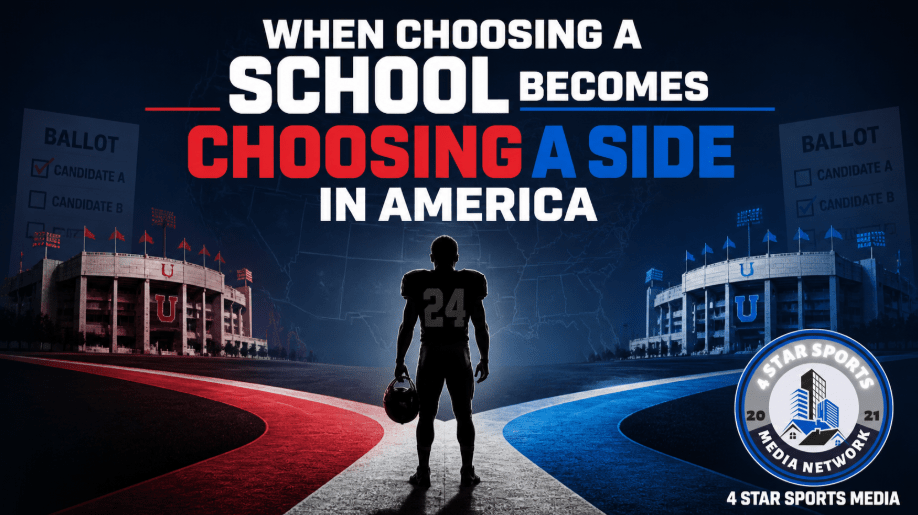
They built the empire of college Saturdays, and now they’re the ones being asked to blow it up.
When Choosing a School Becomes Choosing a Side in America
The same teenagers who turned fall weekends into a multibillion-dollar spectacle are suddenly being told that choosing the “wrong” school isn’t just about ball anymore — it’s a verdict on what kind of power their communities deserve in American democracy.
The Movement Versus the Dream
On paper, the new boycott push aimed at public universities in key Southern states is a clean strategy. It goes straight at the softest spot in college sports: the dependence on young talent to fill stadiums, drive TV ratings, and keep the money machine humming. The message is simple: if states want the revenue and prestige that come with big-time college athletics, they shouldn’t be undermining the political voice of the same communities that fuel those programs.
But that big moral argument lands on individual shoulders. It lands on a 17-year-old quarterback staring at a committable offer from a powerhouse program, trying to balance his family’s future against a fight over district lines and voting maps he didn’t draw. It lands on a sophomore guard who already used the transfer portal once and knows a second move could cost him a year, a role, and a shot at the pros. The people being asked to make the biggest sacrifice are the ones with the shortest window to capitalize on their ability.
For recruits, the dream was supposed to be straightforward: find the best fit, the best development, the clearest path to a degree and the league. Now every logo on the table comes with a new layer of context. What does this state’s legislature look like? What did its courts just approve? Has this university spoken up, or stayed quiet, while voting laws shifted? That’s a heavy checklist for anyone, let alone a teenager trying to finish high school and figure out which coach he actually trusts.
Current players are in an even tougher spot. Transfer windows are narrow. Academic credits don’t always travel. Not every “Plan B” offers the same exposure, strength staff, or NIL opportunities. Walking away from an established role at a major program to make a statement might sound right in the abstract, but it can mean fewer scouts at your games, fewer cameras on your best moments, and fewer chances to turn those moments into professional opportunities. The movement talks about leverage. The athlete has to live with the risk.
The National Cost Of Putting Kids In The Crosshairs
There’s also a narrative tax — the way these decisions will be framed across the country. No matter what a player does, someone is ready to turn them into a symbol. Stay at a school in a boycotted state, and critics will say you chose comfort and cash over principle, that you helped prop up a system that sidelines your own community’s voice. Flip to a different state or a smaller, underfunded program, and another crowd will complain you “brought politics into sports,” that you let yourself be used in a wider culture war.
That labeling doesn’t just bounce off helmets. It follows players onto buses and planes, into classrooms and group chats, into draft reports and coaching meetings. We talk about sports as a pure meritocracy, but anybody who has been around recruiting or scouting knows perception matters. Being cast as “selfish,” “soft,” or “a distraction” — even for taking a stand — can quietly close doors down the line.
The mental load is real. College athletes already juggle weight-room sessions, practice, travel, class, and now the business side of NIL. On top of all that, they’re now told their choice of jersey color might affect who gets a fair shot at representation in Washington or in their own state capitol. That’s a lot to ask of someone still learning how to live away from home for the first time.
Meanwhile, the institutions that helped create this moment mostly move in the background. Legislatures redrew maps. Courts signed off. Universities calculated the risk of speaking up and often decided silence was safer. None of those actors will have their every move dissected on a Saturday broadcast. None of them will hear students chanting their names when things go sideways. The spotlight, as always, will stay locked on the kids.
If this push ends up changing laws or forcing a serious rethink of how we balance political power and economic power in college sports, it will be celebrated as proof that athletes matter far beyond the scoreboard. People will talk about leverage, courage, and the rise of player power. Maybe all of that will be true. But we can’t skip past the immediate reality: the national impact of this moment starts with a handful of young people being asked to carry a load the adults around them were unwilling or unable to shoulder.
They didn’t build the system that’s now under fire. They just made it impossible to ignore. Now, in the middle of a fight over what democracy should look like, they’re being told they might need to walk away from the very dreams their talent created. When choosing a school becomes choosing a side in America, the true cost isn’t measured in TV contracts or ticket sales. It’s measured in the futures we ask teenagers to risk in a battle they never asked to fight.