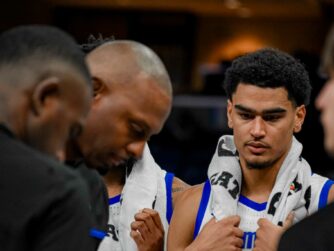


Memphis did not just lose games this season. Memphis lost its continuity. For the first time in the Penny Hardaway era, the Tigers opened a year with zero returning starters, and the product has looked every bit as fragile as that fact suggests.

A Brand-New Starting Five, And It Shows
Memphis did not bring back a single starter from last season’s 29‑win team. Every spot in the first five had to be refilled through graduations, pro exits, and portal moves. What remained on campus were role players, end‑of‑rotation pieces, and a staff forced to hand the keys to newcomers.
That absence of a core shows up in ways that do not fit neatly into a box score. A returning starter knows the system’s pressure points. He knows how the staff wants to guard a late ball screen. He knows which set gets called when the shot clock dips under ten. This roster lacked that embedded memory.
So when the schedule tightened, Memphis was trying to play seasoned, high‑level basketball with a starting group that had never survived a grind together. Defensive switches broke down at the worst times. Offense in crunch moments turned into five guys hoping someone else would make a play. Huddles felt more like hurried introductions than calm adjustments. A team with zero returning starters has tried to manufacture chemistry in real time, and the table shows the cost.
The Price Of Constant Reinvention
Zero returning starters is not a random accident. It is the natural endpoint of how Memphis has built its roster in the NIL and portal era. The Tigers have lived year to year, leaning heavily on transfers and short‑term additions to patch over holes.
That approach works until it erases your spine. This season, it did exactly that. New point guard. New go‑to scorer. New interior anchor. New defensive voice. The veterans on campus were pushed from supporting roles into unfamiliar responsibilities, and even they were surrounded by teammates who did not know their games.
When a roster is flipped that dramatically, two things must be true. The talent evaluation has to be close to flawless, and the system has to be simple and strong enough to give new players an immediate blueprint. Memphis did not meet either standard. The newcomers are capable, but not so overwhelming that they erase mistakes. The schemes are flexible, but not tightly enough defined to give five new starters a shared way of playing.

NIL Money, Thin Foundation
NIL hangs over all of this.
At the top of the sport, the numbers are staggering. Some blueblood programs are operating with basketball NIL budgets that stretch into the high seven figures. Those operations can afford to reload and miss a piece and still bury opponents in talent. Memphis is not in that group.
The Tigers live in the tier just below. They have a healthy collective. They have enough support to bring in a power‑conference point guard, a former five‑star big, and proven scorers. They do not have an unlimited wallet. In the American Conference, they are strong, but no longer alone. Other league programs have built serious NIL operations of their own, turning recent success and local backing into real financial muscle.
In that landscape, the decision to roll into a season with zero returning starters becomes even more dangerous. Memphis has enough NIL strength to replace a lineup. It does not have enough to replace it and remain clearly more talented than everyone it faces. Every misstep in evaluation, every piece that does not fit cleanly, is a costly mistake. This year, there are too many of them.
Coaching Under The Microscope
Zero returning starters is also a verdict on the state of the program under Hardaway.
When no one from a 29‑win starting unit returns, it signals something beyond natural turnover. It suggests the program either could not convince them to stay or did not prioritize keeping them. It raises hard questions about role clarity, development, and trust.
Once that door closed, the job in front of the staff became massive. They were not just teaching plays. They were installing standards for a locker room with almost no built‑in leadership. There was no veteran starter to pull a teammate aside and deliver a message in plain terms. There was no guard who could hear a call from the sideline and know instinctively how everyone should align.
On the floor, Memphis has looked like a team caught in that gap. The defense can flash pressure and length, but long stretches are marred by missed box‑outs and late rotations. The offense can put up points, but too often staggers into isolation and contested jumpers when the game is on the line. That is what happens when a clean‑slate starting group is dropped into a system still searching for one sharp identity.
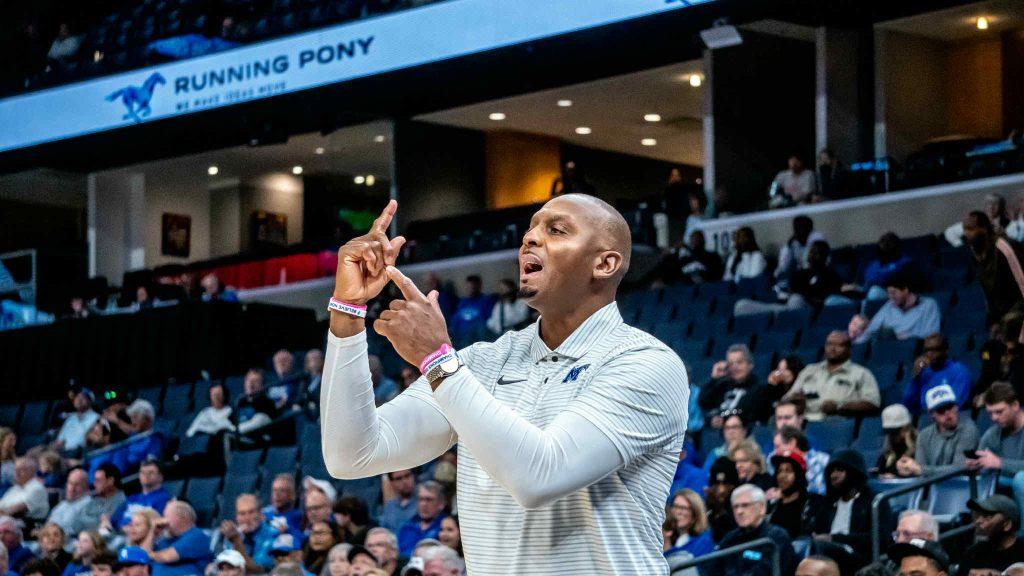
NIL Numbers, Real Context
The financial backdrop sharpens the picture.
Across Division I, some of the biggest men’s basketball programs are believed to be spending in the range of eight to ten million dollars a year on roster compensation. Those are the heavyweights whose NIL and revenue‑sharing pools resemble pro budgets. Memphis is a step below that, closer to the top of the American than to the absolute summit of the sport.
Within the league, revenue‑sharing models and public estimates suggest that American schools, on average, allocate only a modest fraction of the national money flowing through the new system to men’s basketball. The average per‑player figure in the conference sits in the tens of thousands, not the hundreds of thousands. Memphis can push higher than the league means with its collective, but it is not lapping its peers.
Put simply, Memphis has enough NIL to be dangerous and selective. It does not have enough to treat roster spots like disposable parts. Pair that reality with a season that began with zero returning starters, and the margin for error shrinks to almost nothing. This year, Memphis stepped straight into that narrow lane and slipped.
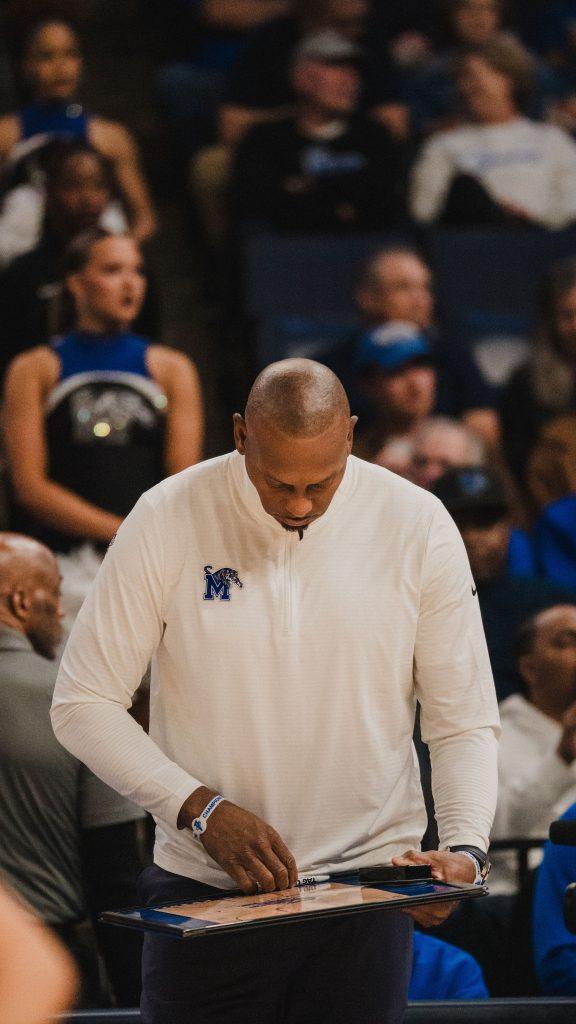
What This Season Really Says
You cannot tell the story of Memphis’ 2025–26 season without starting with the number zero. Zero returning starters. Zero built‑in continuity. Zero margin for error in how NIL money is spent and how a roster is assembled.
NIL did not ruin Memphis. The portal did not ruin Memphis. The choices made inside that environment did. The Tigers used their money and their access to build almost an entirely new team. They failed to build a core. They trusted that talent and a jersey would be enough to hold it together.
The standings say otherwise. Until Memphis uses its NIL strength to keep a nucleus, not just purchase another reset, seasons like this will feel less like “one of those years” and more like the predictable outcome of a program trying to start over every fall.