
Championship expectations do not always rise or fall with a five-star signing or a massive NIL deal. Sometimes, they come down to one unresolved depth chart, one August scrimmage and one coach deciding who gets the first snap when the season opens.
College football is built on star power, but it is often decided by uncertainty.
The Decisions That Will Shape College Football: 10 Position Battles That Can Change 2026
Every August, programs talk about competition. Coaches praise depth. Coordinators insist no one has won a job until the first game arrives. Much of it is standard camp language, the kind of coach-speak that fills a news cycle before the actual football begins.
This year, though, several of the country’s biggest programs are dealing with position battles that will shape far more than a depth chart. These are quarterback decisions with playoff implications. They are offensive-line questions that could either protect a contender or ruin one. They are secondary battles that will determine whether high-priced rosters can survive in the new era of college football.
The 2026 season will have its usual share of surprises. Some will come from injuries. Some will come from the portal. Others will begin with the player who wins an August competition and inherits the responsibility of carrying a program into a season of enormous expectation.
Alabama, Tennessee And Florida Face Quarterback Pressure
Alabama’s quarterback battle is the most important in the country because every quarterback battle at Alabama is the most important in the country.
Kalen DeBoer is trying to keep the Crimson Tide among the sport’s elite while navigating a roster built for immediate championships. Austin Mack brings experience and a familiarity with DeBoer’s offense. Keelon Russell brings the talent, upside and recruiting profile that can change the entire conversation around Alabama’s future.
The decision will not be made based on potential alone. Alabama needs a quarterback who can handle the pressure of an SEC schedule, manage the offense, limit mistakes and make winning plays when the game tightens. Mack may offer the more experienced option. Russell may offer the higher ceiling. Neither choice is simple when the standard remains national championships.
The competition remains unresolved, with both players taking meaningful reps through camp. The winner will inherit one of the sport’s most demanding jobs, and the loser could become one of the most watched backup quarterbacks in America.
Tennessee has its own high-stakes question between George MacIntyre and Faizon Brandon. MacIntyre is a 6-foot-6 redshirt freshman and former four-star prospect. Brandon is a five-star true freshman with the type of arm talent that can turn every practice throw into a social-media moment.
Josh Heupel’s system has long been quarterback-friendly, but it is not quarterback-proof. The Vols need someone who can make quick decisions, attack vertically and maintain composure when defenses force the offense to work through its progressions.
Brandon may be the bigger long-term investment. MacIntyre may be the safer immediate choice. Tennessee cannot afford a long audition once the season starts, especially with an SEC schedule built to expose inconsistency.
Florida is operating under similar pressure, though its quarterback decision comes with a different layer of urgency. The Gators are trying to turn recruiting potential into on-field stability, and the battle between Aaron Philo and Tramell Jones Jr. may determine whether that finally happens.
Philo has the edge entering the season, but Jones has the kind of talent that can keep a competition alive. Florida has spent too many years searching for offensive consistency. It needs a quarterback who can settle the offense early, create efficiency on first down and avoid the costly mistakes that turn competitive SEC games into another frustrating loss.
A quarterback battle is healthy in August. It becomes dangerous in October if no one has earned complete trust.
Clemson, Arkansas And North Carolina Need Answers
Clemson’s quarterback situation would have been unthinkable not long ago. For much of the program’s modern rise, the Tigers had the answer before the question was even asked.
That is not the case now.
Christopher Vizzina entered the year as the likely starter, but true freshman Tait Reynolds has pushed hard enough to make the decision worth watching. Dabo Swinney publicly acknowledged Reynolds as a legitimate contender, and that matters because Clemson does not hand quarterback competition attention to freshmen without reason.
The Tigers need more than a capable starter. They need a quarterback who can restore a sense of danger to an offense that has too often felt limited when the competition rises. Clemson still has defensive talent. It still has recruiting power. It still has the foundation of a national brand. But the Tigers will not return to the ACC’s top tier until the offense gives the program a true advantage again.
Arkansas is not dealing with a national-title expectation, but the quarterback choice between KJ Jackson and AJ Hill carries major consequences for a program trying to reset its identity.
Both quarterbacks represent a chance to establish something new. Jackson brings experience within the program. Hill offers a different profile and an opportunity to seize a job in a new coaching environment. The Razorbacks need a player who can provide calm, consistency and enough playmaking to keep them competitive in an unforgiving SEC.
The battle may not be settled until the opening coin toss. That uncertainty will create national curiosity, but it also puts more pressure on the staff to have a plan. Arkansas cannot waste September learning basic lessons that should have been settled in camp.
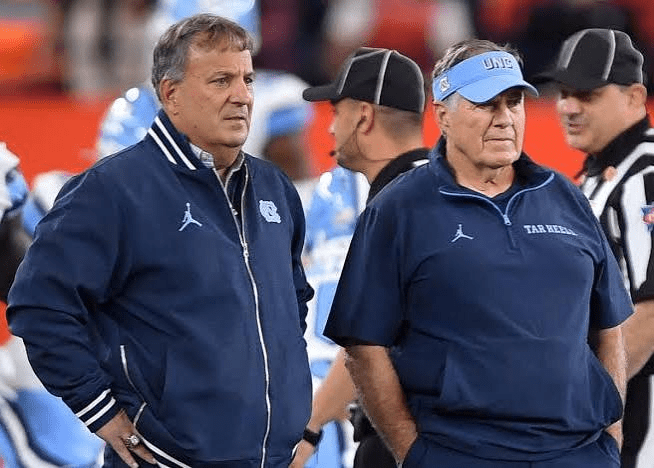
North Carolina’s quarterback situation is the most fascinating because Bill Belichick is trying to solve it in a college environment for the first time. Four scholarship quarterbacks are competing, including Billy Edwards Jr., Miles O’Neill, Au’Tori Newkirk and Travis Burgess.
That is not simply a camp competition. It is an early test of whether Belichick’s structure, evaluation process and player-management approach translate from the NFL to college football.
North Carolina needs a starter who can create stability around a program that now carries far more attention than normal. The Tar Heels do not need a quarterback controversy that lasts into conference play. They need someone who can make the offense functional and allow the rest of the program to establish its footing.
The Supporting Cast Will Matter Just As Much
Quarterback will dominate the headlines, but the most decisive position battles may happen away from the cameras.
Ohio State enters the season with championship expectations, and the Buckeyes will need their offensive line to protect Julian Sayin and establish the physical edge required to survive the Big Ten. Great quarterbacks make headlines. Great offensive lines make championships possible.
USC has the same problem from a different angle. Lincoln Riley’s offense will always have answers, but the Trojans must settle their defensive front and secondary rotation if they want to become more than a talented offense with a national brand. USC cannot win a Big Ten gauntlet if it continues giving up explosive plays and losing the line of scrimmage in November.
Nebraska faces a key quarterback decision with Anthony Colandrea arriving after a productive run at UNLV, while young talent waits behind him. Colandrea is the favorite, but the larger battle involves whether Matt Rhule can finally create offensive continuity in Year 4. Nebraska needs an identity. It needs stability at quarterback, a reliable running game and enough defensive discipline to turn close losses into meaningful wins.
The teams that survive September will not necessarily be the teams with the most five-star recruits. They will be the teams that leave camp with clear answers.
That is what makes these battles important. They are not simply debates for message boards. They are the first major decisions of the season, and some coaches will spend November living with the consequences of what they decide in August.