
The 2026 season has not kicked off, but the pressure already has. From blueblood brands demanding relevance to programs tired of paying for promises, these are the 10 head coaches entering fall with the smallest margin for error.
The Countdown Has Started: College Football’s 10 Hottest Coaching Seats in 2026
College football does not wait for October anymore.
The sport used to give a coach time to install a system, build a roster and survive a rough transition. Now a bad Saturday becomes a social-media trial. A losing month becomes a donor conversation. A second straight disappointment can turn an expensive contract into an athletic department’s most urgent problem.
That is the reality entering 2026. The transfer portal has narrowed rebuilding windows. NIL spending has raised expectations. Conference realignment has made every television slot, recruiting battle and bowl appearance more valuable. A coach cannot sell “the foundation” forever when another program can transform itself in one portal cycle.
Some of these coaches are one collapse away from a change. Others have buyouts large enough to offer temporary insulation. Every one of them enters the season knowing wins are no longer simply wanted. They are demanded.
Mike Norvell, Florida State
No seat in college football burns hotter than the one beneath Mike Norvell.
Florida State’s College Football Playoff snub in 2023 created a wave of national sympathy. But sympathy does not survive losing football. The Seminoles have since watched the conversation move away from what happened to them and toward where the program is headed.
Norvell has proven he can build a winner in Tallahassee. He took Florida State from a broken program into national contention. That matters. Still, Florida State is not built to accept inconsistency, especially after investing heavily in roster construction, facilities and the resources needed to compete at the top of the ACC.
The financial cost of moving on remains significant, but that only delays a decision if the program continues to struggle. Florida State needs more than a respectable record. It needs an identity, reliable quarterback play, recruiting momentum and the kind of national relevance that once made Doak Campbell Stadium one of the sport’s most intimidating venues.
Luke Fickell, Wisconsin
Wisconsin hired Luke Fickell to raise the ceiling. Instead, the Badgers have spent too much time trying to locate the floor.
Fickell arrived in Madison as one of the most respected program builders in the sport after his run at Cincinnati. The fit appeared logical. Wisconsin had tradition, development pipelines and a recognizable identity. What it needed was a modern offensive gear capable of surviving a new Big Ten loaded with national powers.
The results have not matched the expectation. Wisconsin has endured back-to-back losing seasons and Fickell now works under an athletic director who did not hire him. That is never a comfortable place for a coach, especially when the program’s decline has become impossible to ignore.
Wisconsin cannot afford to drift into irrelevance while Oregon, USC, Penn State, Ohio State and Michigan control the Big Ten’s attention. Fickell does not need to win the conference to ease the pressure. He does need to make Wisconsin feel like Wisconsin again: physical, disciplined, difficult to play and dangerous enough to matter in November.
Bill Belichick, North Carolina
This is the strangest seat on the board because it belongs to the most decorated NFL coach of his generation.
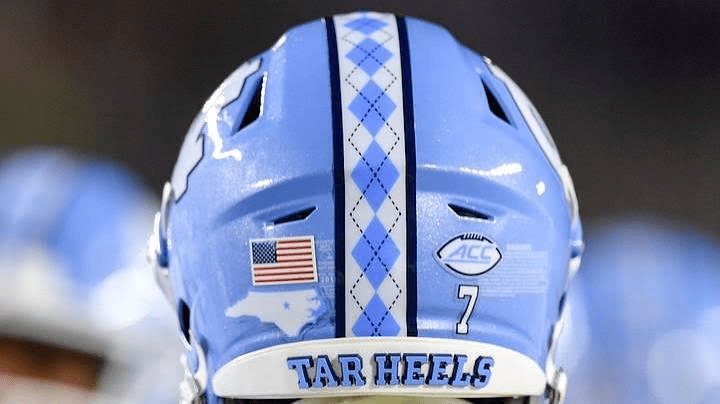
Bill Belichick arrived at North Carolina with a level of attention Chapel Hill football had never experienced. The hire was bold, fascinating and impossible to ignore. It also created expectations that normal college hires do not carry.
North Carolina did not bring in Belichick for a quiet rebuild and occasional bowl appearances. The Tar Heels brought him in to create legitimacy, structure and a winning product capable of competing in an increasingly unforgiving ACC.
The immediate question is whether the NFL model translates to college football’s recruiting demands, portal churn, NIL politics and player-management realities. Belichick’s name opens doors, but it does not automatically guarantee high school prospects or portal veterans will choose North Carolina over programs with more established college infrastructure.
For a school that made such a public bet on a historic name, the spotlight will remain bright if results do not arrive quickly.
Lincoln Riley, USC
Lincoln Riley has elite offensive credentials, a major-market job and one of the sport’s most recognizable brands. Yet Year 5 at USC has reached the point where potential no longer counts as progress.
The Trojans moved into the Big Ten to compete with college football’s biggest brands. That transition changed the standard. USC cannot live on quarterback highlights, splashy recruiting wins and occasional top-25 appearances while Michigan, Ohio State, Oregon and Penn State set the league’s competitive tone.
The central question remains simple: Can Riley build a complete program?
His defenses have repeatedly placed the offense in difficult situations. His teams have too often looked less equipped for physical, late-season football than the opponents they are trying to surpass. USC has enough money, exposure and recruiting appeal to contend. It needs the consistency and toughness to prove it belongs.
A massive buyout can delay a firing. It cannot stop a damaging narrative from taking hold.
Dave Aranda, Baylor
Dave Aranda has already survived one major hot-seat moment at Baylor. That does not mean he can count on surviving another.
The Bears showed improvement in 2024, but a 5-7 finish in 2025 put Aranda back in a familiar position: defending the direction of a program that has struggled to find consistent footing in the reworked Big 12.
Baylor is not asking for annual playoff appearances. It is asking for relevance, stability and a football identity that can travel. The program has the resources to be competitive in its league, but the difference between six wins and nine wins in the Big 12 can be the difference between a hopeful future and an exhausted fan base.
Aranda’s defensive background makes the program’s struggles especially glaring. Baylor must look organized, tough and fundamentally sound. If it does not, the Bears may decide patience has become more expensive than change.
Mike Locksley, Maryland
Mike Locksley deserves credit for taking Maryland to bowl games and producing some of the program’s most competitive stretches in recent memory. But progress has an expiration date when it is followed by regression.
The Terrapins have finished 4-8 overall and 1-8 in Big Ten play in consecutive seasons. That is a difficult profile to defend in a league where Maryland has invested more aggressively in NIL support and administrators expect a return on that investment.
Maryland will never have the structural advantages of Ohio State or Michigan. It does not need to. But it must become consistently competitive against the middle of the Big Ten, protect its regional recruiting territory and stop treating bowl eligibility as a ceiling.
Locksley is entering his eighth season. Every early-season result will feel larger because the program needs proof that its recent slide is not permanent.
Brent Venables, Oklahoma
Oklahoma did not join the SEC to become another program fighting for a middle-tier finish.
Brent Venables inherited a massive challenge, but he also inherited a blueblood with money, history and an expectation of competing for championships. The Sooners are still adjusting to the weekly brutality of the SEC, yet the grace period gets shorter every time another rival makes a statement.
The defense must look like a Venables defense. The offense must become reliable enough to win games when the schedule turns violent. Most importantly, Oklahoma has to prove it can recruit and develop at the level needed to survive its new neighborhood.
Venables may not be coaching for his job in September. But if the Sooners again look overwhelmed by the conference they chose to join, the pressure will become impossible to ignore.
Shane Beamer, South Carolina
Shane Beamer has built goodwill in Columbia because he understands the place and has delivered moments that matter. But goodwill is not the same as security in the SEC.
South Carolina’s ceiling has always been complicated by geography, conference competition and the challenge of recruiting against Clemson, Georgia and the rest of the league’s heavyweights. Still, the Gamecocks cannot keep living off isolated upsets and good vibes.
The issue is not whether South Carolina can beat a good team. It is whether it can stack victories, build roster depth and avoid the frustrating losses that define mediocre seasons.
The Gamecocks need a season that feels like a step forward, not another debate about what might have been.
Bill O’Brien, Boston College
Bill O’Brien’s first season at Boston College brought seven wins and optimism. His second brought only two wins and a reminder that the ACC’s middle class is a dangerous place to reside.
The drop was dramatic enough to put O’Brien in national hot-seat conversations entering 2026. Boston College does not operate with the same resources as the conference’s biggest brands, which means the margin for mistakes is thin.
O’Brien needs to restore credibility quickly. The Eagles need to be difficult to play, sound on defense and opportunistic enough to win close games.
A two-win season can be dismissed as a bad year. A second straight collapse becomes a verdict.
Scott Satterfield, Cincinnati
Cincinnati once looked like the Group of Five model for modern college football. Now, after its move into the Big 12, the Bearcats are trying to prove they are more than a former success story.
Scott Satterfield inherited a program dealing with transition, but the honeymoon period is over. Cincinnati needs to show it can recruit at a Big 12 level, develop talent and win enough games to make Nippert Stadium a problem for visiting teams again.
The Bearcats cannot afford to simply be happy to have reached power-conference status. The job is to compete, build momentum and remind the sport why Cincinnati became one of the most compelling stories of the last decade.
The coaching carousel will begin spinning long before the final regular-season Saturday. It always does. These 10 coaches will enter 2026 knowing that the sport has changed, patience is gone and the next bad stretch could become the final one.