
Roger Hayhurst never wanted to be the guy on the video game cover or the coach at the podium. He wanted to be the man everyone quietly depended on—the one in the foxhole who goes out, gets the job done, and comes back with everything the team needs to win.
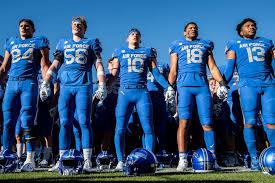
Hidden Starters: Inside the Film Room Powering Air Force Football
As the director of video operations for Air Force football, he and his cadet film crew are the people who “make the sausage of sports,” turning chaos into cut‑ups, practices into data, and Saturdays into something coaches and players can actually learn from.
The Man Behind the Lens
Hayhurst never took the traditional route into college football video. Instead of starting as a student filmmaker and climbing from intern to graduate assistant to coordinator, he spent eight years serving in the United States Air Force in the 1990s, first as a mechanic and then in IT. When he left the military, he landed in corporate America as a sales trainer for a finance and leasing company, a world far removed from game plans and practice tape but still rooted in communication and performance.
One off‑hand request from his boss changed everything. They knew he was a musician and had recorded music, and they asked if he could record a video and put a Christmas piece together for the company party. He said yes, talked himself into something he didn’t yet know how to do, and dove in. Somewhere in that first project, he fell in love with the process—the filming, the editing, the interaction with people—and realized that “video coordinator” was not just a job title, it was a calling.
He started his own production business, churning out wild local commercials—“somebody’s got to make that ‘Crazy Larry’s Used Cars’ spot,” he jokes—and learning to tell stories on a shoestring. When the economy crashed in 2008, he went back to school, intending to become a history teacher at Fairmont State in West Virginia. But the pull of football and film was too strong. He messaged the head coach, explained he was a video guy and lifelong college football fan, and just asked to help the program any way he could. Fairmont made him their video guy, and that three‑year stretch became his launchpad into a career that’s now taken him to Mississippi State, Rice, and ultimately Air Force, where he’s heading into his 18th season in college football and his fifth with the Falcons.
For Hayhurst, football filled the void the military left. He talks about missing brotherhood, a shared mission, and a room full of people, each with a specific role, working toward one objective. In his words, “The closest thing you’re going to get to the regiment of the military is football. It’s the same thing—it’s training, it’s planning, it’s execution.” He never wanted to be in front of the camera. He wanted to be the guy everyone depends on, the one they “can’t get it done without.”
Making the Sausage: A Week in the Dark
If you think video operations is pointing a camera for a couple of hours and calling it a day, Hayhurst will politely blow your mind. His week doesn’t start on Monday; it starts before the sun comes up on Sunday, often around 7 a.m., just hours after the previous game is put to bed.
On Sunday, before a single practice snap is filmed, his entire focus is on the future. He logs into the open exchange system where teams upload their coaching film, downloads all of Air Force’s upcoming opponents, and imports every game into the editing software. If it’s Week 1, that might mean pulling eleven other games for a single opponent and attaching data from analytics companies so coaches can immediately sort by third down, red zone, punts, personnel, fronts, and coverages. His whole Sunday is spent building the rest of the week—developing cut‑ups, segmenting situations, and making sure coaches and players have the material they need to study long before they ever step on the field.
Monday through Thursday blends routine with controlled chaos. Hayhurst and his staff—16 Air Force Academy students who film practices and help run the operation. Coaches are still in opponent‑scout mode, building practice scripts, playlists, and teaching plans off the mountains of film he has already processed. On the field, he runs eight to ten cameras at almost every practice, capturing everything from full‑team looks to the small details that separate an average Tuesday from a polished Saturday. Off the field, he’s also “first‑level IT,” responsible for keeping coaches’ computers, projectors, networking, and software functioning so they can actually watch the film he and his students grind to capture.
By Friday, the Falcons are in walkthrough mode and headed to the team hotel—even for home games. For Hayhurst, Friday night is showtime differently. Every week, he creates a motivational highlight video for the team’s meeting, cutting together recent plays, graphics, and a soundtrack he hopes hits his players right in the chest. “It’s probably my favorite part,” he says. “Friday at nine o’clock, when we throw on whatever video I made, and I get to see the guys’ reaction.” A good Friday night video doesn’t win a game by itself, but in a sport of edges and energy, it’s his way of adding a little spark.
Then comes Saturday, when the rest of the country finally sees the product. For Hayhurst and his crew, it’s less a climax and more the last stage of a long process. Cameras roll from every angle. In‑game video systems feed live views to coaches on the sideline and in the box. Every snap becomes another puzzle piece for future weeks. And when something breaks—and it always does—he and his counterparts on the other sideline scramble to patch the system together.
He still laughs about a game last season when the opponent’s in‑game video system went down, triggering the rule that if one team loses its in‑game video, the other has to shut theirs off, just like with headsets. For about five plays, both staffs were suddenly blind to the technology they’ve come to rely on. “I’ve never seen coaches get used to something so quick and then realize that when it’s gone—‘oh no,’” he says. The stress is real. “I’d be devastated if there was a situation where something I didn’t have ready caused us to have an issue that cost us a win.” For someone who isn’t an athlete or a coach, he is fiercely competitive; his standard is simple: when the ball kicks, he wants to know in his heart that he did everything he could to help them win.
Why the Hidden Work Matters
Hayhurst boils down the importance of his world into two lines he preaches to his cadets. The first is the fun one: “If we didn’t film it, it didn’t happen.” The second is the one he’s deadly serious about: “They can’t win if they can’t see.”
In his mind, film is the root system of every successful football program. The public hears about quarterbacks and coordinators who “live in the film room,” but what they don’t see are the people making sure there is a film room at all—clean angles, properly tagged plays, synced data, and a system that lets coaches and players turn hours of footage into real, actionable teaching. He’s very clear about the chain of responsibility: “If we don’t do our job, the people we do our job for can’t do theirs. If they can’t do theirs, the players can’t do theirs.” That mindset shapes everything from how he handles technology failures to how many backups he brings to a meeting. If he needs one thing, he’s likely bringing three.
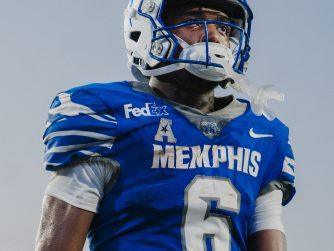
He also wants fans to understand something bigger: the student workers—especially at places like Air Force—are the unsung engine of the sport. “If they weren’t doing their job, your team would go 0–11 every year,” he says bluntly. And he doesn’t limit that to video. He’s talking about equipment, nutrition, training rooms, all the infrastructure jobs fans never see on TV. Across the country, there are smart, hardworking kids volunteering or working for small stipends just to be part of something bigger than themselves, whether that patch on their chest says Air Force, Mississippi State, or Memphis.

Inside his own room, there’s one more rule: no “they.” “In my film room, we are not allowed to say ‘they won’ or ‘the team won,’” he explains. “The only thing we’re allowed to say is ‘we won.’ We are the team. We’re part of the team.” That sense of ownership makes victories hit different. He still lights up talking about Mississippi State’s Dak Prescott–era Egg Bowl win over Ole Miss that led to the first bowl trip of his career, or the rain‑soaked home victory over Auburn that vaulted State to No. 1 in the first College Football Playoff rankings. He remembers Nick Fitzgerald’s 75‑yard touchdown run against Texas A&M not just for the play, but for the offensive line that “parted the Red Sea.”
And then there’s 2022: a 13–7 grind against Army, Camby Golff’s late interception, and the Commander‑in‑Chief’s Trophy secured after Air Force had already beaten Navy. A few months later, Hayhurst was at the White House, meeting the President and the Vice President, celebrating a trophy that means “everything” to him. “I’ve tasted it once,” he says. “I want it again.”
Brotherhood, Cadets, and the “Why”
For all the cameras and cut‑ups, Hayhurst’s “why” is rooted in people. At the top of the list are his four sons. He wants them to see that life doesn’t have to be confined to safe, traditional careers—that you can carve out your own lane, the way he did when he decided in 2005 that he wanted to be a video coordinator and found himself working an SEC game eight years later.
Right beside them are his cadets. Sixteen personalities, all smart, all driven, all headed toward careers that most Americans will never fully understand or be willing to attempt. He feels a personal responsibility not just to train them to run cameras and systems, but to give them something they can carry into their service—a standard, a mindset, a shared language of “we” over “they.”
Recently, his graduating seniors walked into his office with a parting gift: a bobblehead figure of Hayhurst himself. He laughs, but you can hear the emotion under the humor. Those cadets will leave to become pilots, officers, and leaders, but they wanted their video guy in the room with them one more time.

His world is built on adaptation and quiet excellence. Technology keeps racing forward—from 35mm film to VHS to HD, to 4K and cloud‑based systems that let coaches watch tape anywhere, anytime—and Hayhurst and his peers across the country work together to stay ahead of the curve. They lean on an informal fraternity of video coordinators who trade ideas, share solutions, and push one another to keep innovating. They’re constantly learning new tools, tweaking workflows, and creating technology themselves when what they need doesn’t exist yet.
Ask him how he wants to be known, and it isn’t as a pioneer, a genius, or even an expert. He wants to be the guy slightly behind and to the left of his head coach, quietly making sure everything is taken care of. He wants to be the one whose players and cadets trust that when he goes into the proverbial foxhole—whether that’s a freezing practice field, a glitchy meeting room, or a chaotic rivalry game—he’ll come back with the film they need to win.
In a sport obsessed with stars, stats, and highlight reels, the debut subject of “Hidden Starters” reminds us of something simple: none of it happens if someone like Roger Hayhurst isn’t up before dawn on Sunday, pulling film, building cut‑ups, and making sure the people in front of the cameras can actually see what really happened.