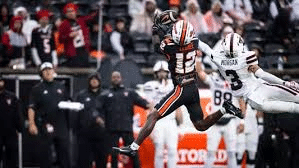


MUS Made It a Fight — But Bartlett’s Fourth-Quarter Answer Sent a Message to Open 2026
Bartlett came to Stokes-Alston Stadium on Aug. 21 with one central objective: start the 2026 season with a win. The Panthers opened 2026 with explosive plays, a punishing ground game and the poise to answer MUS when the Owls made the game tight.
The Panthers did exactly that, using an explosive first quarter, a 248-yard rushing performance and two decisive fourth-quarter touchdown drives to defeat MUS 37-27. But Bartlett’s season opener was more than a comfortable wire-to-wire result. It became a test of composure after the Owls turned a 17-point deficit into a three-point game by halftime.
Bartlett ultimately passed that test.
“We had some ups and downs, but the downs didn’t get to us fast, so we kept doing what it takes for us to come out with the dub,” wide receiver Pierce Washington told 4 Star Sports Media.
Head coach Ben Bowden agreed that the response mattered most, even as he pointed toward areas the Panthers must clean up moving forward.
“As far as our game goes, we played OK,” Bowden told 4 Star Sports Media’s Jonathan Sturdivant. “We had lots of mistakes though. Too many dumb penalties. I was glad how we responded after they got back within three points.”
Washington Sparks Bartlett’s Fast Start
Bartlett did not ease into its season opener. Just over four minutes into the game, quarterback River Holland found Washington behind the MUS secondary for a 51-yard touchdown. The score capped a four-play, 63-yard drive that lasted only 1:07 and immediately gave the Panthers the energy they wanted.
“I think it was a great win,” Washington said. “We came out with the mindset of, ‘Let’s start the year out with a dub,’ so we came out from the jump and got going.”
Washington’s touchdown was not simply a deep ball completed in open space. Once he secured the pass, he knew the Owls were in trouble.
“When I first caught the ball, I realized I already had the dude in front of me beat, so I got past him,” Washington said. “The other ones was tryna bring me down to help him out, but they couldn’t, so I knew I had the open touchdown. Reality though, I was really just faster than my defenders.”
That speed showed up on the stat sheet. Washington caught four passes for 75 yards and a touchdown, including the game’s longest offensive play from scrimmage for Bartlett.
The Panthers kept rolling after the early strike. Rod Lucas finished a five-play, 37-yard possession with a five-yard touchdown run to make it 14-0. MUS answered with Wallace Bradshaw’s seven-yard rushing touchdown, but Bartlett delivered another immediate jolt when Chris Freeman returned the ensuing kickoff 61 yards for a score.
Less than 10 minutes into the game, the Panthers had built a 21-7 advantage.
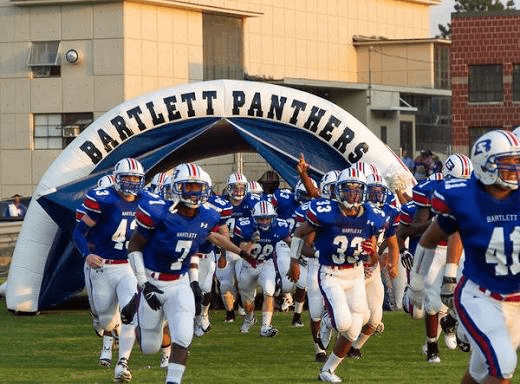
The Owls Turn Momentum Before Halftime
Bartlett appeared poised to take a commanding lead into halftime after Jackson Bell drilled a 40-yard field goal with 2:47 left in the second quarter, putting the Panthers ahead 24-7.
Then MUS made the game dramatically different. Dhilan Madasu hit Foster Flaherty for a 13-yard touchdown with 57 seconds remaining in the half. On the final play before intermission, the Owls recovered a Bartlett fumble, and Marcus Harris returned it 61 yards for a touchdown.
Suddenly, a game that had looked headed toward a Bartlett runaway was 24-21 at halftime. MUS carried that momentum into the third quarter and held the Panthers scoreless. The Owls also had a chance to tie the game, but Jacob Stalls missed a 41-yard field goal with 3:39 remaining in the quarter.
Bartlett had made enough mistakes to give its rival hope. The Panthers were penalized 13 times for 131 yards, compared with five penalties for 35 yards by MUS, and the fumble return created seven points for the Owls without requiring the offense to move the football.
Bowden’s assessment was direct, but the Panthers’ response showed why the victory was meaningful. They did not let the mistakes define the final result.
Bartlett’s Fourth-Quarter Finish
With MUS within three points entering the fourth quarter, Bartlett went back to its strength: controlling the game on the ground.
The Panthers opened the final period with a nine-play, 80-yard scoring drive. Holland capped it with an eight-yard touchdown run, putting Bartlett back in front 31-21 with 11:54 remaining.
Holland was effective in every phase, completing 9 of 14 passes for 127 yards and a touchdown while carrying nine times for 81 yards and another score. He helped Bartlett extend drives, including a team-wide 8-for-12 performance on third down.
Then came the clinching blow.
Aiden Jackson broke free for a 22-yard touchdown run with 7:56 left, giving Bartlett a 37-21 lead. Jackson led the Panthers with 140 rushing yards and a touchdown on 22 carries, averaging 6.4 yards per attempt.
Bartlett finished with 412 total yards and outgained MUS by 157 yards. The Panthers ran 65 offensive plays, produced 22 first downs and rushed for 248 net yards on 46 carries. MUS managed 255 total yards and was held to 98 net rushing yards.
The Owls did not quit. Cullen Hayden found Flaherty for a 15-yard touchdown with 5:31 left, but the missed extra point left MUS down 37-27. Bartlett’s defense closed the door from there.
Caleb Rogers recorded a sack, while Jackson Brown, Kingston Hatch and Kaleb Ridgeway each registered five total tackles to lead a defense that weathered the Owls’ second-half charge.
Bartlett’s 1-0 start also narrows the program’s all-time series deficit against MUS to 18-8. More importantly, it gives the Panthers a clear early blueprint: their speed can change a game in one snap, their ground game can control it over four quarters, and their resilience can finish it when adversity arrives.
For Washington, the mindset remains uncomplicated. Bartlett wanted to begin the season with a “dub.” It got one — and it did so by proving it can deliver when the game turns into a fight.