

The rankings took a beating, but they shouldn’t get all the attention. UCF beat No. 2 BYU with a backup quarterback. Texas found enough of a running game to survive the trouble it created against Ole Miss. Utah handled a ranked opponent while other Big 12 contenders stumbled. Memphis extended a standard of postseason consistency that deserves more than a passing mention. The week offered more than fallen favorites. It offered a reminder that the best stories are often hiding behind the loudest reactions.
Sunday Reset: Look Beyond the Upsets, and the Week Gets More Interesting
That is where an honest national reset begins: not with another round of championship predictions, but with a closer look at what changed, what held up and what deserved more attention. Not every upset exposes a fraud. Not every close victory reveals a fatal flaw. And not every program outside the largest television window should have to beat a highly ranked opponent before becoming interesting.
UCF’s Quarterback Deserves His Own Headline
The easy headline was BYU losing its undefeated season in a 39–31 double-overtime defeat The better follow-up begins with Keyone Jenkins. UCF’s backup quarterback threw for 293 yards and three touchdowns, added a rushing touchdown and helped the Knights produce 463 total yards. BYU entered allowing an average of 275 yards per game.
That is substantial production against an opponent whose previous work suggested those opportunities would be difficult to find. UCF also rushed for 170 yards. This was not merely a quarterback improvising through one fortunate possession. The Knights generated enough balance to prevent BYU from comfortably narrowing its defensive responsibilities.
The Cougars had complaints about a consequential overtime penalty. They also had problems long before the flag. UCF produced 233 yards on 10 explosive plays, according to the Deseret News’ game analysis, including a 56-yard reception on third-and-17. Those numbers explain why the winning offense deserves attention beyond the final overtime sequence. Jenkins did not simply avoid losing the game. He helped shape it.
Elsewhere in the Big 12, Utah beat No. 14 Houston, 21–13, while BYU and Texas Tech lost. The Utes belong near the center of the conference conversation, not underneath a general declaration of chaos. Sometimes the most significant development is the contender that completes its assignment while everyone watches somebody else fail.
Texas Supplied an Answer, Not a Cure
Texas needed its 34–27 victory over Ole Miss. The Longhorns had lost two straight and entered with uncomfortable questions about their direction. Winning moved them to 5–2 overall and 2–2 in the SEC. It did not make those questions disappear.
Texas built a 24–3 halftime lead, then allowed Ole Miss to score 21 unanswered points. Three Arch Manning turnovers helped turn a controlled game into another examination of whether the Longhorns could finish. The revealing response came on the ground.
Texas rushed for 207 yards and finished with 419 total yards to Ole Miss’ 363. The Longhorns averaged 5.8 yards per play, compared with the Rebels’ 4.4. When the game tightened, Texas produced a go-ahead touchdown drive without attempting a pass. That is the football worth discussing.
Not whether one afternoon settled every argument about Manning. Not whether Ole Miss’ ranking should become a punchline. Texas found a way to move forward without demanding that its quarterback repair every problem through the air.
Can that become a dependable foundation? A good answer under pressure is valuable. A repeatable answer changes the outlook of a season. Ole Miss belongs in that evaluation, too. The comeback showed the Rebels could recover from a dreadful opening half. The finish showed why recovery and victory remain different accomplishments.
Memphis’ Standard Deserves National Recognition
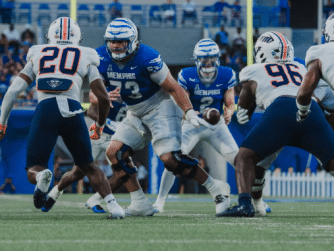
The national review should not begin and end with Saturday. Memphis beat East Carolina, 41–34 in overtime, after trailing 16–3 at halftime Thursday. Marcus Stokes completed 29 passes for 320 yards and accounted for five touchdowns, all after the break.
It was his fourth 300-yard passing game of the season and a career high in completions. There is a quarterback-development story in those numbers. There is also a program story in the result. Memphis reached bowl eligibility for the 13th consecutive season.
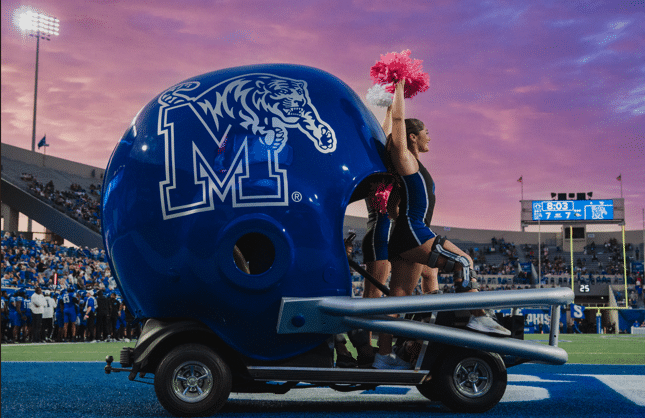
Fans can expect more than eligibility while recognizing that sustained achievement is not automatic. Maintaining a baseline and raising a ceiling are different tasks. A serious evaluation accounts for both. The first half deserves criticism. The recovery deserves credit. The longer standard deserves context.
That is the reset this week requires. Notice the backup quarterback who changed a game. Notice the contender that handled its business. Notice the program sustaining a meaningful floor while trying to build something higher. The national picture becomes more useful when every result does not require either a coronation or a collapse. Saturday changed the standings. Looking beyond the obvious changes our understanding.