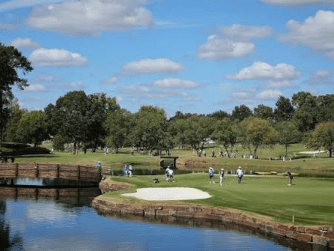

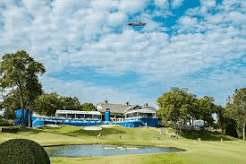
At the Walmart NW Arkansas Championship, Jeremy Friedman showed Dream BIG students how preparation, relationships and calm help turn Pinnacle Country Club into a functioning international media operation.
Before the first Round 1 score became a headline Friday at Pinnacle Country Club, Friedman was already focused on the details most fans will never see.
Jeremy Friedman Makes the Media Room Work At NWA Championship
Parking. Internet strength. Coffee. Food. Access. Press releases. The fastest route to accurate information. The relationships that allow a media operation to function when a tournament becomes busy, stressful and unpredictable.
As the opening groups made their way around Pinnacle, Friedman spoke with students from the Dream BIG nonprofit group about the behind-the-scenes work that helps make the Walmart NW Arkansas Championship run. His job, he told the group, is to make media members’ jobs easier.
More than 210 media members are credentialed for this week’s tournament, Friedman said, representing local, national and international outlets. That scale means the media operation needs more than tables and a wireless password. It needs a system that helps reporters, photographers, broadcasters and digital outlets get information, file stories and access players efficiently.
Friedman, the tournament’s media director and a vice president at Outlyr, explained why a golf media room faces a different challenge than one inside a permanent arena or stadium.
A Media Room Built Around a Course
At a stadium, the press box, interview space, parking routes and communications infrastructure are usually built into the facility. At a golf tournament, much of that operation must be created around a course for one week.
That work starts before the first tee shot.
Friedman emphasized the basic needs that keep a long tournament day moving: great food, workable parking, dependable internet, strong Wi-Fi and coffee. Those details can determine whether a reporter files on deadline, a photographer uploads images or an outlet keeps up with a leaderboard that changes hole by hole.
The assignment, Friedman said, is to make the work easier for credentialed media members—not to control what they cover.

That requires clear access procedures, useful updates, available interviews and information delivered quickly. Friedman discussed the role of releases in that process, describing them as a way to keep media members and the community informed as tournament week moves at full speed.
For an LPGA event, a release may communicate player availability, schedule changes, community events, weather information or updated pairings. The purpose is to provide journalists with information before uncertainty creates confusion.
Relationships Matter Under Pressure
Friedman previously worked with Golf Channel and NBC Sports before moving into his current role in professional golf communications. His career has given him a view of the relationship between an event and the reporters assigned to cover it.
At Pinnacle, Friedman works in the space between the tournament and the people tasked with telling its story.
He stressed the importance of cultivating relationships with his staff, credentialed media members and people throughout the sport. A well-written release, an organized interview process or a quick response can help in one moment. Trusted relationships make those interactions more effective when pressure rises.
For students from Dream BIG, the visit showed a side of professional sports that is rarely visible from the gallery.
An LPGA tournament requires players, caddies and officials. It also requires communications staff, reporters, photographers, broadcasters, operations workers, hospitality employees, volunteers, marketers and digital producers. Friedman’s message was clear: a career in sports can begin with communication, organization, service and relationship-building—not only with playing ability.
‘Controlled Chaos’ and a Pause
Friedman described tournament week as “controlled chaos.” When stress builds, he said his personal reset is simple: “Breathe in, breathe out.”
He encouraged the Dream BIG students to “respect and reflect.” Life, school and work can feel overwhelming, he said, but pressure does not have to determine a person’s response. Pause. Release. Reflect. Smile when possible. “It’s going to be OK,” Friedman told the students.
The message was not clinical mental-health guidance. It was the personal approach of an event professional responsible for handling constant movement, changing information and more than 210 credentialed media members during an international golf event. Afterward, Friedman said he “loved doing this stuff.”
That enthusiasm showed in the way he connected practical details—parking, coffee, internet, releases and access—to a broader lesson for students: the jobs that make sports work are often the ones fans never see. The leaderboard will determine who wins the Walmart NW Arkansas Championship. But before every score is reported, Friedman helps make sure the story can be told.