
.

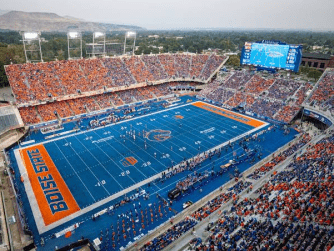
The final score was Boise State 38, Memphis 20, but the most troubling part was not the loss itself. It was how the Tigers piled up offense, gave up even more, and showed exactly where a promising season could unravel.
Memphis Had 519 Yards and Still Lost by 18. That Should Scare Everyone
Memphis had the kind of offensive production that usually travels well. The Tigers finished with 519 total yards, averaged 10 yards per play and generated 384 net passing yards. On the surface, that sounds like a team that should have been right in the game until the final minutes.
Instead, Memphis lost 38–20. The numbers look good until the scoreboard enters the conversation. Then the story becomes much harder to explain away.
Boise State finished with 578 total yards, ran for 357 yards and recorded 29 first downs. Memphis had 17 first downs. The Tigers could create explosive plays, but Boise State controlled the game. Memphis had flash. Boise State had command. That difference is why the Tigers left Boise with a loss that should create real concern, not just frustration.
Boise State Found the Weakness and Never Let Go
The Broncos did not need a complicated formula. They ran the football, kept running it and waited for Memphis to prove it could stop them. Memphis never did.
Boise State carried the ball 47 times for 357 yards, averaging 7.6 yards per attempt. The Broncos scored three rushing touchdowns. That is not a defense being hurt by a single long run or an isolated missed tackle. That is a defense getting beaten repeatedly at the point of attack.
A team can give up a few explosive plays and still find a way to win. It cannot allow an opponent to average nearly eight yards every time it runs the ball and expect to control anything.
The issue is larger than one player, one position group, or one bad series. Boise State’s ground game suggests Memphis had problems with run fits, edge leverage, block destruction, tackling and physicality. The film will determine exactly which issue hurt the Tigers most. The stat sheet already makes one thing clear: whatever happened, it happened too often.
Boise State did not just run for yards. The Broncos used the running game to own down and distance, keep their offense comfortable and prevent Memphis from making the game one-dimensional. When an opponent can run for 357 yards, it gets to call the game on its terms. That is the part Memphis must fix first.
The Big Plays Did Not Become Big Points
There is no need to pretend the Memphis offense was ineffective. It was not. The Tigers completed 17 of 26 passes, a 65 percent clip, and averaged 22.6 yards per completion. They created explosive gains and showed the kind of vertical capability that can make an offense dangerous.
But dangerous is not the same as dependable. Memphis gained 519 yards and scored 20 points. That is the stat that should sit with the Tigers longer than anything else. An offense that creates that much yardage should put significantly more pressure on the scoreboard.
The problem is that Memphis depended too much on chunk plays. Boise State did not need the same kind of explosive production because it was consistently moving the chains. The Broncos had 29 first downs. Memphis had 17.
That margin matters because first downs are not just about yardage. They are about control. They are about extending drives, wearing down a defense and preventing the opponent from finding a rhythm. Memphis had the faster offense. Boise State had the steadier one.
The Tigers now have to examine what happened after the big plays. Were drives stalled by penalties? Did the offense struggle in short-yardage situations? Were there missed chances to finish possessions? Did Memphis become too reliant on the next explosive throw instead of building a sustainable offensive identity? Those questions are not an attack on the offense. They are the path toward making it better.
The Fix Has to Be More Than Talk
Memphis also committed 10 penalties for 71 yards. That number alone did not decide the game, but it added to the problem. The Tigers were already trying to overcome a defense that could not stop the run. They could not afford to make their own drives harder or give Boise State additional opportunities.
The good news is that Memphis has real offensive talent. Five hundred nineteen yards and 384 net passing yards do not happen by accident. The Tigers have the athletes and the playmaking to compete with quality opponents.
But the Tigers cannot hide behind those numbers. The defense has to become much more dependable against the run. The offense has to turn explosive production into sustained scoring. The penalties have to be reduced. And Memphis has to become a team that can win when the game is decided at the line of scrimmage rather than through one big throw. Boise State exposed a problem. Memphis now has to prove it can solve one.