
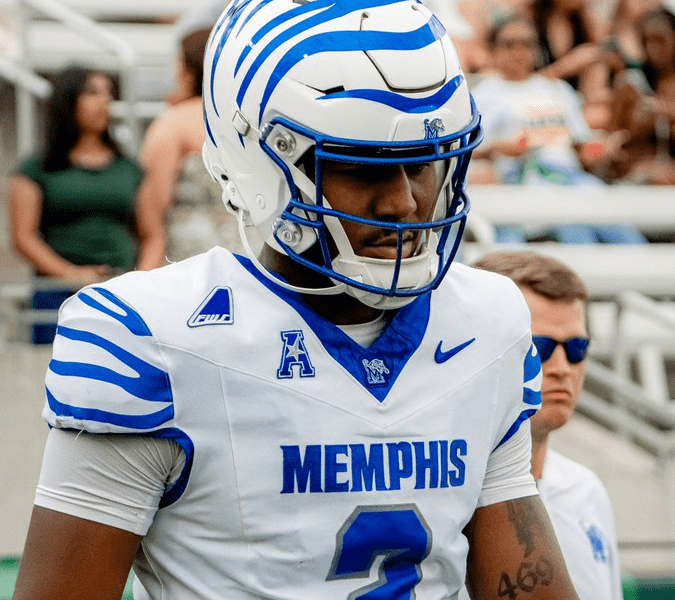
The revenue-sharing era was supposed to bring structure to college football. Instead, it has created a market where the right quarterback can reshape a program, the wrong investment can bury a budget and the richest schools are learning that even $21.3 million does not go as far as it once did.
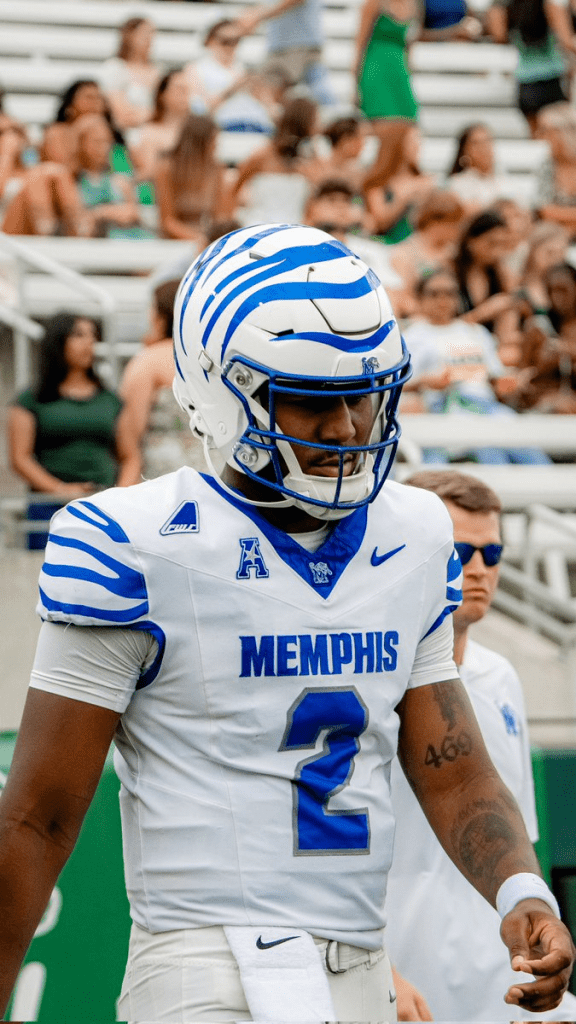
College football has found its most expensive position.
The Price Of Winning: The Quarterback Market Is Breaking College Football’s Old Math
It is quarterback, and it is not close.
A proven Power 4 starting quarterback can now command between $1 million and $3 million in the modern player market. Elite passers can push well beyond that number. A single quarterback decision can eat a massive share of a school’s football allocation before an athletic department pays a running back, upgrades the offensive line or retains the defender who actually gets the quarterback the ball back.
That is the real cost of the new era.
The revenue-sharing pool for the 2026-27 academic year sits at about $21.3 million across all sports. Most football schools will direct the majority of that money toward football, but even a football-heavy split leaves limited room for error. A team that spends badly at quarterback may discover it cannot afford depth. A team that refuses to spend may discover it cannot keep its season alive.
The old college football question was simple: Can you recruit a great quarterback?
The new question is harder: Can you acquire one, retain one and still build a roster around him?
The Quarterback Is Now The First Budget Meeting
College football coaches once spent January and February chasing high school prospects, finalizing staff structures and preparing for spring ball. Now the quarterback decision is a front-office calculation.
A program must decide whether it wants a veteran transfer, an unproven former blue-chip recruit or a cheaper internal option. Each decision carries risk.
The veteran transfer can provide stability. He can also cost enough money to leave holes elsewhere. The highly rated young quarterback may offer long-term upside, but he may need time and patience that a staff does not have. The internal option might know the playbook, but the portal has changed how fans and boosters view competition.
Nobody wants to hear that the best available option is already on the roster when the market is filled with names.
That is why quarterback battles at Alabama, Tennessee, Florida and Clemson matter beyond X’s and O’s. The winner is not simply named the starter. He becomes the investment the program is trusting to lead the entire operation.
At Alabama, the decision between experience and elite upside comes with national championship expectations. At Tennessee, the quarterback must be able to run a fast offense without turning possessions into chaos. At Florida, quarterback stability may determine whether the program’s talent finally becomes wins. At Clemson, the position could decide whether the Tigers are merely good or once again nationally dangerous.
Quarterback is not just a roster spot anymore.
It is the first budget meeting.
Spending Smart Is More Important Than Spending Big
The richest programs will always have advantages. Ohio State, Texas, Georgia, Oregon, Alabama, LSU, Michigan and Texas A&M have resources that make it easier to survive a bad investment.
But money does not erase poor decisions.
A program can spend millions on a quarterback and still fail if the offensive line cannot protect him. It can load up on receivers and still lose if the defensive front cannot get off the field. It can win one portal cycle and lose the next because it neglected player retention.
That is the trap.
The best programs will not simply chase the biggest names. They will build balanced rosters. They will identify players before the market gets inflated. They will reward players who fit the culture. They will spend on depth, development and continuity.
That is how a revenue-sharing model becomes sustainable.
The teams most capable of winning this era may not be the ones with the flashiest portal announcement. They may be the ones that avoid needing one. Ohio State and Georgia are not dangerous only because they can recruit stars. They are dangerous because their systems allow them to replace stars without rebuilding their entire identity.
The same principle applies to the next tier of programs.
Indiana has shown that organizational belief and a sharp coaching fit can change the perception of a program. SMU has the donor resources to be aggressive. Miami has the market, the recruiting geography and the financial appetite to remain relevant. Texas Tech, Utah, Arizona State and Ole Miss can all become major players if they use their money with purpose instead of panic.
The revenue-sharing era will not be won by the school that spends the most in August.
It will be won by the school that makes the fewest expensive mistakes in December.
The Group Of Six Is Playing A Different Game
The financial pressure is even more severe in the Group of Six.
Memphis, Boise State, Tulane, USF, James Madison and UNLV can build great teams. They can develop quarterbacks. They can win conference titles. They can reach the national conversation.
But the moment a G6 quarterback becomes a star, the fight changes.
A Power 4 program can offer more money, more exposure and a clearer playoff path. A Group of Six staff has to sell culture, opportunity, familiarity and the chance to become the face of a program. Sometimes that is enough. Often, it is not.
That is why G6 roster building must be smarter than everybody else’s.
The best G6 programs have to identify talent before it becomes expensive. They have to build relationships that make players want to stay. They have to develop depth because the portal will eventually take somebody important. And they have to create enough winning momentum that leaving feels like a risk, not an obvious upgrade.
The quarterback market has changed college football’s old math.
A school can no longer simply find a good player and assume he will be there next season. It must retain him. It must pay him. It must give him a reason to believe that winning where he is matters more than chasing a bigger check somewhere else.
That is the true price of winning.
Not the number on the contract. Not the size of the NIL collective. Not the donor quote at a booster event.
It is the ability to build a roster that survives its own success.