
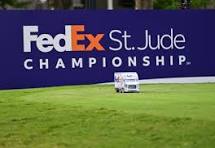
Memphis is set to lose one of its biggest annual sporting events as the FedEx St. Jude Championship will no longer be part of the PGA Tour’s playoff schedule after the 2027 season.
Memphis Is Losing Its PGA Tour Playoff Event After 2027
For nearly seven decades, professional golf has been part of Memphis’ sporting identity.
The tournament now known as the FedEx St. Jude Championship has survived name changes, venue changes, shifts in the PGA Tour calendar and the evolution of the sport itself. It has grown from a regional PGA Tour stop into a charitable powerhouse for St. Jude Children’s Research Hospital, then into a World Golf Championships event and, most recently, the opening event of the FedExCup Playoffs.
That standing is about to change.
The PGA Tour has confirmed that the FedEx St. Jude Championship will not be part of its new top-tier Championship Series when the restructured schedule begins in 2028. That means the 2027 tournament will be Memphis’ final season as a FedExCup Playoffs host under the current format.
The news has understandably created concern throughout Memphis. A playoff event means the game’s biggest names, national television exposure, corporate investment and an enormous annual platform for St. Jude. Losing that designation does not mean professional golf is leaving the city, but it does leave the future role of the event—and potentially the strength of its field—unsettled.
A Memphis Tradition Since 1958
The tournament’s history predates both St. Jude and FedEx.
The PGA Tour first arrived in Memphis in 1958 with the Memphis Open at Colonial Country Club. Billy Maxwell won the inaugural tournament, which carried a $20,000 purse. At the time, it was one of many regional stops on the Tour, but it quickly became part of the city’s sports identity.
Its most significant transformation came in 1970.
St. Jude founder Danny Thomas partnered with Memphis civic leaders and agreed to lend his name to the tournament in exchange for St. Jude Children’s Research Hospital becoming the event’s designated charity. The tournament became the Danny Thomas Memphis Classic, permanently linking professional golf in Memphis to one of the world’s most important pediatric cancer research and treatment institutions.
FedEx became the title sponsor in 1986, bringing together two Memphis institutions with global reach: the shipping giant founded in the city and the hospital that has become synonymous with hope for families facing childhood cancer and other life-threatening diseases.
The event moved to TPC Southwind in 1989, where it has remained ever since. The course became known as one of the Tour’s more demanding tests, with water hazards, narrow landing areas and a closing stretch capable of changing a tournament in a hurry.
John Mahaffey won the first edition held at TPC Southwind. Over the years, Memphis has welcomed champions such as Lee Trevino, Greg Norman, Nick Price, David Toms, Justin Thomas, Dustin Johnson, Brooks Koepka and Rory McIlroy.
The tournament also owns one of the most important moments in PGA Tour history. In 1977, Al Geiberger shot 59 at Colonial Country Club on his way to winning the Danny Thomas Memphis Classic. It was the first sub-60 round in PGA Tour history, ensuring Memphis would always hold a significant place in the sport’s record book.
From Regular Stop to Global Stage
For decades, Memphis was a respected PGA Tour event often played in June, regularly serving as a final test before the U.S. Open.
That changed dramatically in 2019.
The PGA Tour elevated Memphis into the World Golf Championships rotation, rebranding it as the WGC-FedEx St. Jude Invitational. The new designation brought one of the deepest fields of the season to TPC Southwind and placed Memphis alongside some of golf’s most internationally recognized events.
It was a landmark development for the city. Instead of competing for attention among regular-season tournaments, Memphis became a destination for the sport’s best players.
The next evolution came in 2022, when the Tour eliminated the WGC model and made the FedEx St. Jude Championship the opening event of the FedExCup Playoffs. Memphis became the postseason starting line, with the top 70 players in the FedExCup standings qualifying for the tournament. From there, the field was cut to 50 for the BMW Championship and then 30 for the Tour Championship.
The playoff designation enhanced the event across the board. The field was elite, the stakes were unmistakable and the tournament occupied one of the sport’s most valuable windows of the year.
For St. Jude, the impact went beyond golf.
The event is not simply a professional tournament with a charitable partner. Its relationship with the hospital is central to the tournament’s purpose. Since St. Jude became the designated charity in 1970, the tournament has raised more than $86 million for the hospital.
What Changes in 2028?
The most important clarification is straightforward: the FedEx St. Jude Championship remains a FedExCup Playoffs event through 2027.
The 2026 and 2027 tournaments are not affected by the announced change. Memphis will continue to host the opening playoff event under the current structure.
The shift begins in 2028, when the PGA Tour plans to launch a new two-tier competitive system featuring a premium Championship Series and a Challenger Series.
The Championship Series will be the Tour’s highest level, expected to include 23 or 24 events. That schedule will feature the four major championships, The Players Championship, a redesigned postseason, an annual team event and a select group of PGA Tour tournaments.
The Challenger Series will serve as a pathway for players seeking to earn or keep access to the Championship Series.
Memphis is not among the Championship Series events announced to date. That is why the FedEx St. Jude Championship will no longer be a playoff event after 2027. The postseason itself will be housed within the Tour’s new top-tier structure.
This is not simply a case of the PGA Tour moving one playoff tournament away from Memphis. It is part of a larger decision to place the new postseason inside a smaller, more exclusive championship tier that does not currently include TPC Southwind.
Why Is the PGA Tour Making the Change?
The PGA Tour has not provided one definitive public explanation for why Memphis was excluded from the Championship Series.
It would be inaccurate to say the tournament lost its playoff role because of attendance, August heat, sponsorship concerns or TPC Southwind. None of those factors has been identified publicly by the Tour as the sole reason for the decision.
What is clear is that the Tour is attempting to reshape its entire competitive product.
The new structure is designed to consolidate more of the game’s biggest stars into a limited number of premium events. That creates difficult decisions because the Championship Series has only a finite number of available slots. Those positions must accommodate the majors, The Players Championship, postseason events, team competition and selected PGA Tour markets.
The Tour is also considering a combination of traditional golf markets and new or expanded markets. That means Memphis is competing in a changing business environment, not merely against a single tournament or host city.
Local concerns about August heat, weekday attendance and the broader difficulty of sustaining a major event in a smaller market are part of the conversation. But they should be viewed as context rather than a confirmed explanation.
The Future Is Still Unclear
Memphis is losing its place as a playoff host after 2027. That part is settled.
The future of the tournament itself, however, has not been finalized.
The PGA Tour has indicated that Memphis is well-positioned to remain on the schedule, although a place in the Challenger Series has not been confirmed. That distinction matters. The tournament could continue, retain its vital relationship with St. Jude and remain a major charitable event for the city, even if it no longer guarantees a field filled with the sport’s biggest stars.
FedEx has expressed disappointment over the decision while reaffirming its commitment to St. Jude and Memphis.
Still, there is no avoiding the significance of what the city is losing.
A playoff event gives St. Jude a massive national and international platform. It puts the hospital’s mission in front of millions while bringing the best players in golf to Memphis. If the tournament shifts to the Challenger Series, its television exposure, field strength and national relevance could be dramatically different.
For a city that has hosted PGA Tour golf since 1958, the next two years will be critical. Memphis has built a tournament with deep roots, an unmatched charitable mission and a history most events cannot replicate.
The question now is whether Memphis, FedEx, St. Jude and the PGA Tour can find a way to protect that legacy—even without the FedExCup Playoffs.