
“There Is No NIL, We’re Just Paying to Play”: Josh Pastner Just Blew Up the Comfortable Lie in College Basketball
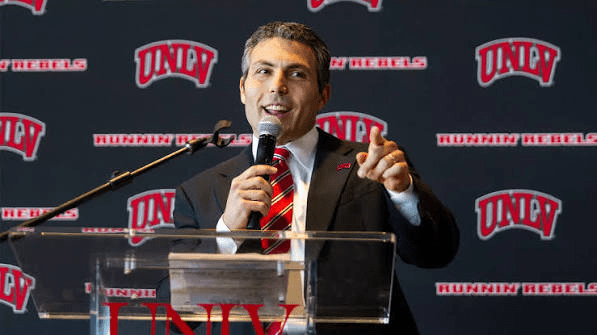
The sport has danced around this for years, but Josh Pastner just said the quiet part out loud. On Conference Crunch, the UNLV head coach didn’t dress up the state of college basketball in branding, buzzwords, or press‑conference spin — he called the current reality exactly what it is. “There is no NIL, we’re just paying to play,” Pastner said, framing 2026 college athletics as a straight business model where “pay to play” has replaced the original idea of name, image, and likeness. In one sentence, he summed up what a lot of coaches whisper privately and refuse to attach their name to publicly.
Coaches Know The Truth. Pastner Actually Said It.
For Pastner, the problem isn’t that players are getting paid. It’s that the entire system has shifted so quickly into a financial arms race that the structure hasn’t caught up. He talked openly about the idea that true stability will require a collective bargaining agreement — a CBA style framework that brings players to the table, defines the rules, and “eliminates the lawsuits” and constant injunctions flying through state courts. In his mind, federal legislation is a long shot. There’s “a lot more going on in government than worrying about the college athletic scene,” he pointed out, and it’s hard to imagine Congress prioritizing bracket math over bigger national issues. So instead, he put his finger directly on the one realistic path to order: a CBA that caps spending, clarifies expectations, and finally makes this pay‑to‑play era something more than chaos.
From there, Pastner drove home how uneven the landscape has become. UNLV is rich in history, but he’s brutally honest about the current financial gap. “We’re not in one of those power conferences. We don’t have the same budget even as Memphis. We’re not even in their same galaxy,” he said. That isn’t coach‑speak; that’s a man telling you where his program actually sits in a stratified marketplace. In a world where some schools can throw absurd figures at portal stars, he knows his margin for error is microscopic. “For us to be successful… we’ve got to be outstanding, near perfect at trying to thread the needle at evaluating and then also finding guys under the radar,” he explained. The entire model for a mid‑major contender has become this: identify undervalued players, hit big on evaluation, and pray you don’t get crushed by injuries.
Why Mid‑Majors Have To Be Near Perfect Just To Survive
Pastner made a pointed comparison that every fan can understand. In football, he said, if you miss on a player or suffer an injury, “you can still be okay… as long as it’s not your quarterback.” There are more bodies, more positions, more ways to absorb a mistake. In basketball, it’s ruthless. “If you mis‑evaluate or you have an injury or two, especially to the guys that you’re paying, it’s a crusher season.” One wrong read in recruiting or one bad break with a key paid player doesn’t just hurt — it can obliterate your year. And when your budget forces you to put a huge chunk of your resources into a small number of players, the stakes on every decision feel like life or death.
That’s why his vision for guardrails matters. Pastner floated the idea of a theoretical cap — “I’m just making this number up, 8 million for all men’s basketball teams” — with NBA‑style luxury tax penalties for going over. Not everyone would have to opt in, but no one could blow past the ceiling without consequences. With no such agreement yet, though, he points out the reality of American capitalism: “You can’t really put a restriction on it because it’s technically against the law.” Schools are spending “at such different rates right now,” and until that changes, coaches at programs like UNLV are forced to compete in a marketplace where the price of admission keeps climbing.
Pastner’s perspective hits harder because he isn’t hiding behind clichés about “student‑athletes” and “doing it for the right reasons.” He openly acknowledges that players have agents and make “business decisions,” that an offer difference of $200,000 vs. $750,000 isn’t about feelings or fit; it’s about math. “You’re not going to leave $550,000 on the table,” he said, noting that “very few are going to do that” no matter how tight their relationship with a coach may be. That’s the uncomfortable reality: talent goes where the money is, and coaches who don’t have it have to find another way.
So Pastner leans into what he can control — selling to the community, getting people to buy tickets, convincing fans and donors to invest in the program so UNLV can at least enter the conversation financially. But he’s also unafraid to say what many in his seat think behind closed doors: NIL as it exists today isn’t about brand deals and social campaigns. It’s about straight payment for play, and the sport either has to admit that or keep pretending a marketing term still matches the way the money moves. On Conference Crunch, Josh Pastner chose honesty. And once you hear him say it, it’s hard to unsee the sport any other way.