
College football still treats the Heisman Trophy like a clean, heroic ending. A star quarterback lifts the stiff-arm trophy, smiles in New York, thanks his parents, and returns to campus as the face of the sport. That version of the story is outdated. In 2026, the Heisman is not just a football award. It is a financial grenade. When one player becomes a national brand overnight, the locker room does not simply celebrate. It recalculates.
That is why Fernando Mendoza’s 2025 Heisman win matters beyond Indiana’s history. Mendoza became Indiana’s first Heisman winner after a dominant season in which he earned 2,362 points, collected 643 first-place votes, and appeared on 95.16 percent of all ballots. He threw for 2,980 yards and 33 touchdowns before the ceremony, then finished the year with 3,535 passing yards and 41 touchdown passes across 16 games. He deserved the trophy. That is not the issue. The issue is what the trophy now does to the economics of a roster.
The Award Is Now A Pay Raise
In the old version of college football, winning the Heisman raised your NFL draft stock and your campus celebrity. In the NIL era, it does something far more disruptive. It changes your market value in real time.
By the end of the 2025 Heisman race, all four finalists reportedly held NIL valuations above $1 million, and Mendoza’s valuation had climbed above $3 million after a major Adidas deal. That matters because football is the ultimate interdependent sport. Quarterbacks do not win alone. Offensive linemen protect them. Receivers make contested catches. Running backs clean up bad boxes. Yet the money rarely spreads evenly with the spotlight.
That imbalance creates tension, whether coaches admit it publicly or not. A Heisman winner becomes more than the team’s best player. He becomes the team’s walking business empire. Every incompletion gets judged differently. Every sideline conversation gets filtered through money. Every teammate knows exactly who is cashing the biggest checks.
The Locker Room Elephant In The Room
This is the elephant in the room that polite college football coverage keeps dodging: NIL has already fractured locker rooms, and coaches have said as much. Maryland coach Mike Locksley publicly acknowledged that NIL tension contributed to his losing his locker room, describing the dynamic as one of “haves and have-nots”. Long before the current revenue-sharing era sharpened these divides, coaches were already warning that a heavily compensated quarterback could damage morale and reshape expectations for touches, playing time, and loyalty.
Now apply that reality to a Heisman winner. Mendoza was not just productive. He was the most decorated player in the country, winning the Heisman, the Maxwell Award, the Walter Camp Award, and AP Player of the Year honors. That kind of profile does not merely boost endorsement appeal. It creates a completely different economic class inside the same locker room.
That does not mean teammates resent greatness by default. It means the pressure of unequal compensation becomes harder to contain when one player’s face is on commercials, apparel, and national campaigns while the guards protecting him remain anonymous. Coaches are no longer just managing personalities. They are managing salary perception without formal salary structures.

Fame Changes Team Math
The hardest part is not the money itself. It is what the money represents. A Heisman winner becomes proof that college football’s individual economy can outgrow its team-first culture.
Once that happens, every decision feels political. If the star quarterback forces a throw, teammates notice. If a receiver is underused, he wonders whether the offense exists to feed the brand. If a backup believes he can play, he also sees the business waiting on the other side of the depth chart.
That is the modern Heisman curse. The award still honors greatness, but it also amplifies imbalance. In a sport built on sacrifice, shared punishment, and synchronized trust, the biggest individual prize now comes with a financial aftershock. Mendoza earned the trophy. But in the NIL era, earning the trophy and protecting the locker room are two completely different jobs.
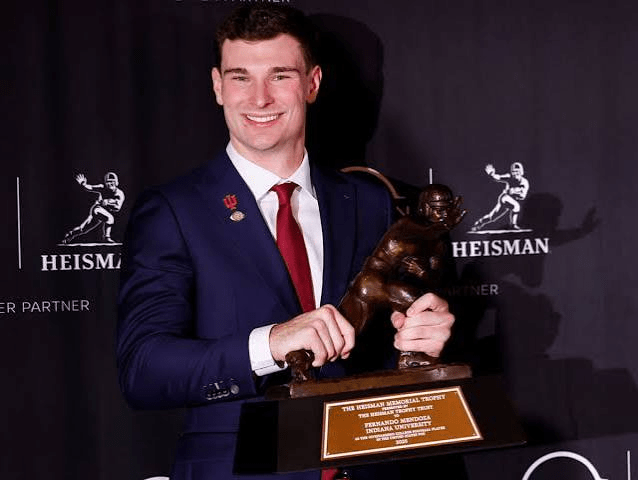
The Heisman used to crown the face of college football. Now it may quietly test whether a team can survive having one.