
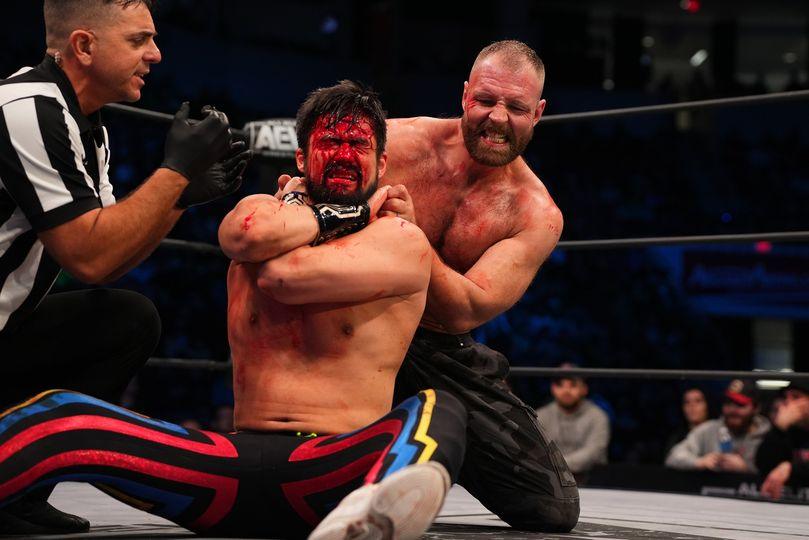
Pro wrestling didn’t just have a big weekend — it had the kind of weekend that makes every other era feel small. In three days, WWE, AEW, TNA, and NXT all swung for the fences at the same time, delivering world title shockers, interpromotional dream matches, and promotion-defining shows that left fans scrambling just to keep up. This wasn’t a nostalgia trip or a one-company hot streak; it was a rare moment where the entire industry seemed to hit peak form all at once. If you’ve ever said, “Wrestling isn’t what it used to be,” this was the weekend that dared you to hit play and prove yourself wrong.
Did We Just Live Through The Greatest Wrestling Weekend Ever?
For fans, it felt less like a run of isolated events and more like a three-day festival spread across time zones and platforms. You could start your weekend with a stadium spectacle, roll straight into a crossover supercard, flip over to a rejuvenated TNA tentpole, and close out with NXT’s next generation on network TV. The sheer volume of relevant, high-stakes wrestling created a new kind of problem: not “Is there anything good to watch?” but “How do I watch all of this without missing something huge?” That’s a good problem to have — and it’s a big reason this weekend deserves the hype.
One Weekend, Four Can’t-Miss Shows
From the jump, there was no such thing as a warm-up act. WWE rolled into a packed stadium overseas with a card built around tournament finals and major championship implications, then capped it with a world title finish that instantly rewrote the company’s current landscape. This wasn’t a throwaway international show; it was canon-defining, the kind of event that resets feuds, reshapes the main event scene, and gives fans a moment they’ll be arguing about for years. When your “special” show delivers a decade-in-the-making payoff, it sends a clear message: every stop on the calendar counts.
On the other side of the world, AEW’s Forbidden Door doubled down on its identity as wrestling’s unofficial all-star game. What started as a novelty crossover has evolved into a showcase where multiple promotions send their best, and this year’s edition felt like the most ambitious yet. High-profile singles matches, interpromotional tags, and tournament finals all shared the spotlight, creating a card with almost no downbeat. Fans tuning in knew they were watching something that used to live only in fantasy booking threads — except now, it was canon, and it came with production, stakes, and global visibility to match.
TNA stepped in determined not to be overshadowed. Slammiversary carried the feel of an organization that knows it’s being watched again and wants to justify the attention. The world title picture featured names who felt fresh in that environment, big stipulation matches tapped into the company’s history of innovation, and the X-Division reclaimed its role as a highlight factory. For a promotion that has lived through nearly every boom-and-bust cycle imaginable, delivering a show that can be mentioned in the same breath as the weekend’s other heavy hitters is a statement in itself.
Meanwhile, NXT quietly but confidently rounded out the lineup with a special that kept the pipeline stocked and the brand relevant in its own lane. With a national TV slot and a card structured like a true event rather than a “prospect showcase,” NXT proved again that it can launch new stars while still feeling like must-see programming. Title matches, grudge bouts, and breakout performances combined to make the show feel less like developmental and more like a proving ground where the next wave announces itself in real time. On a weekend where everybody else was flexing, NXT still found ways to demand its slice of your attention.
The New Golden Era of Choice
What truly sets this era apart from past “booms” is how much control fans have over what, when, and how they watch. In the Monday Night War era, your choice was essentially one night, two channels, and a lot of channel-flipping. This weekend, choice meant deciding which show to make your centerpiece, which matches to watch live, and which to catch on replay or via highlights. You weren’t forced into an either/or. You could treat the WWE stadium show as your main course, stack AEW’s crossover spectacle as your dessert, sample TNA’s resurgence the next day, and binge NXT’s big moments whenever you had time.
That flexibility is powered by distribution that would’ve sounded like science fiction a generation ago. Big shows hit streaming platforms, sports networks, cable, and broadcast TV simultaneously, making it almost impossible not to stumble into something interesting if you’re even casually paying attention. Social media amplifies the biggest spots and finishes in real time, turning surprise title wins and insane sequences into instant viral moments. Instead of relying on word of mouth days later, fans can join the conversation as it happens, then decide to jump in live, catch up later, or deep dive through full replays.
Choice also shows up in style. If you’re into long-term storytelling and spectacle, one promotion has you covered. If you care more about bell-to-bell work rate and international flavor, another show speaks directly to you. If you want a blend of nostalgia and innovation, there’s a lane for that too. Even within a single weekend, you can bounce between pure sports-entertainment, hard-hitting “pure wrestling,” high-flying chaos, and character-driven drama. It’s like having four different genres of the same medium all firing at once — and knowing you can move between them without friction.
An Industry Thriving, Not Just Surviving
Maybe the most important part of this weekend isn’t what it meant for fans, but what it reveals about the health of the business. For a long time, “boom period” essentially meant one company catching lightning in a bottle while everyone else tried to keep up. Now, it looks like multiple promotions are running profitable, well-attended, and widely viewed shows at the same time, each with its own identity and loyal audience. That’s not just competition; that’s an ecosystem. Talent can move between companies, reinvent itself, and still stay in front of national and international audiences. Creative risks can be taken without everything hinging on a single show or rating.
We’re also seeing a slow but undeniable shift from pure tribalism to strategic cooperation. Cross-promotional events, talent exchanges, and subtle acknowledgments of other worlds have created a sense that wrestling is a shared universe rather than a series of isolated islands. Fans benefit because they get to see dream matches and fresh combinations that used to require ignoring company lines; promotions benefit because those same matchups draw attention, subscriptions, and ticket sales. When everyone can win on the same weekend — and nobody’s success automatically spells doom for someone else — the ceiling for the entire industry rises.
All of that brings us back to the central question: did we just live through the greatest wrestling weekend ever? The answer probably depends on which era shaped you, which promotion you ride for, and what kind of wrestling you love most. But even if you hedge on the superlatives, it’s hard to argue with what this weekend represents. Four major brands, four meaningful shows, three days, zero dead weight. If you love this wild, theatrical, hard-hitting world, this was the weekend that proved it’s not just surviving on nostalgia — it’s thriving in the present. The only real question now is whether the companies can keep raising the bar, or whether we’ll look back on this stretch of days as the moment wrestling’s new golden age crystallized in real time.